

| top design | aluminum rail18-28-38.50 mm top rail |
| size | 80*250 100*250 120*250 match many kinds of window |
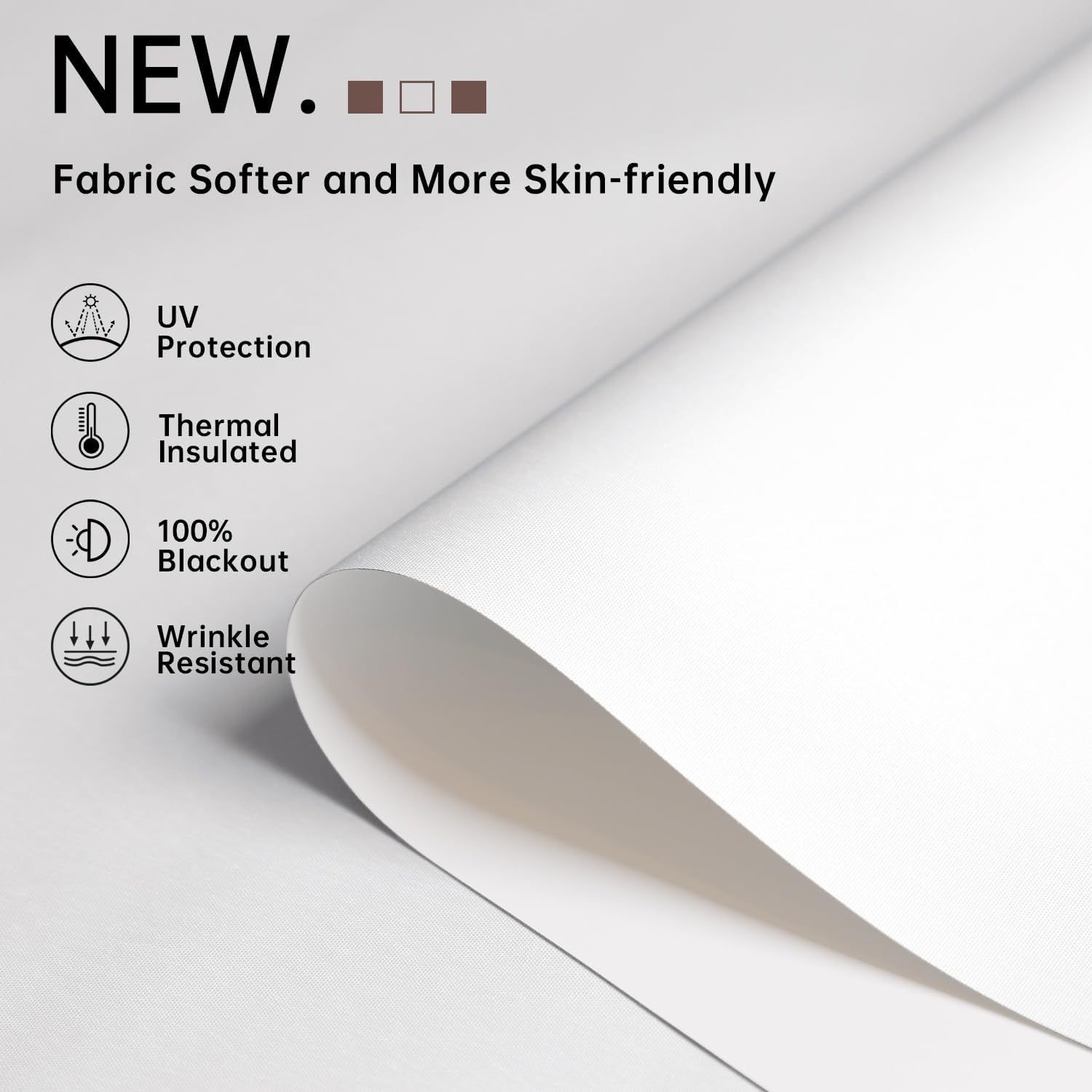
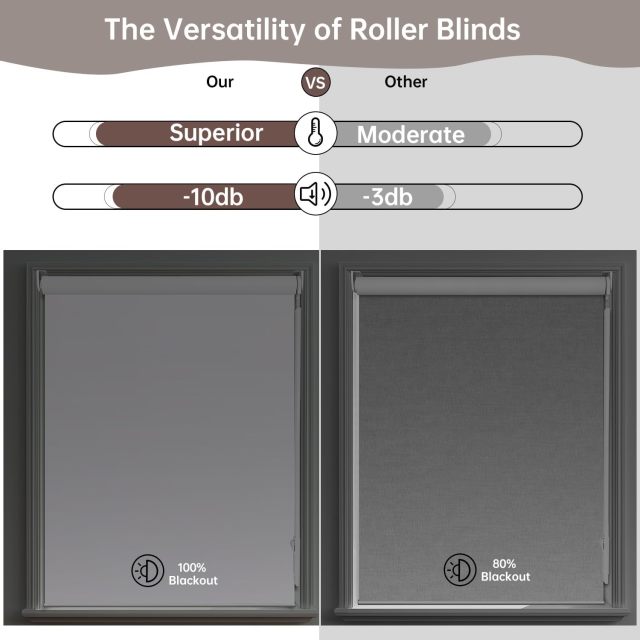
| fabric desingn | blackout daylight design |
| MOQ | 10PCS for normally size |
| Packing | carton with pp bag or pet box |
| Sample | One pcs for free |
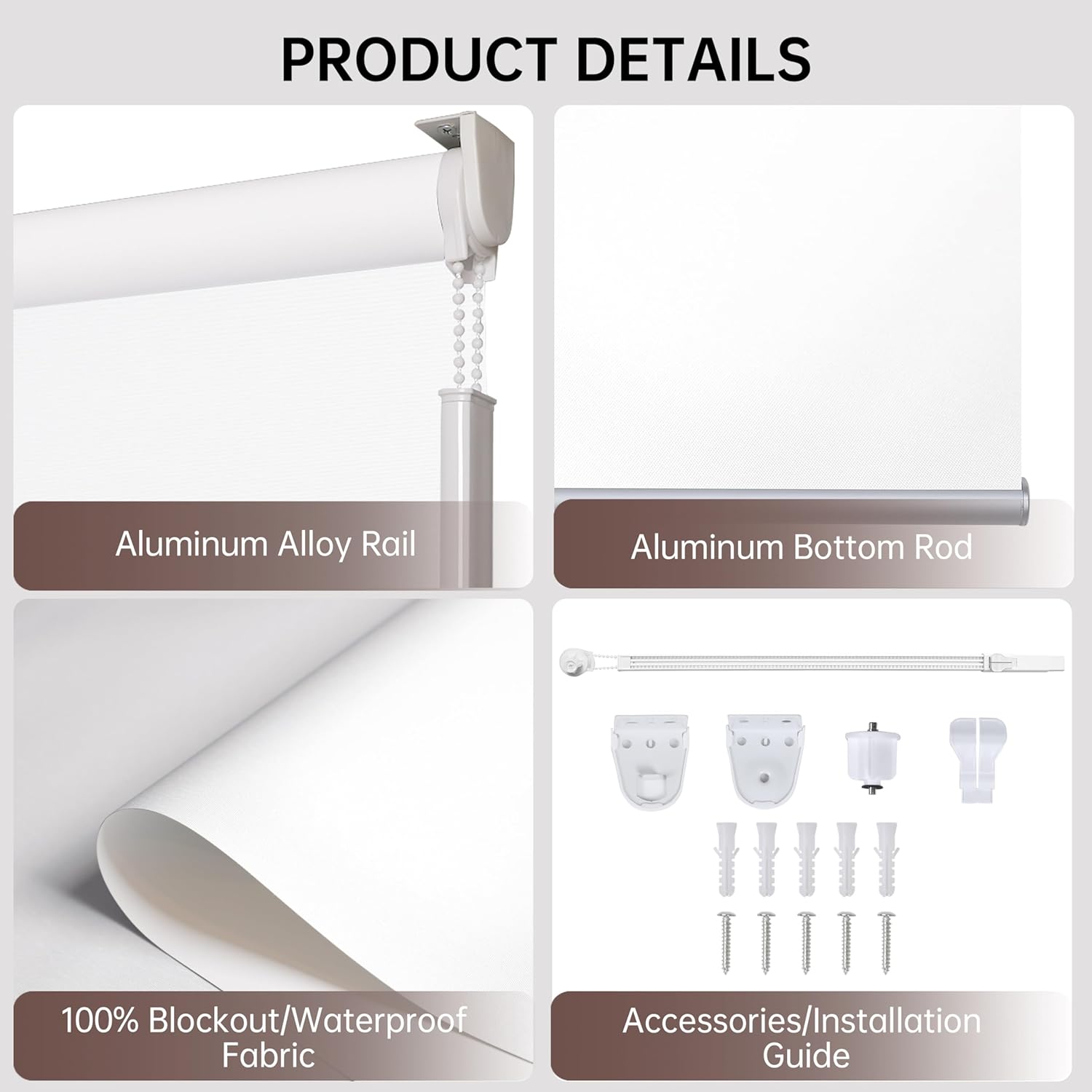

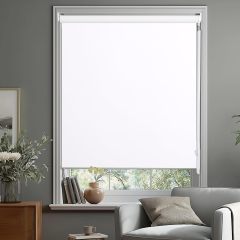
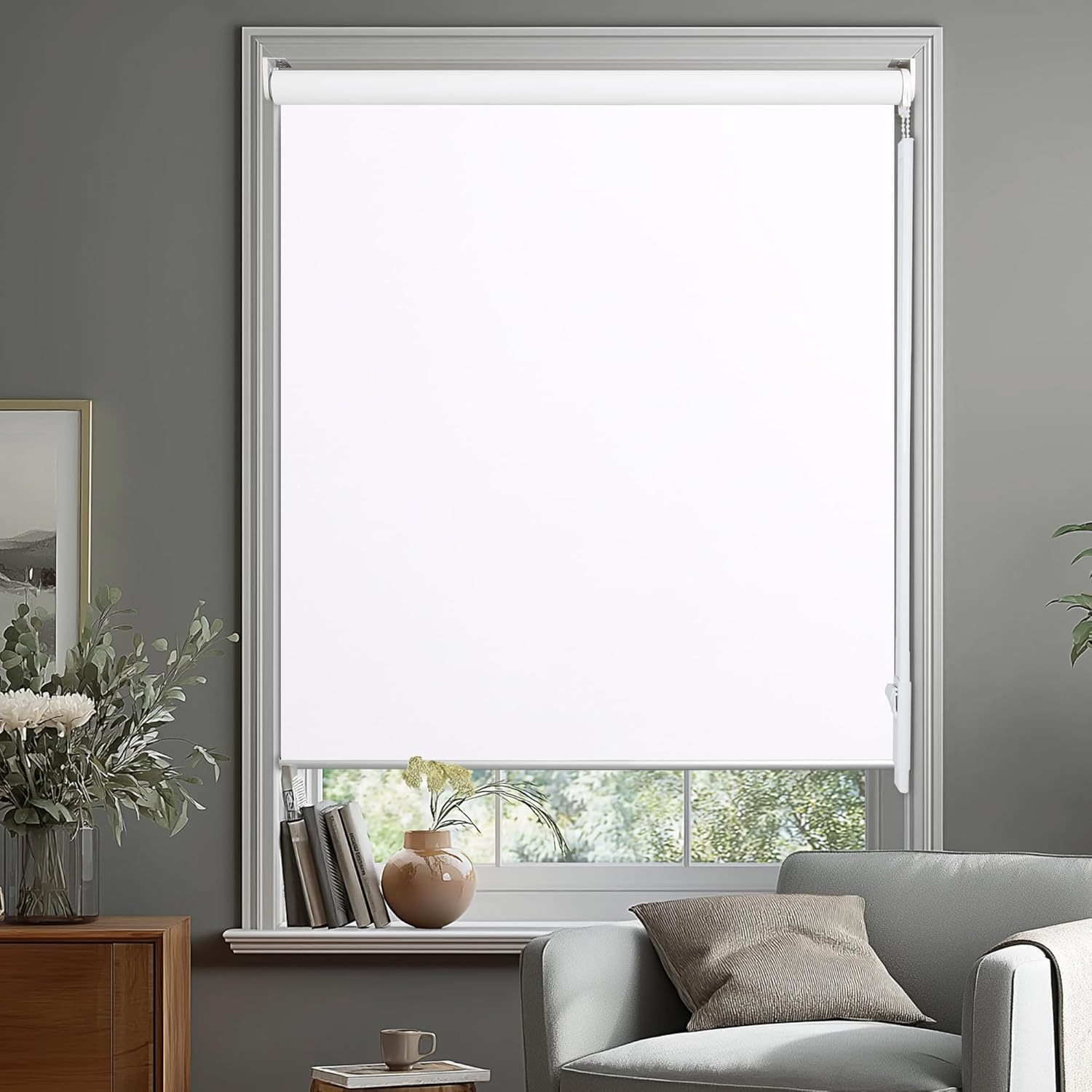
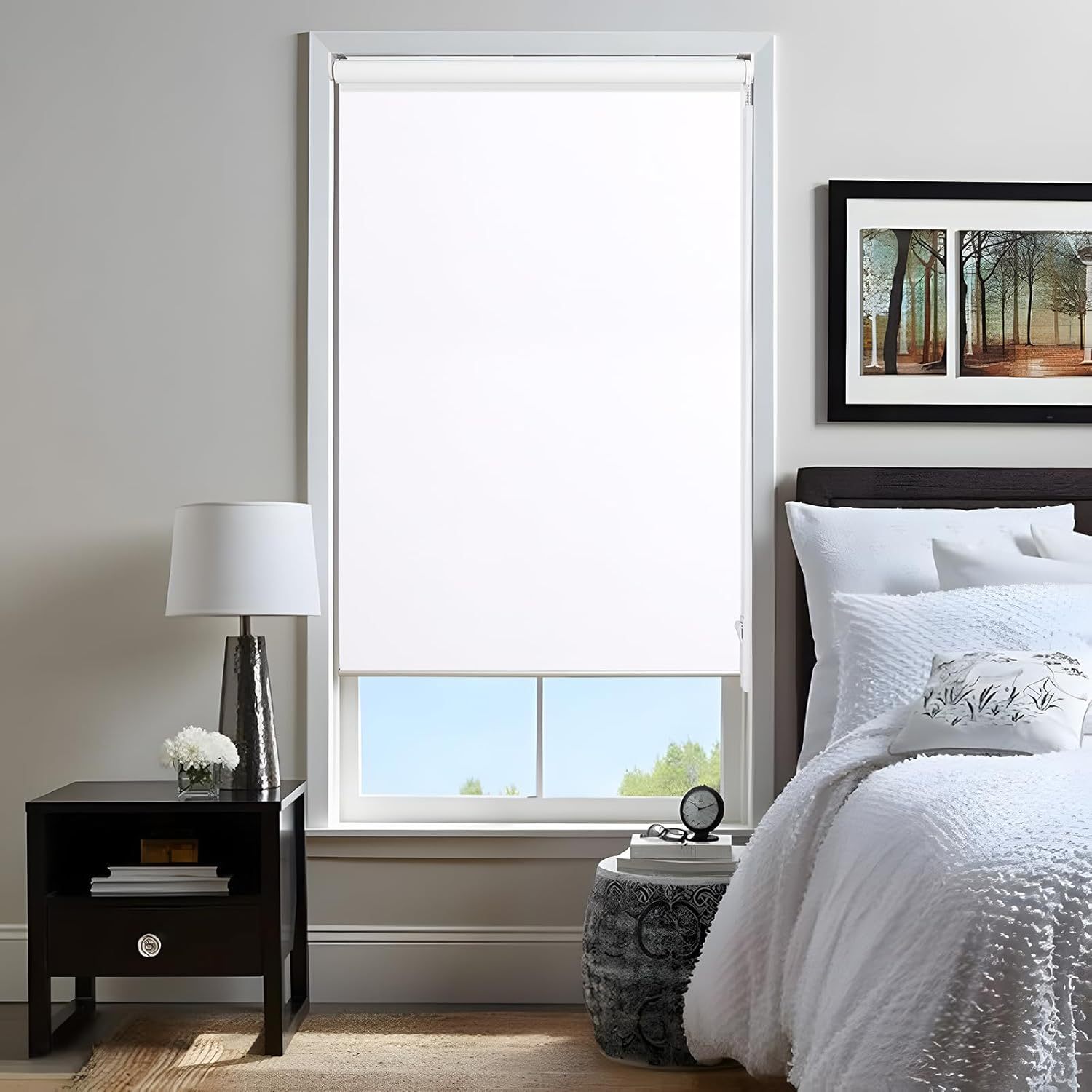
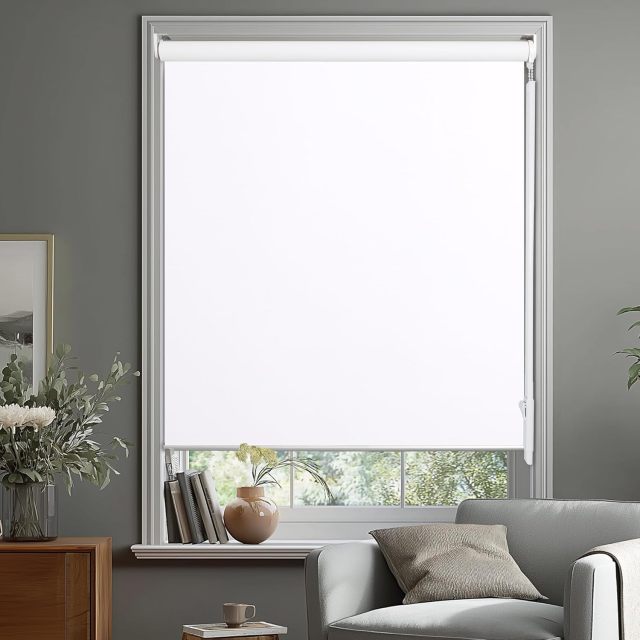
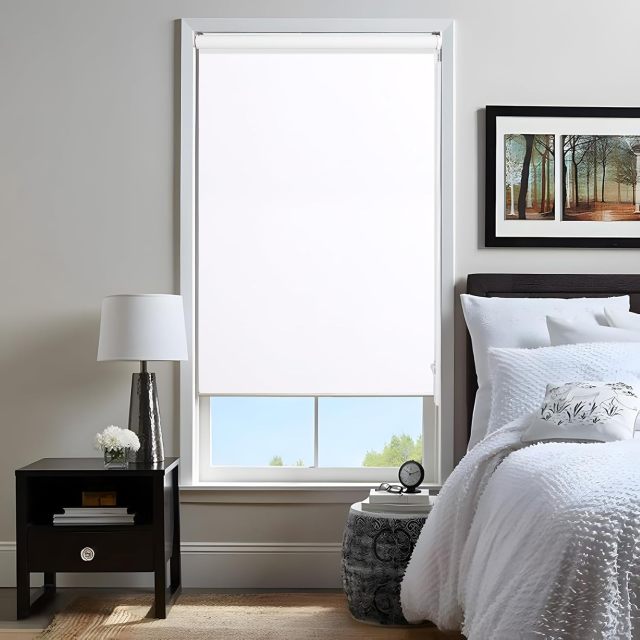
A white roller blind is the least intrusive way to take control of a window. The fabric rolls straight down over the glass, the mechanism hides behind a slim aluminum rail, and nothing is left hanging in the room when the blind is raised. This model pairs that mechanism with a white blackout fabric, an aluminum top rail and an aluminum bottom rod, so the whole assembly reads as part of the window rather than an addition to it.
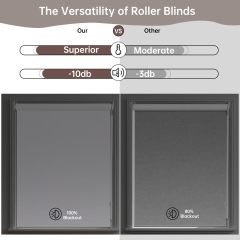
The fabric is made in two builds. The blackout design uses a high-density, light-impermeable cloth, usually with a blackout lining, to darken a bedroom, a guest room or a media room. The daylight design filters the sun instead, which suits living rooms, studies and hallways where light is welcome but glare is not. Both run on the same rail and the same beaded chain, so one house can be fitted from a single range without the rooms looking mismatched.
Standard sizes of 80 × 250 cm, 100 × 250 cm and 120 × 250 cm match many kinds of window, and openings that fall outside them are made to measure. White is where most buyers start, because it disappears against white frames and pale walls; grey, black and beige are also available, with custom colors matched for larger jobs.
For a builder, a distributor or a hotel operator furnishing a whole floor, the value of blackout roller blinds like these is consistency: one fixing method, one fabric family, one pool of spare brackets and chains, and the same light control in every room from the first unit to the last.
Orders are handled by the factory rather than a consumer sales counter, in the way window blinds manufacturers normally work with trade customers. You send sizes, quantities, fabric design and chain side; we confirm the rail, the packing and the schedule, and the run is built in one pass.
| Fabric design | Blackout or daylight (light-filtering) |
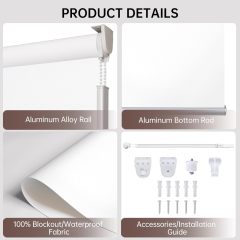
| Fabric build | High-density, light-impermeable cloth with a blackout lining on the blackout version |
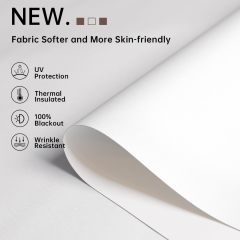
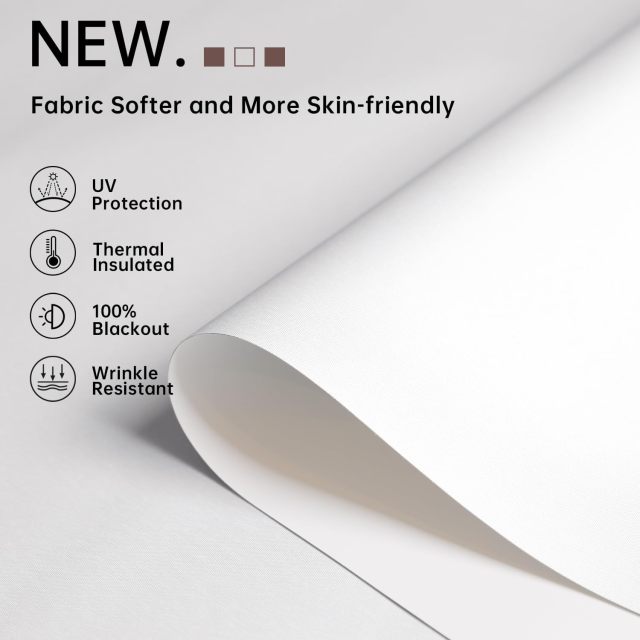
| Fabric surface | Smooth, soft-handing, wrinkle resistant |
| Color | White, grey, black, beige; custom colors on request |
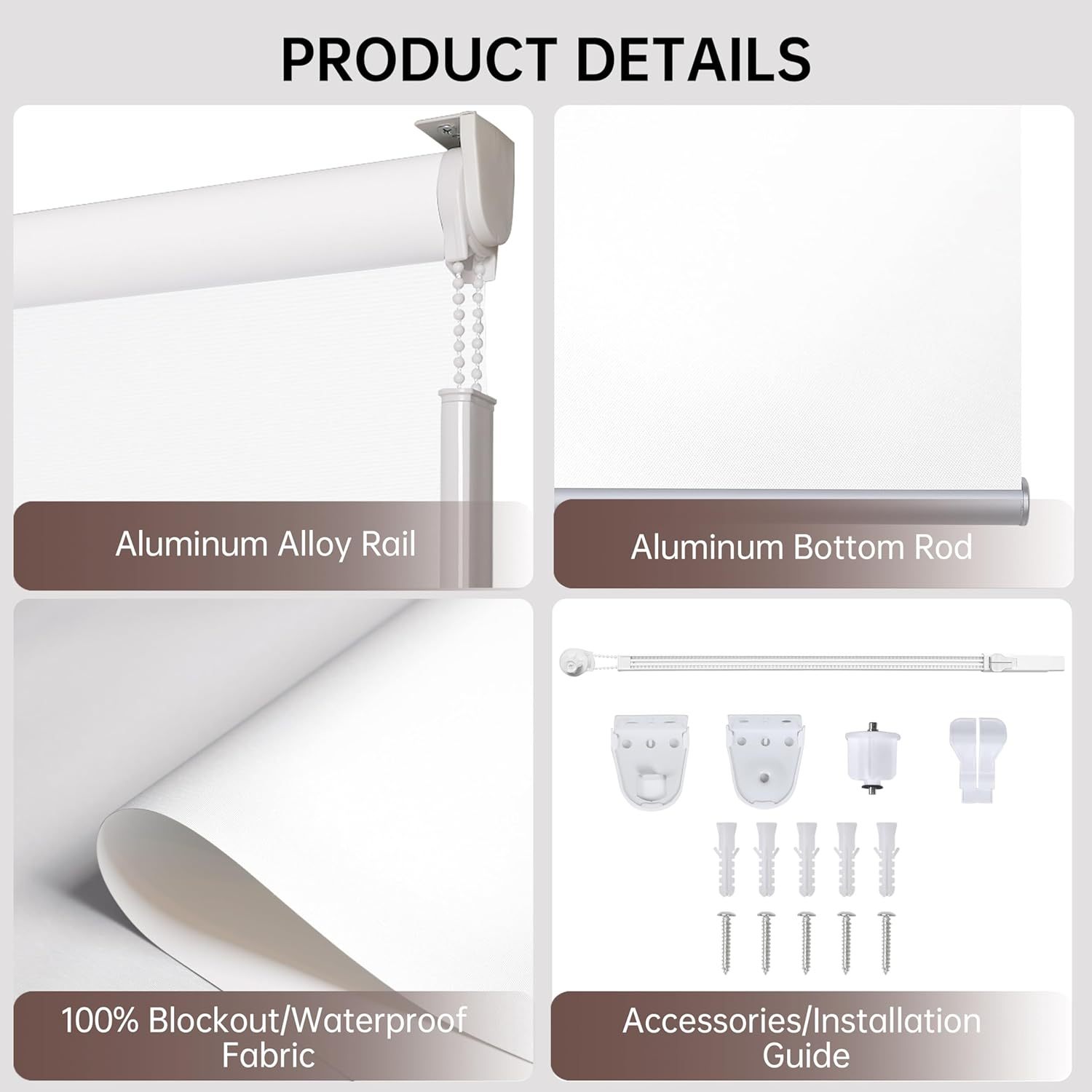
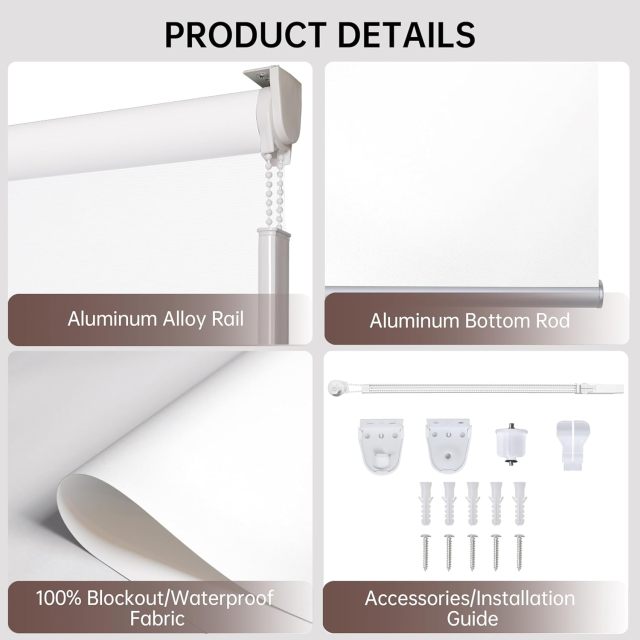
| Top rail | Aluminum, 18 mm / 28 mm / 38.5 mm profiles |
| Bottom rail | Aluminum bottom rod |
| Standard sizes | 80 × 250 cm, 100 × 250 cm, 120 × 250 cm (width × drop) |
| Control | Metal or ABS beaded chain |
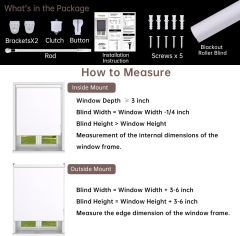
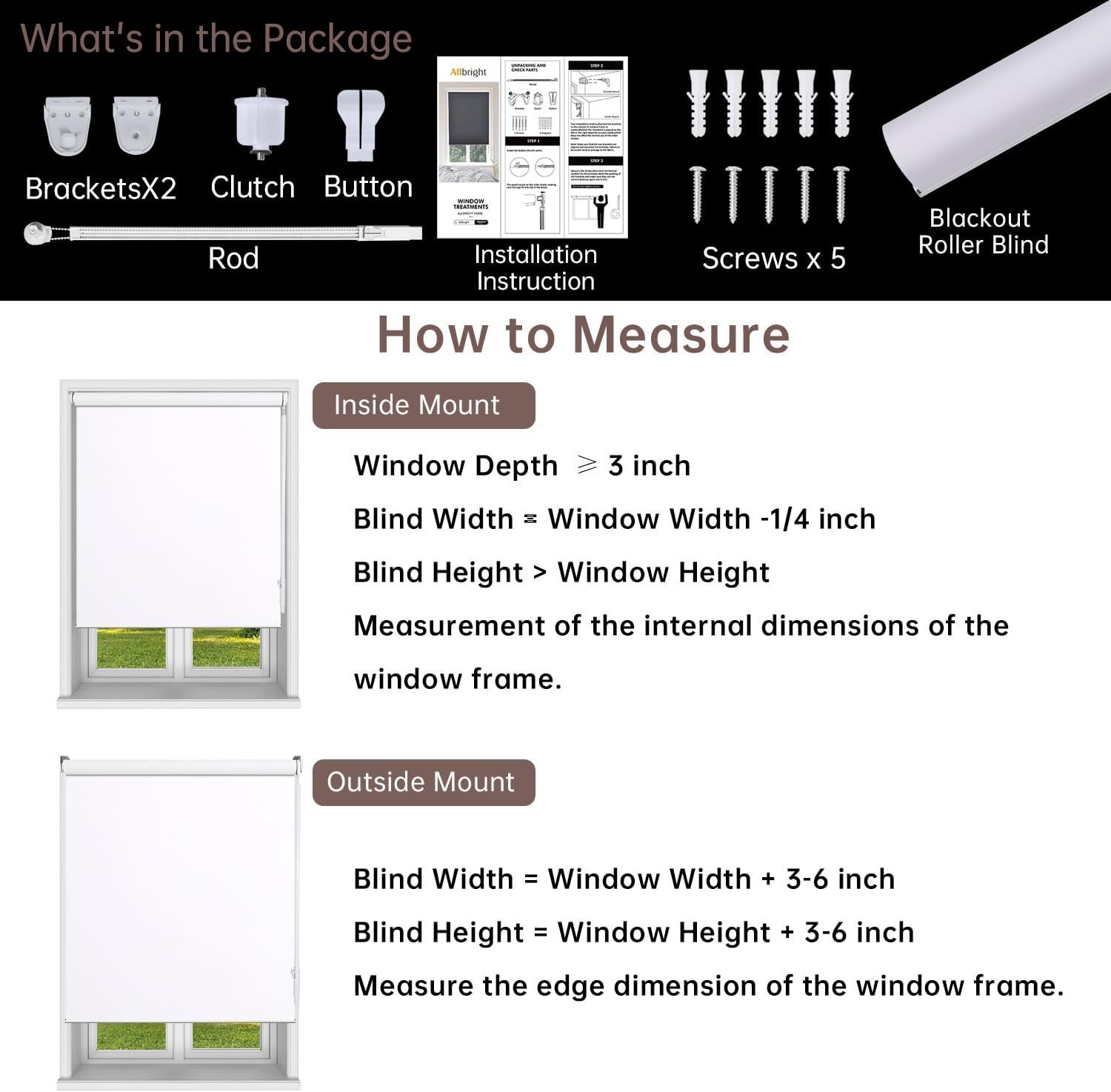
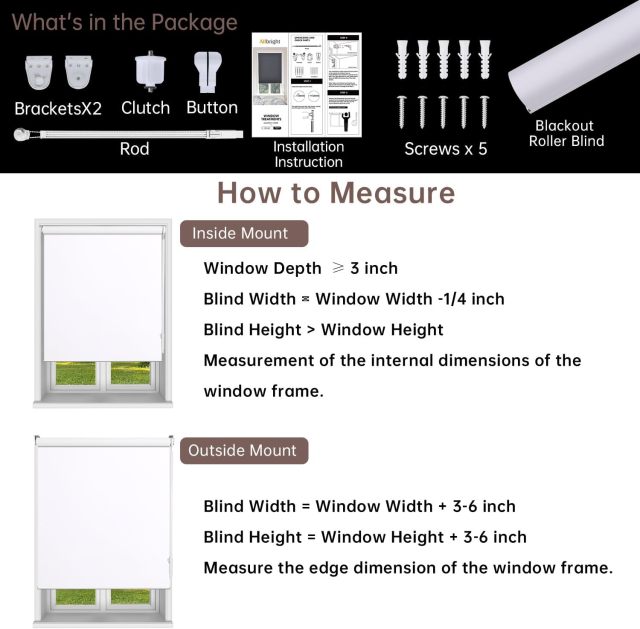
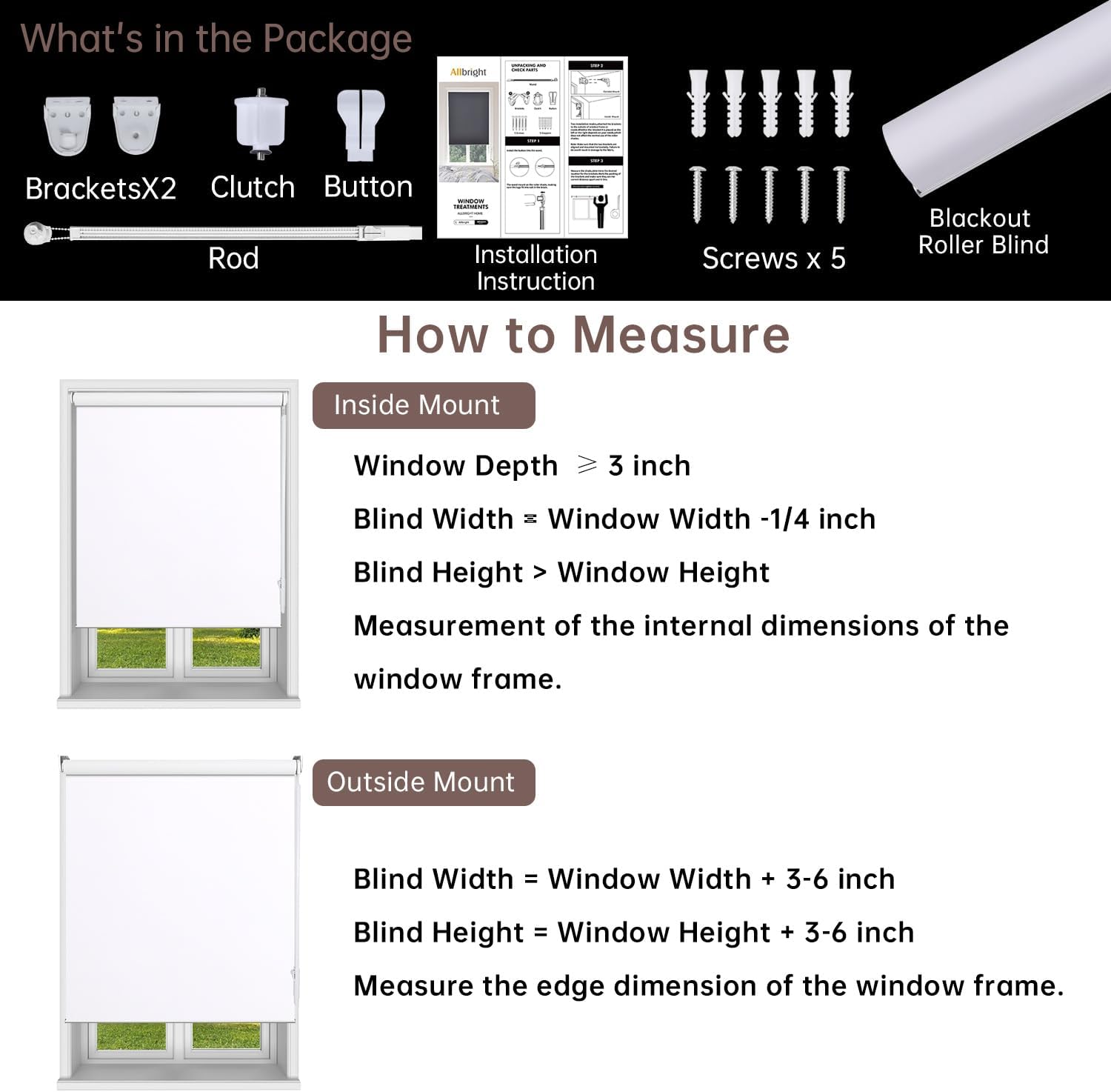
| Mounting | Inside the recess or over the frame |
| Supplied with | Brackets, screws and fitting instructions |
The beaded chain is the only part of these roller shade blinds that anyone touches every day, so it decides whether the product feels well made. We fit a metal or ABS beaded chain running through a clutch at the end of the rail. The glide is smooth and quiet, there is no squeak or judder, and the clutch holds the fabric wherever you stop it.
That matters more than it sounds. A blind that creeps down overnight draws a bright line across a bedroom wall by morning. This one stays put, so the fabric can sit at eye level for daylight, halfway down for privacy, or fully closed for darkness, without fiddling every evening.
The chain hangs on the right-hand side as standard. Say so at order if your layout needs it on the other side, or if the loop has to clear a worktop, a radiator or a piece of furniture — a chain should never reach the floor, both for safety and because a chain dragging on the floor wears at the clutch.
Day to day, a dry cloth keeps the chain clean. Grit and kitchen grease are what make any chain feel rough, so if a chain starts to bind, check that the fabric is running square in the brackets before pulling harder.
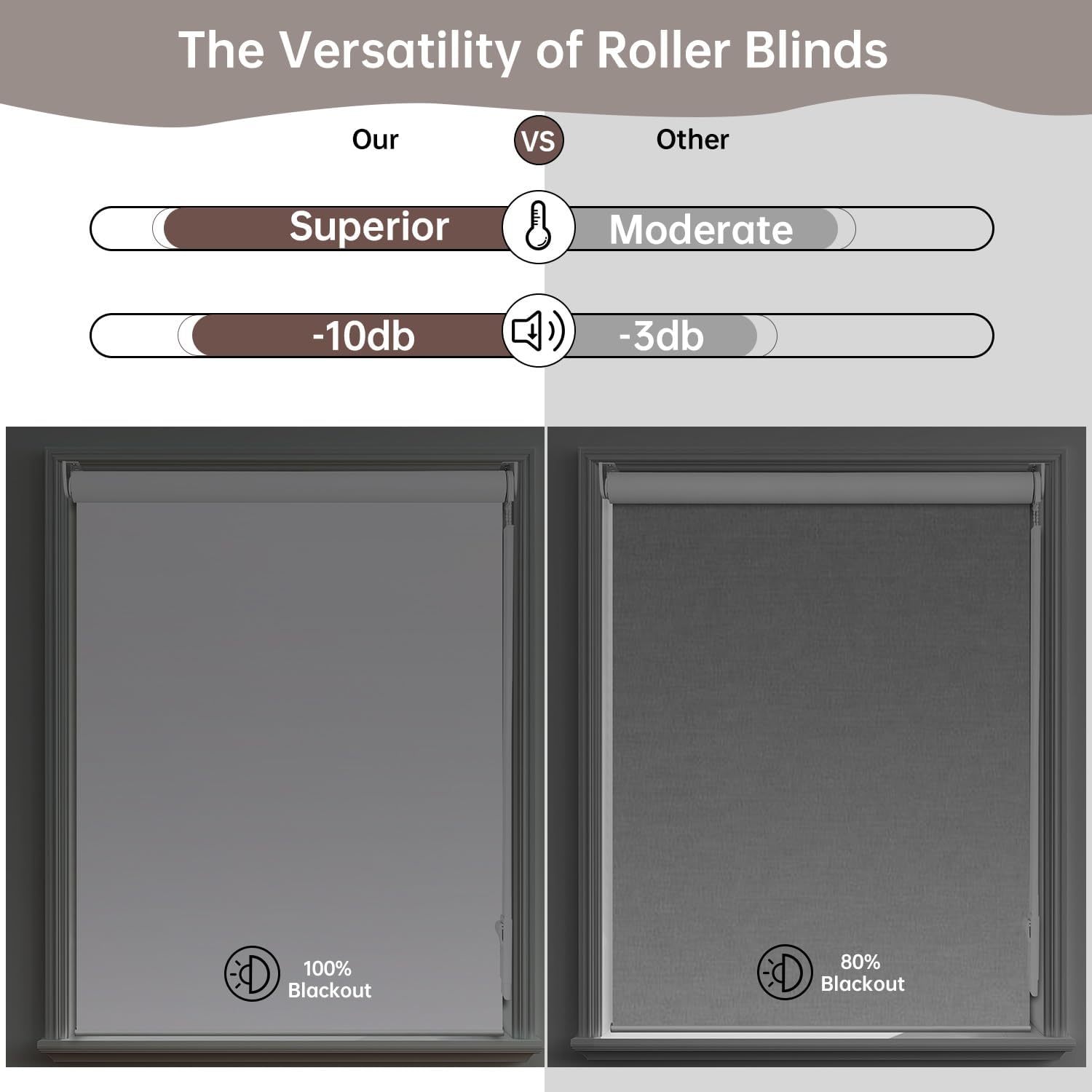
An opaque fabric turns a window from a two-way opening into a one-way surface. With a light on inside in the evening the room cannot be read from the street, and by day the space stays private without the window looking blacked out. That is why black out roller blinds are fitted so often to ground-floor flats, street-facing bedrooms, bathrooms and consulting rooms.
The second effect is thermal. Glass is the weakest part of a room's envelope, and a layer of fabric held close to it slows the movement of heat. In summer the same roller shade blinds take the direct sun before it reaches the room, so the space behind them stays cooler; in winter they reduce the chill that radiates off cold glass and help the room hold its warmth.
Be realistic about the size of the effect. A blind is one part of a window's performance, not a replacement for double glazing, and nobody can promise a specific saving in a room they have not seen. What it does deliver is comfort at the window itself — most noticeable in older buildings with single glazing, and in rooms with large areas of glass.
In hotels, serviced apartments and care settings, that combination of privacy all day and a room that holds its temperature usually matters more than the extra weight of a heavier fabric.
A roller blind fails in two quiet ways: a chain that will not release when something pulls it, and a tube that bows under a wide fabric. Both are dealt with here.
The beaded chain carries a breakaway connector. If a child, a pet or a piece of furniture catches the loop, the connector separates under load instead of holding, the blind drops open and the chain comes apart, which is exactly the outcome you want. Reconnecting it takes a moment and no tools. It is the reason these black out roller blinds suit family homes, hotel rooms and anywhere children pass through.
The fabric is wound onto a sturdy aluminum roller tube. A 100 cm or 120 cm drop hangs heavy, and on a lighter tube it would sag in the middle, which makes the fabric run off-square and rub the brackets. Aluminum keeps the roll straight across the full width, so a wide unit still lifts and lowers evenly. As your window blinds supplier we also need to know what the blind is going into — masonry, timber, plasterboard or a uPVC frame — because the bracket and screw set has to suit the substrate.
Keep the chain clear of cot sides, chair backs and radiator valves, and fit the blind so the loop does not reach the floor. A roller is only as reliable as the fixings holding it up and the clearance around it.
Beyond blocking light, the opaque fabric gives you complete privacy, so nothing is visible from outside whether it is day or night. The same fabric works as an insulating layer at the window, reducing heat transfer in summer to keep the room cooler and holding warmth in during winter, which can help lower your heating and cooling costs.
Meijia Window Decoration has been manufacturing window coverings since 2005 and today runs a 53,000 m² factory with around 200 staff, plus a second production base in Anhui with 12 lines, backed by a database of more than 3,000 qualified suppliers. We supply builders, e-commerce sellers and supermarkets across Europe, North and South America, the Middle East and Asia, with OEM and private-label production, minor customisation and one-stop export handling under 100% quality control. Both plants hold BSCI social responsibility, ISO 9001 and ISO 14001 certification.
Yes. The standard sizes run to a 250 cm drop and anything longer is made to measure. On a door, the chain loop has to clear the handle and the floor, so send the drop with the order and the chain length is set to suit. The fabric also rolls tightly at the top, so a full-height window keeps a clean line when the blind is raised.
The rail has to carry the fabric roll for the width and drop you order. The 18 mm profile suits narrower windows and shallow recesses, while the 28 mm and 38.5 mm profiles are used where the roll is heavier or the opening is wider. Give us the size and we will confirm which rail the order is built on rather than leaving you to guess.
The fabric wipes clean and handles steam and splashes, which covers most bathrooms and kitchens. Directly over a shower or a hob, tell us first and we will confirm the right fabric build for that spot rather than assuming the standard one will do.
Convert to centimetres before ordering, because sizes are quoted width × drop in centimetres. Round to the nearest standard size only when the difference sits inside your mounting allowance; otherwise send the exact figures. For blinds for windows that were fitted years ago, measure the opening rather than the old blind, since frames move and old fabric stretches.
A wide opening is usually covered by two blinds side by side rather than one long tube, because each unit then keeps its own bracket support and its own chain. That is how most blackout shades are specified for wide glazing: send the total opening and we will confirm the split and the overlap at the centre.
White, grey, black and beige are standard, and custom colours can be matched on larger runs. Check a swatch against your wall or frame before ordering, because a white fabric reads warmer or cooler depending on the light in the room.