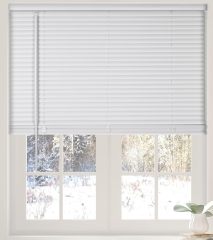








These 1" slat venetian blinds are made for rooms that see heavy daily use — offices, clinics, classrooms, apartment blocks and family homes — where a window covering has to look neat, take constant handling and stay easy to clean. The panel runs on an aluminium headrail with horizontal slats, a matching bottom rail and a tilt wand on the left, and the lift is spring-loaded, so the blind is raised by hand from the bottom rail and stays exactly where you leave it.
With no pull cord, there is nothing hanging at child height and nothing to re-thread when a cord frays. That single change is why these cordless mini blinds suit public buildings, rented flats and any window a maintenance team has to keep working without callbacks.
As a window blinds supplier we deliver them cut to the sizes on your window schedule, so a fitter hangs them rather than trimming them on site.
| Slat width | 1 in |
| Slat material | Aluminium with a PVC coating |
| Tilt range | 0–105° |
| Lift system | Cordless, spring-loaded |
| Controls | Tilt wand at the left of the headrail; hand lift on the bottom rail |
| Headrail | Aluminium |
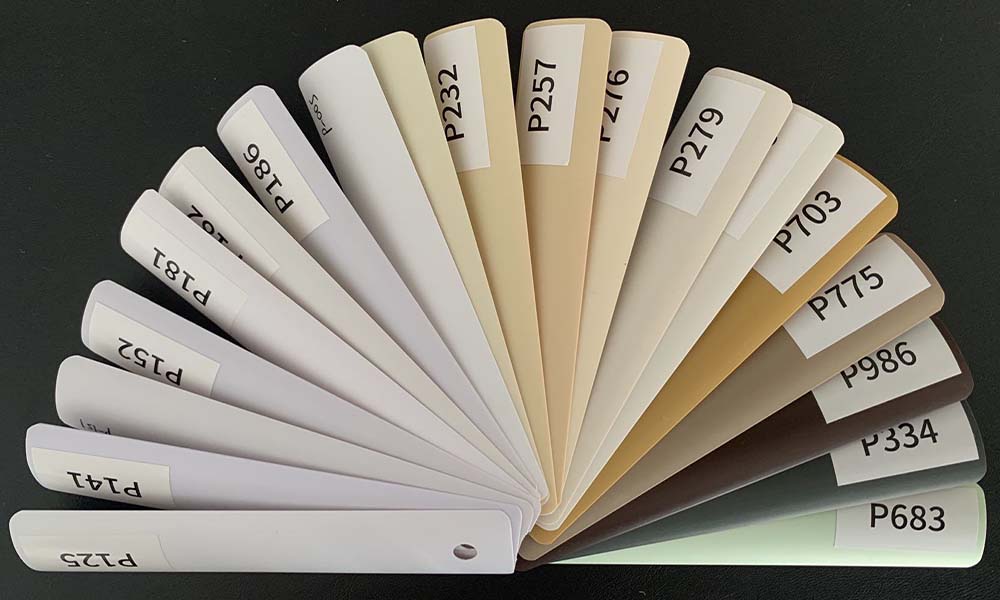
| Standard colours | White, grey, beige |
| Mounting | Inside the recess or on the face of the frame |
| Hardware included | Mounting brackets, bracket covers, tilt wand |
| Sizing | Made to measure to your window schedule |
| Supply | OEM and private-label production |
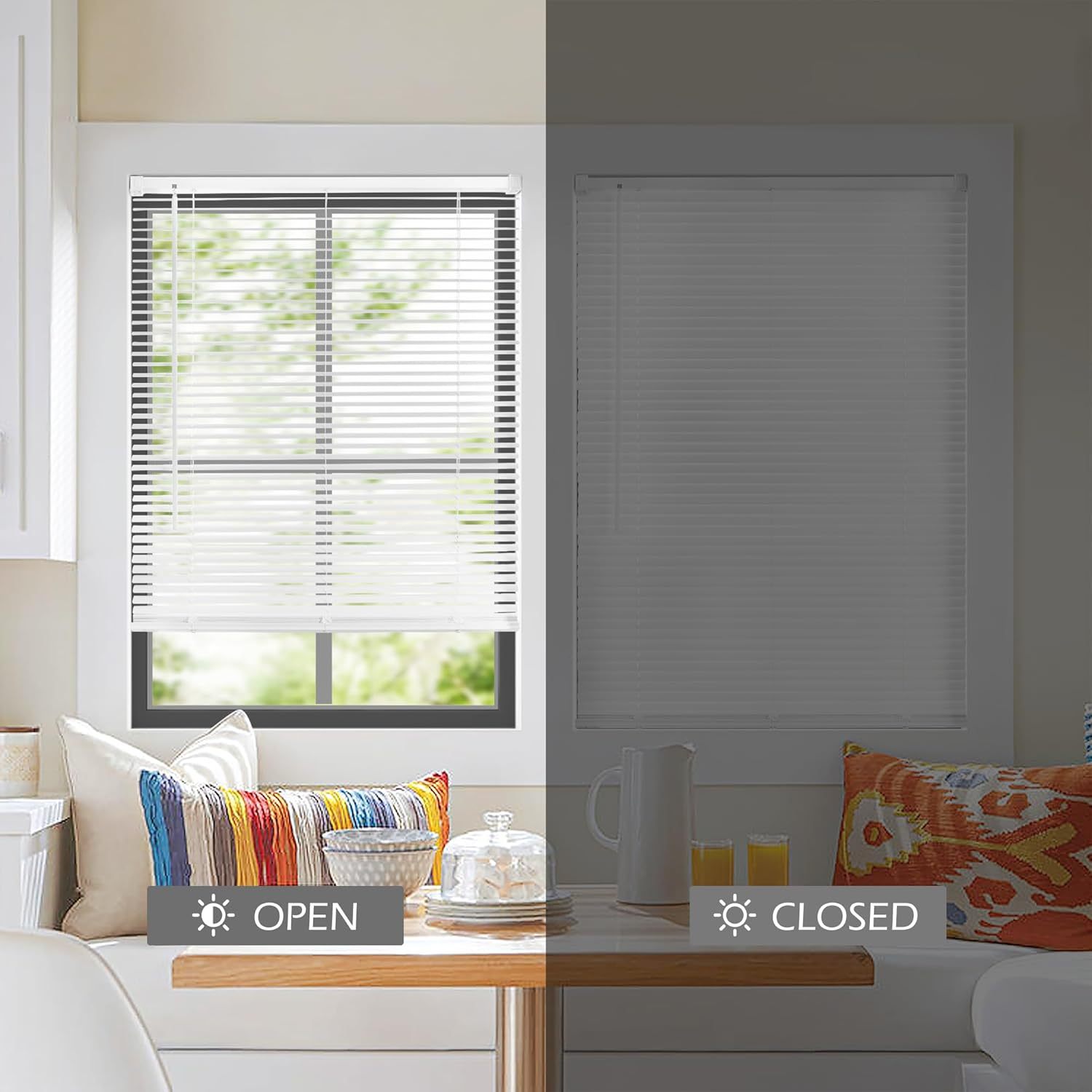
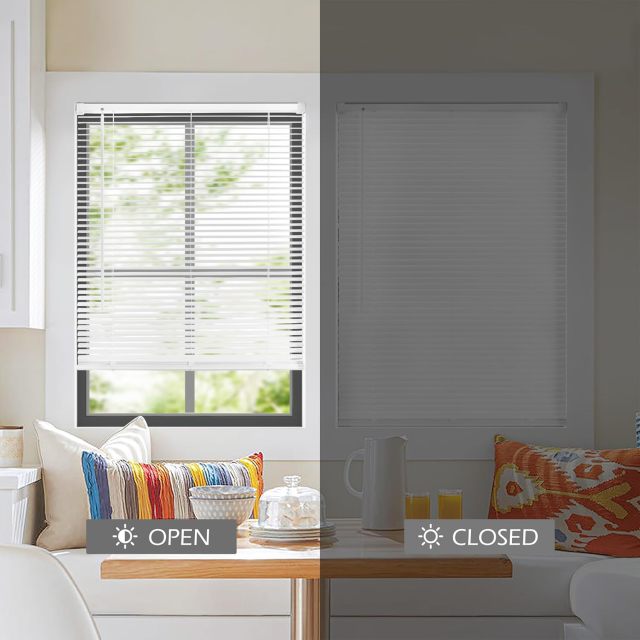
Venetian blinds control light in two ways at once. Tilting the slats changes the angle of the daylight coming in: part-tilt gives a soft, diffused wash that keeps a room bright while cutting the direct glare that bounces off screens and glossy floors. Closing the slats fully shuts out the view from outside, which is what a ground-floor office or a street-facing bedroom actually needs. Raising the whole panel clears the glass completely.
The slat itself is aluminium with a PVC coating, which is why the blind holds up where a timber or fabric product would struggle. The coating seals the metal, so condensation on a bathroom window does not lead to rust creeping along a slat edge, and the flat surface wipes clean instead of absorbing marks. The finish is checked for moisture and wear resistance before a run is released, and the slats are rigid enough not to bow when the blind is fully lowered.
One limit is worth stating plainly: this is a light-control blind, not a blackout blind. Even with the slats closed, a thin line of light passes between the slats and around the edges of the panel. For a room that must go completely dark — a sleep study room, a projection space — plan a blackout layer behind it. What you get in exchange is daylight on your terms at any hour, without raising the blind to get it.
Measuring for venetian blinds takes ten minutes and saves a return visit. Take the width in three places — at the top of the recess, at the middle and just above the sill — and work to the narrowest figure, because few recesses are truly square. For an inside mount, measure the drop from the underside of the recess head to the sill and check that the recess is deep enough for the slats to tilt without catching the frame or a window handle. For an outside mount, measure the frame and add an overlap on each side so the panel covers the edges of the glass; this is the usual choice where the window opens inward or the recess is shallow.
Custom blinds are cut to the opening, so narrow, tall and irregular windows are handled the same way as a standard one: send the width and drop per window and the slats, headrail and bottom rail are cut to match. Note the mount type for each opening, flag any window with a handle, a trickle vent or a deep reveal, and send the whole schedule in one list. Grouping the openings in one order keeps the slat line consistent across a façade and avoids two batches that sit side by side and do not quite match.
Dust is the main thing that dulls mini blinds for windows in a busy building, and it takes a minute per window. A microfiber duster or a vacuum brush on its lowest setting once a week keeps the slats clean; for finger marks or kitchen grease, wring out a cloth in warm water with a little washing-up liquid and wipe along each slat rather than across the ladder tapes, then dry with a second cloth so no water sits in the headrail. Skip solvents, scouring pads and spray cleaners aimed directly at the mechanism.
Day to day, the habits matter more than the products. Do not hang anything on the bottom rail, and lower the blind by hand from the rail rather than pulling a slat. Check the brackets once a year and re-seat the headrail if it has shifted; the spring lift needs no oiling and no adjustment. If the lift starts to feel slack or the tilt stiffens, raise it with your sales contact before forcing it, because a strained spring is the one part that is not a field fix. Buildings near the coast or in constant humidity need the same routine more often, not a different one.
| Packing options | Pet box or mail box, chosen to suit the order |
| Packing standard | One blind per box, with its hardware bagged alongside |
| Sea freight | The usual route for large and full-container orders |
| Air freight | For urgent shipments and higher-value orders |
| Express courier | For samples and small trial orders |
| Export handling | One-stop export service |
| Production and delivery | Generally 7 to 15 days, depending on order complexity and customization |
| Rush scheduling | Ask your sales contact whether a rush slot fits your installation date |
| Bulk volumes | Confirm the current lead time for wholesale window blinds quantities before you fix a site date |
| Order details | Confirm minimum order terms, colour approval and delivery dates with your sales contact before the cut sheet is released |
Meijia Window Decoration has been manufacturing window coverings since 2005 and today runs a 53,000 m² factory with around 200 staff, plus a second production base in Anhui with 12 lines, backed by a database of more than 3,000 qualified suppliers. We supply builders, e-commerce sellers and supermarkets across Europe, North and South America, the Middle East and Asia, with OEM and private-label production, minor customisation and one-stop export handling under 100% quality control. Both plants hold BSCI social responsibility, ISO 9001 and ISO 14001 certification.
These aluminum mini blinds are built from aluminium slats with a PVC coating, carried on an aluminium headrail with a matching bottom rail. The coating is what keeps the metal from rusting in humid rooms and lets the slats wipe clean, while the lift is a spring unit housed inside the headrail and the tilt wand hooks onto the same headrail. Because the panel is metal and coated slat from end to end, there is no fabric to hold cooking smells or trap dust the way a soft shade does.
Yes. Venetian blinds are cut to the opening, so narrow, tall and irregular windows are treated the same as a standard one — you send the width and drop for each window with the mount type noted, and the slats and rails are cut to match. Colour can be customized as well, with white, grey and beige as the standard slat colours. Confirm any custom match against a physical sample before the run is cut, and include handles, vents and deep reveals in the measurements so nothing interferes with the tilt.
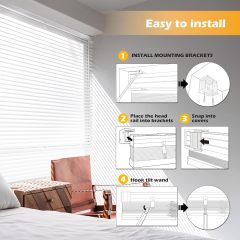
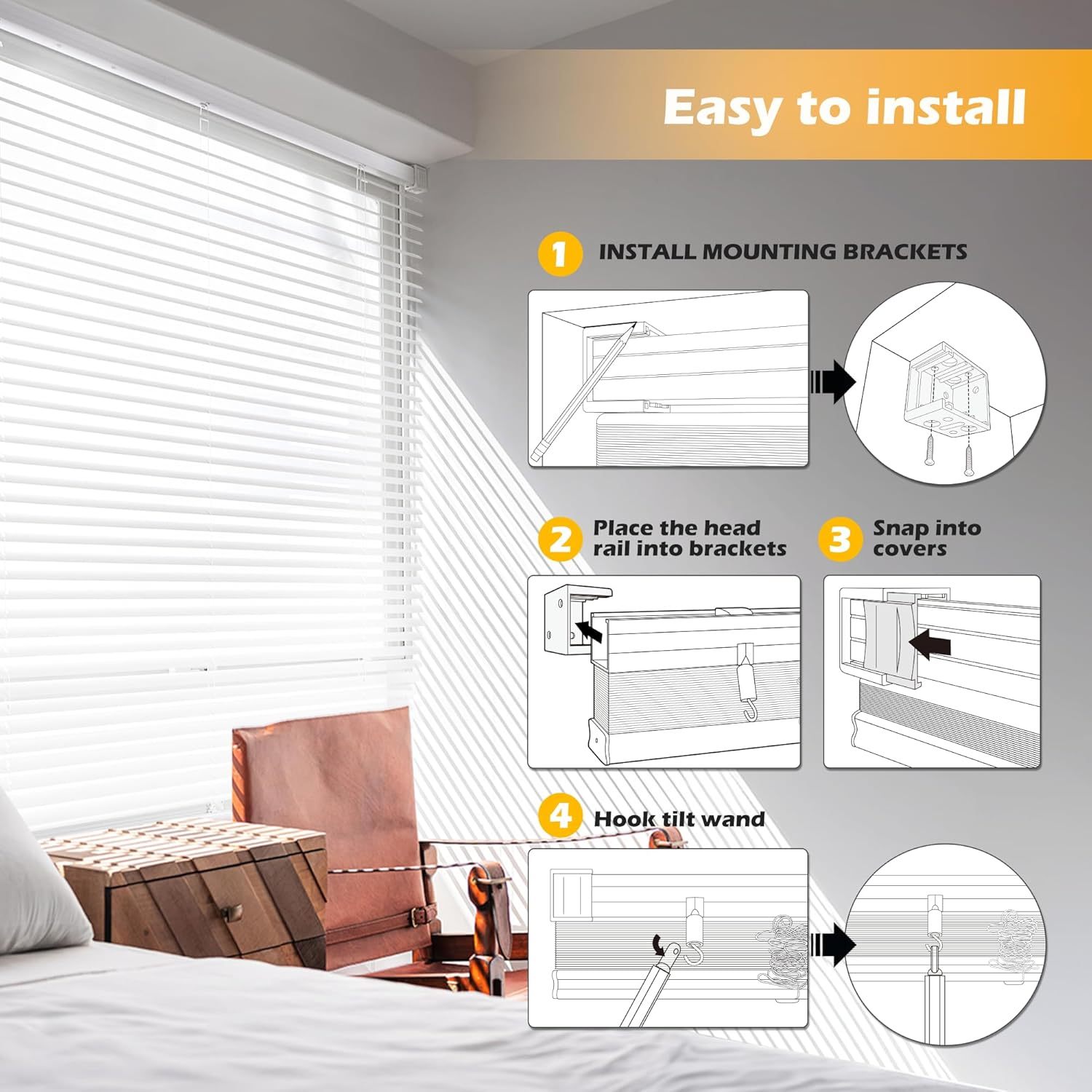
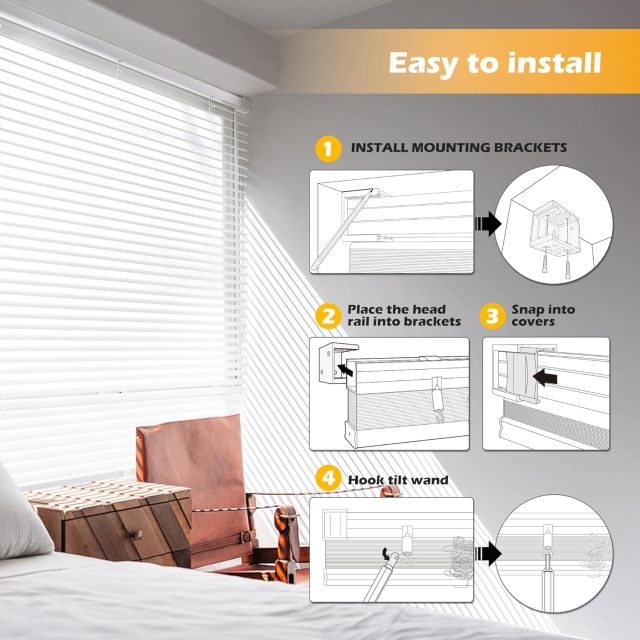
The blind hangs on mounting brackets fixed to the window frame or the wall — inside the recess or on the face of the frame — and the headrail presses into those brackets with snap-on covers hiding the fixings. The tilt wand hooks onto the left end of the headrail, and the spring lift needs nothing more than one or two runs up and down to seat it. An installer with a drill and a level can fit a window in a few minutes, and the same procedure works on a domestic window and along a commercial façade.
They do. The slats hold any tilt between fully open and fully closed, so a row can be set for morning sun and left there, and the lift holds the panel wherever you release it because the spring is balanced against the panel weight during assembly. On these mini blinds the only parts you handle are the bottom rail and the wand, which is also why there is less to wear out than on a corded mechanism.
Wipe, don't scrub. A microfiber duster or a vacuum brush on low covers weekly upkeep on mini blinds for windows in most rooms; for marks, wring out a cloth in warm water with a little washing-up liquid and wipe along each slat, then dry with a second cloth so no water sits in the headrail. Keep solvents, scouring pads and spray cleaners away from the mechanism, and never hang anything on the bottom rail while cleaning.
White, grey and beige are the standard slat colours, and custom colours are possible on custom blinds orders where a project needs a specific tone. Send a physical sample or a finish reference and confirm the match on a signed swatch before the run is cut — screens and printed references shift colour, so a physical sample is the only reliable check, especially when the same colour has to run across several phases of a building.