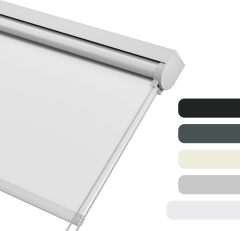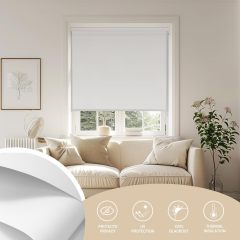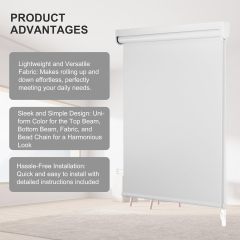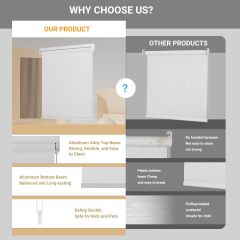
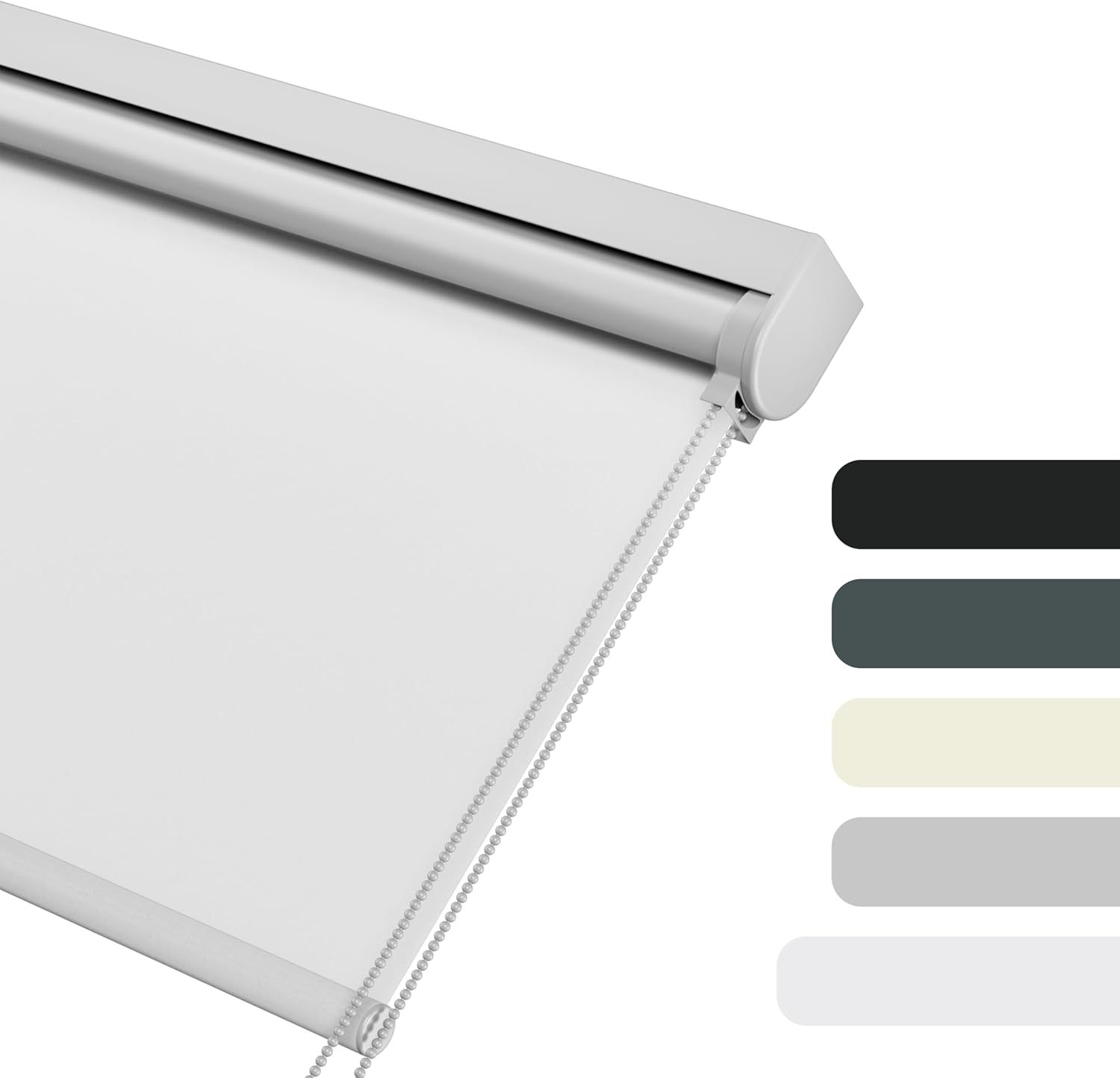
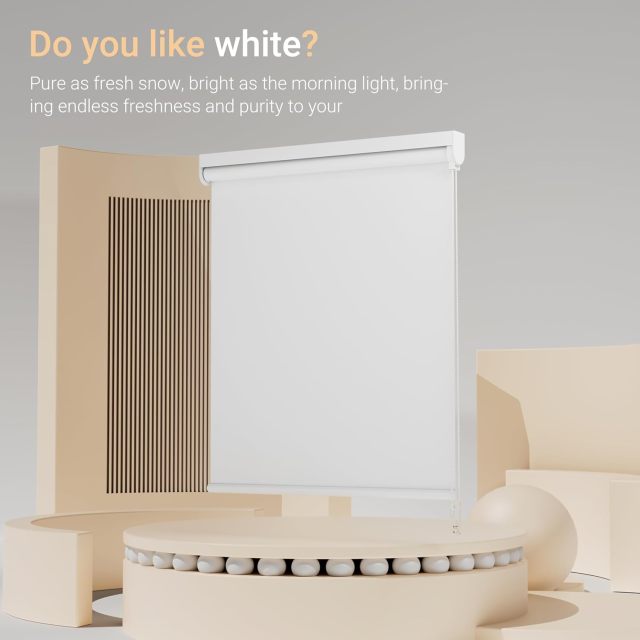
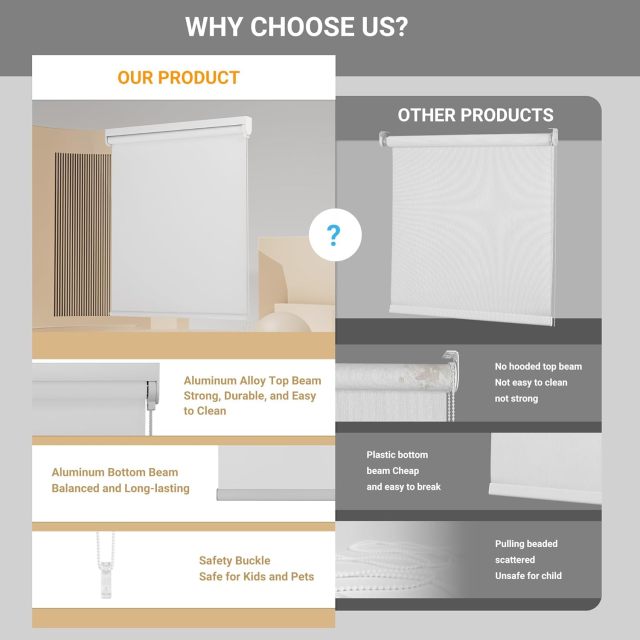
| top design | aluminum rail 28-38 mm top rail |
| size | 80*250 100*250 120*250 match many kinds of window |
| fabric desingn | blackout daylight design |
| MOQ | 10PCS for normally size |
| Packing | carton with pp bag or pet box |
| Sample | One pcs for free |
The sliding-door roller is the tall member of the range: one panel of fabric that pulls down over the full height of a glass door or a wide kitchen window and rolls back into a slim aluminium headrail when you want the view back. Standard sizes are 80 × 250, 100 × 250 and 120 × 250 cm, which match many of the openings that come up in renovation and fit-out work; anything outside those measurements is cut as custom roller blinds.
It is what people fit where a curtain would be in the way. On a sliding door the fabric hangs flat against the glass rather than bunching at one side, so the panel keeps running past it and the floor track stays clear. In a kitchen, most kitchen blinds of this shape are built in blackout or daylight fabric rather than a heavy decorative weave, because the panel sits close to the sink, the hob and the steam.
Fit-out contractors order them by the opening for apartment and hotel refurbishment, where the same blind has to repeat across dozens of windows — the repeat run roller shades manufacturers are set up for. Distributors and e-commerce sellers stock the three standard sizes for customers who want a tall blind without waiting on a measuring visit.
It is not a slatted product. There is nothing to tilt and no blades to align — the only adjustment is how far down the panel sits, which is why it suits a doorway that people walk through rather than a window people look out of all day.
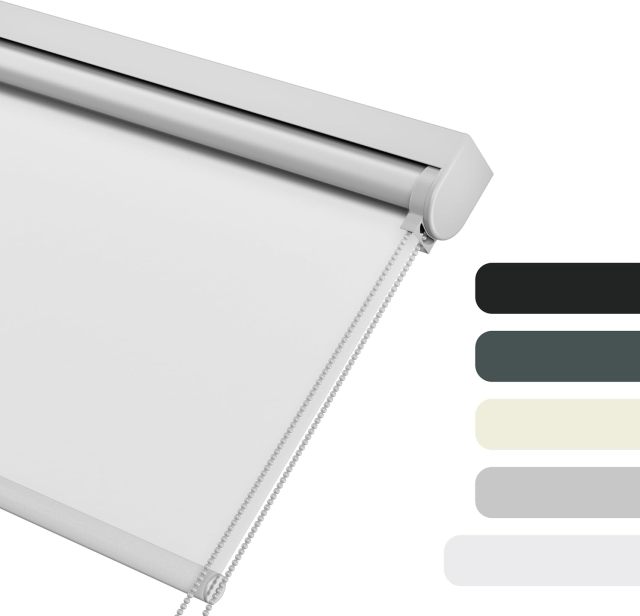
| Top rail | Aluminium, 28–38 mm |
| Standard sizes | 80 × 250 cm, 100 × 250 cm, 120 × 250 cm (W × H) |
| Fabric | Blackout or daylight (light-filtering) |
| Control | Side beaded chain loop on a clutch |
| Colours | White, grey, black, beige, custom colour |
| Mounting | Inside the reveal, or flush to the frame or ceiling |
| Standard drop | Up to 250 cm |
| Typical openings | Sliding glass doors, patio doors, kitchen and bathroom windows, wide residential glazing |
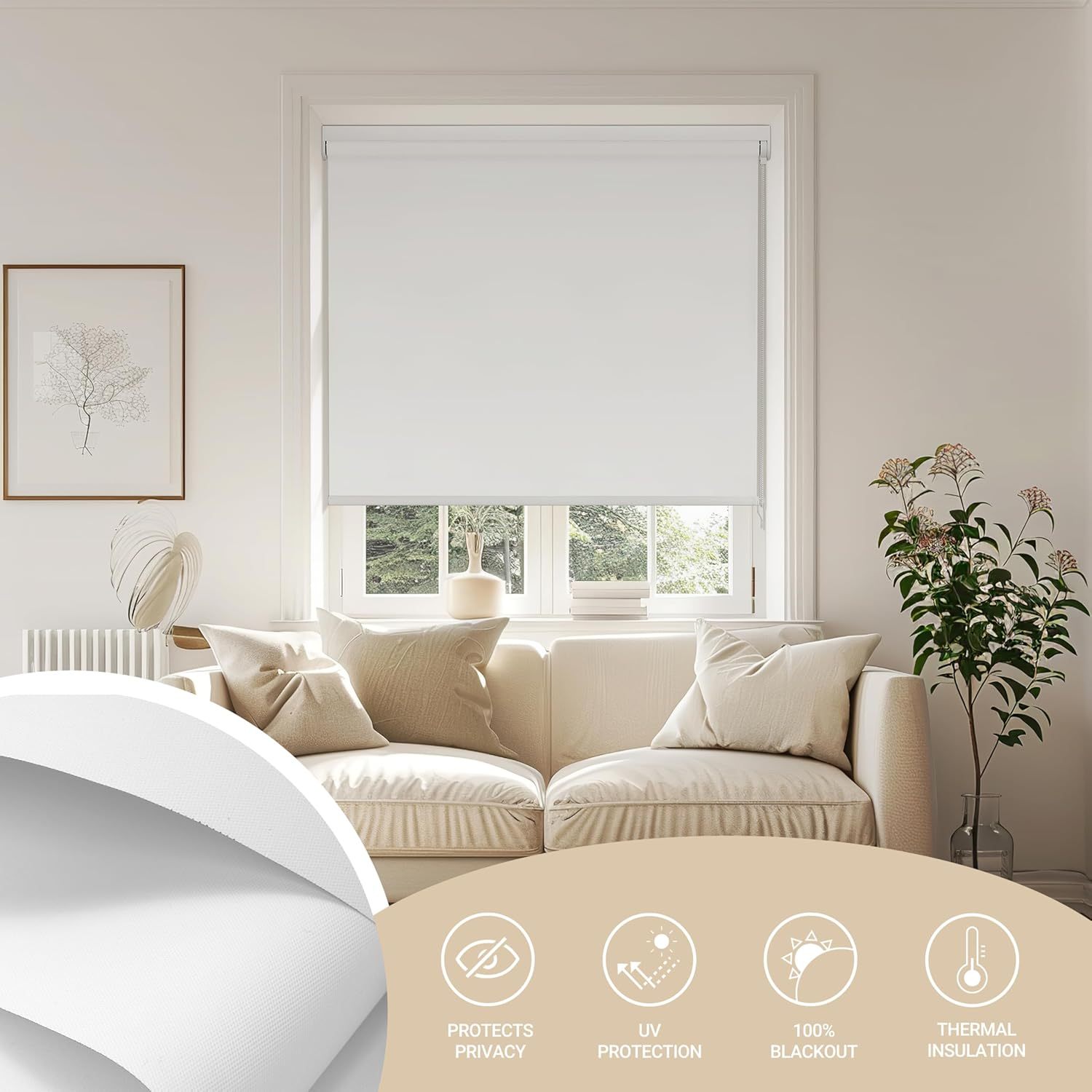
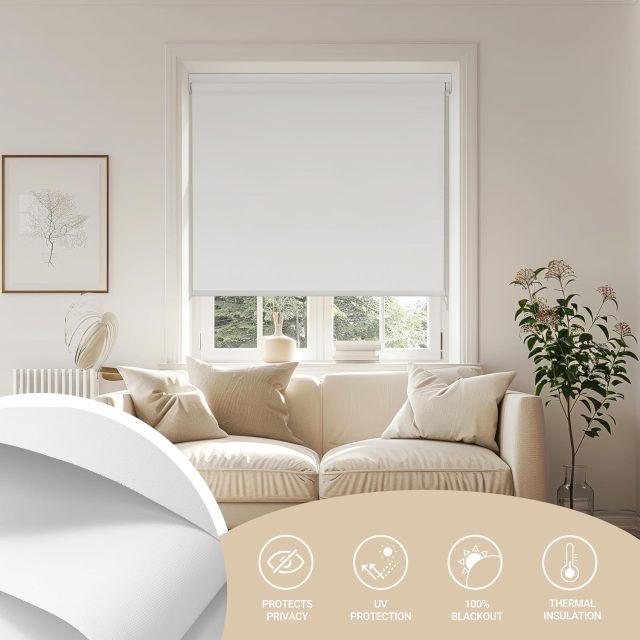
Blackout is where most buyers start. The fabric is high-density and light-impermeable, usually with a blackout lining behind it, and it takes out up to 99% of the light coming through the glass. In a room that has to go properly dark — a bedroom, a hotel room, a screening wall — that is the difference between a blind that dims the room and one that actually darkens it. These are the blackout roller blinds in the range, and they are the version we quote most often for bedrooms and for street-facing doors.
On a sliding door the effect is harder to miss than on a small window. A full-height sheet of glass lets in a lot of low afternoon sun, and that is the light that lands on a television, a monitor or a dining table. Pulling the panel down takes the glare out without turning the room into a cave, because it can be stopped at any height and the top of the door left clear.
The daylight fabric does the opposite job. It filters rather than blocks: the room stays bright and you keep a sense of the sky and the garden, but the hard edge comes off the light and the heat that arrives with it. Over a kitchen worktop that is usually the better choice in summer; in a room you sleep in, it usually is not.
Most roller shades in this range come down to one question: does the room need to go dark, or does it need to lose the glare? Answer that and the fabric choice follows.
One practical note about edges. Even a full blackout fabric loses a little light around the sides and over the top of the roll, because the panel has to run in a rail. Mounting inside the reveal gives the neatest finish; mounting on the face of the frame, with the fabric a little wider than the opening, closes most of that gap. Tell us which you plan to do and we will cut to suit.
If you are working to a light level for a specific room — a nursery, a guest room, a screening room — say so when you order. Fabric, mounting and the size of the overlap all change the result, and it is far easier to set that at quotation stage than on site.
A roller takes its space at the top, not in the room. The fabric rolls around the tube inside the headrail, so when the blind is up there is nothing hanging at the side of the window, nothing stacked on the floor and nothing projecting into the walkway. A curtain needs room to gather and a track to gather it on; this mechanism sits inside a rail of 28–38 mm and disappears into the top of the opening.
That matters most in the two places the blind is usually specified. In a kitchen it keeps the sill and the worktop completely clear — no fabric hanging into the sink, no hem to catch on a tap — which is the main reason kitchen blinds of this shape are chosen over a curtain in the first place. Over a sliding door the panel runs past the blind without touching it, so the doorway stays usable even when the fabric is part way down, and the floor track stays clear of hems.
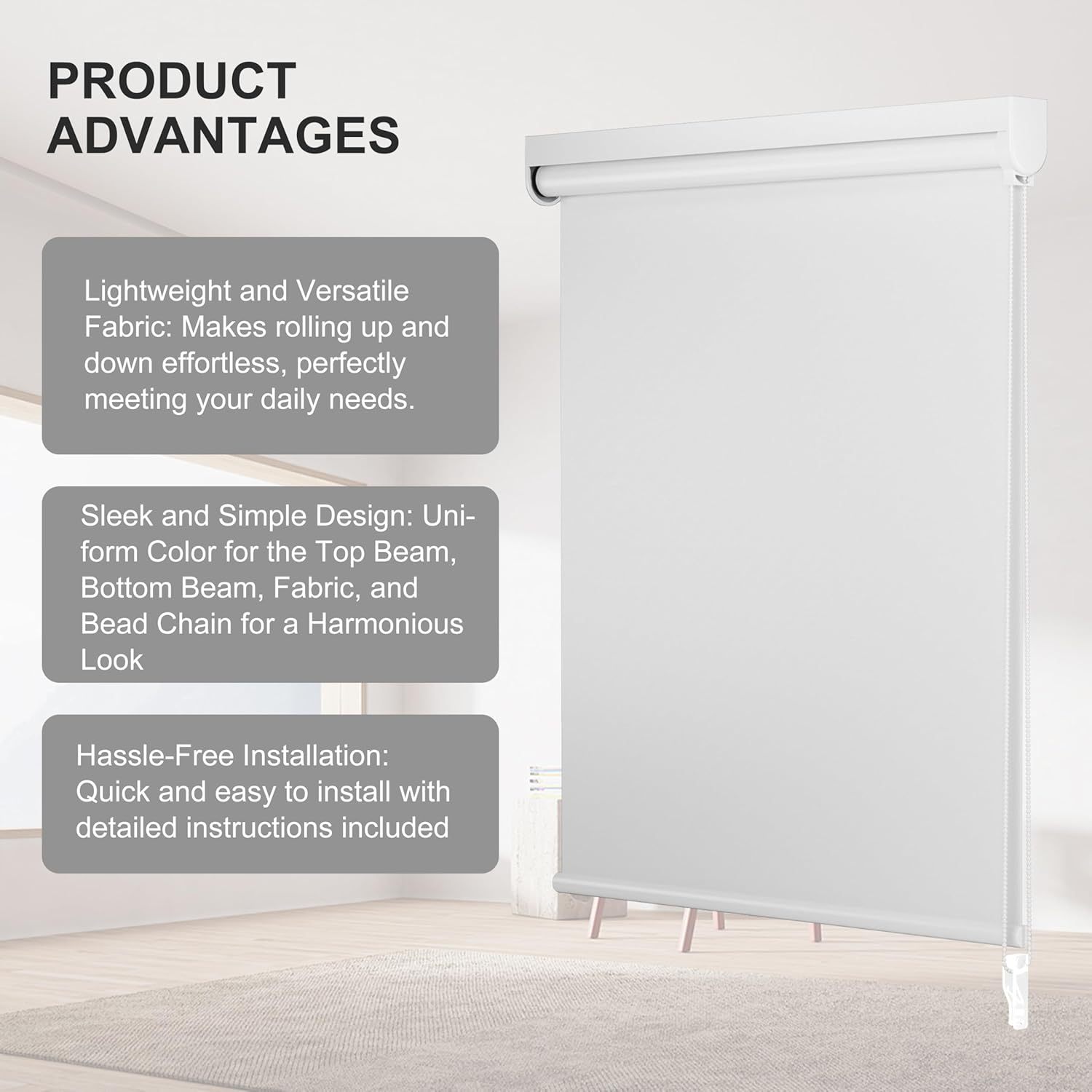
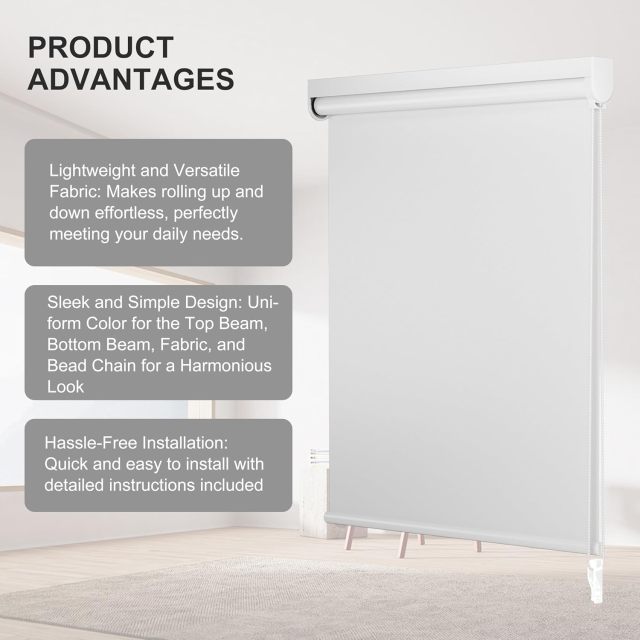
The look is deliberately plain. Because the fabric mounts flush to the frame or the ceiling, the blind reads as part of the window rather than an addition to it. That is why roller shades are so often used where a room has to stay quiet and uncluttered, and why the same blind can repeat across a floor of apartments without the interiors starting to feel busy.
It also solves awkward openings: a doorway with a radiator under it, a window behind a sofa, a galley kitchen where a curtain would brush the units. All of these are places where a covering that stays within the depth of the frame works and a curtain does not.
For a fitted look, mount inside the reveal so the fabric sits level with the wall. For maximum coverage, mount on the face of the frame or the ceiling and let the fabric overlap the opening. Either way the headrail reads as a slim line rather than a box, and the fabric can be matched to the frame.
The fabric is opaque, which is a different thing from dark. When the blind is down nothing can be seen through it, day or night, so a ground-floor sliding door or a kitchen window onto a shared courtyard stops being a window you have to think about. Because the panel covers the full height in one piece, there is no gap to close at the side and no gap to leave open for light.
Heat works the same way. A full-height sheet of glass is the weakest point in a room's insulation, and a blind pulled down in front of it acts as a layer between the glass and the room: it takes the edge off the heat coming in on a summer afternoon and slows the warmth going out on a winter night. The heavier the fabric and the closer the blind sits to the glass, the more difference you notice.
Both benefits depend on how the blind is used, and this is where most people get it wrong. Leaving it fully down on a bright winter day keeps out sun you actually want; leaving it fully up on a summer afternoon lets the heat load the room before you think about closing it. Closing before the sun hits the glass works far better than closing afterwards.
In a kitchen, running roller window blinds a little short of the sill rather than hard down lets the room breathe while keeping the worktop and the garden out of direct view. On a very cold morning that same small gap lets air move behind the fabric and keeps condensation on the glass rather than on the panel.
One thing to be clear about: this is a fabric layer, not a rated insulating panel. It measurably improves comfort and glare in the room, but it is not a substitute for better glazing, and we would not suggest otherwise. If you are specifying roller shades for an energy-led project, tell us the room and the glazing and we will say plainly what the blind will and will not do.
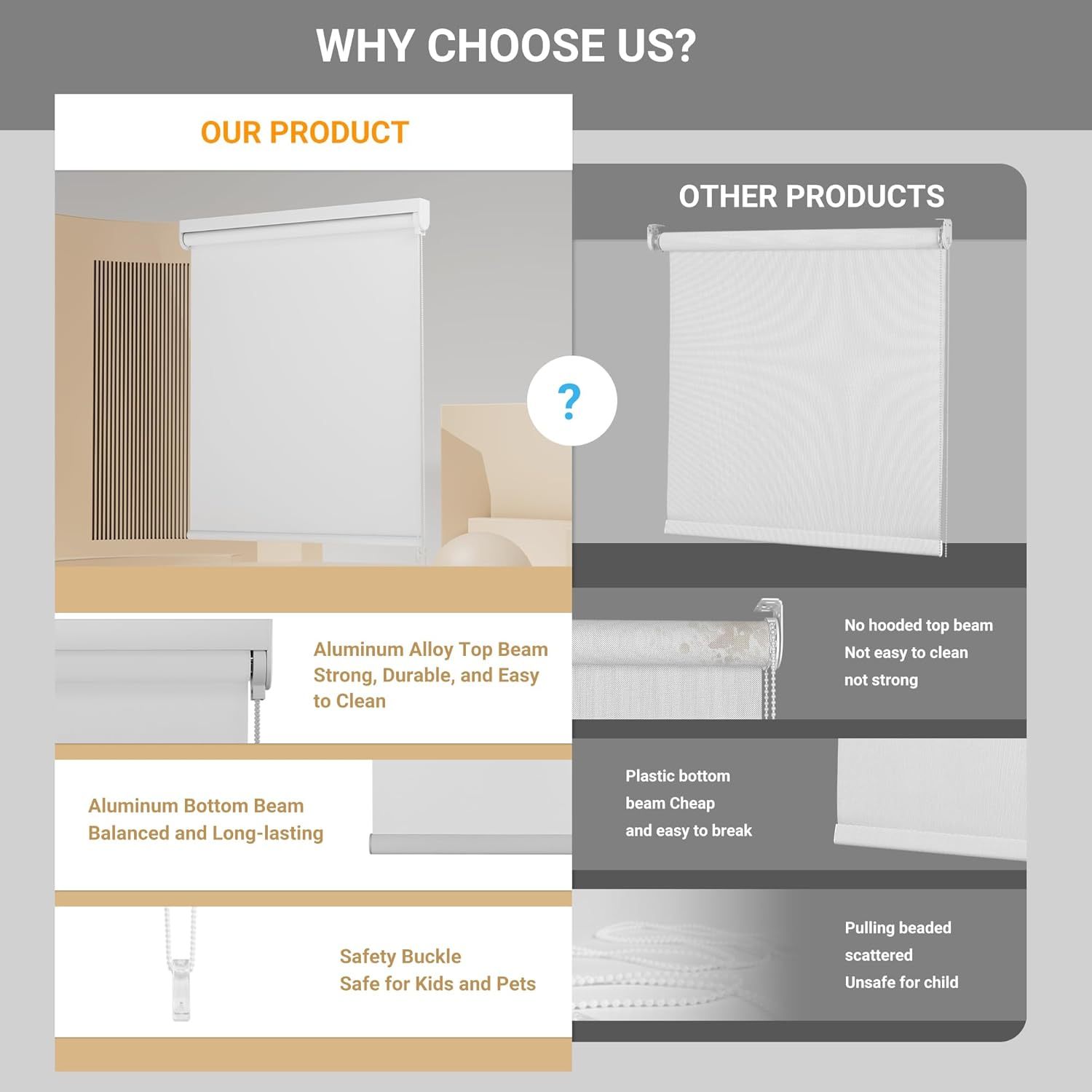
On a blind this tall, the chain loop is the part to think about. The beaded chain runs on a breakaway connector: if a child or a pet catches the loop and pulls hard, the connector separates and lets go instead of holding. That is the standard arrangement on a corded blind, and it is the reason the loop should always be kept short and tied off above the reach of small children.
If the room is used by children, by pets, or by anyone who might not judge the risk, the answer is not a longer chain — it is a different mechanism. The wider range includes cordless and motorised versions, so if the door leads to a garden where children play, say so at quotation stage and we will point you at the right one rather than fitting a corded blind and hoping.
The rest of the hardware is chosen for stability. The fabric rolls on a sturdy aluminium tube, which is what stops a wide blind sagging in the middle or dropping on its own when it is left part way down. The clutch holds the fabric at the height you set it, without creeping, and the rail keeps the roll straight across the width.
For contract work, consistency is the safety issue nobody talks about. As roller shades manufacturers we keep the clutch, chain and rail hardware the same from set to set, so the fourth floor of an apartment building operates exactly like the first and maintenance staff only need to know one mechanism. On a wholesale roller shades programme delivered in phases, ask your sales contact to confirm the same hardware will still be available for the later phases.
One installation point that affects how safe the blind feels in use: fix the brackets into something solid. A blind that shifts in its brackets works loose over a season, and no clutch design compensates for a fixing that moves.
Meijia Window Decoration has been manufacturing window coverings since 2005 and today runs a 53,000 m² factory with around 200 staff, plus a second production base in Anhui with 12 lines, backed by a database of more than 3,000 qualified suppliers. We supply builders, e-commerce sellers and supermarkets across Europe, North and South America, the Middle East and Asia, with OEM and private-label production, minor customisation and one-stop export handling under 100% quality control. Both plants hold BSCI social responsibility, ISO 9001 and ISO 14001 certification.
Blackout fabric is high-density and light-impermeable, usually with a blackout lining behind it, and it blocks up to 99% of the light coming through the glass. Daylight fabric filters instead of blocking: the room stays bright and you keep some sense of the sky, but the hard edge comes off the glare. Blackout roller blinds are the usual choice for a bedroom, a hotel room or a screen wall; daylight is the usual choice where the room has to stay usable during the day, which is normally the case over a kitchen worktop. The two read very differently across a full-height door, so compare them side by side if you can.
Measure the width at the top, the middle and the bottom of the opening and take the narrowest figure, because door frames and old reveals are rarely square. Then decide the mounting: inside the reveal, measure the opening itself; outside, measure the frame or wall area you want covered and add the overlap you want at each side. The drop runs from where the headrail will sit down to where you want the fabric to finish — the sill, the floor, or just above a worktop. Send a photo of the opening with your figures and we will check them against the standard sizes before anything is cut.
The fabric rolls on an aluminium tube, which is what keeps a wide panel even across its width. Each set is run up and down by hand before packing and the fabric is checked for the marks that would show as a wave in the roll. On a very wide opening, tell us the layout — how many panels you plan and where the frame mullions fall — and we will size each roller shade so the fabric is properly supported rather than stretched across an opening it was not cut for.
You choose: tell us left or right when you order. The sensible side is the one away from the sliding panel, so the loop does not tangle with the handle, and away from the sink or a tap where it would hang in the way. On roller window blinds with a 250 cm drop the loop is sized so the pull sits comfortably below the headrail rather than at the very top. If the window sits over a deep worktop, send the worktop height as well and we will confirm the chain length works for the person who will actually use it.
Wipe with a damp cloth first, working from the top of the panel downwards so you are not pushing dirt into the roll. Where cooking has left a film, a little mild detergent on the cloth will lift it. Let the fabric dry fully with the blind down before raising it, because rolling a damp panel traps moisture between the layers. For routine dust, a soft brush vacuum attachment once a month saves most of the wiping.
Each set arrives complete: the fabric on the tube, the top rail, the bottom rail and the beaded chain, with fitting instructions. What you fix it into decides the screws and plugs, so tell us whether the wall is masonry, plasterboard or an aluminium door frame and we will confirm the right fixings. A blind that shifts in its brackets will work loose over a season, so that part is worth getting right before the rail goes up.