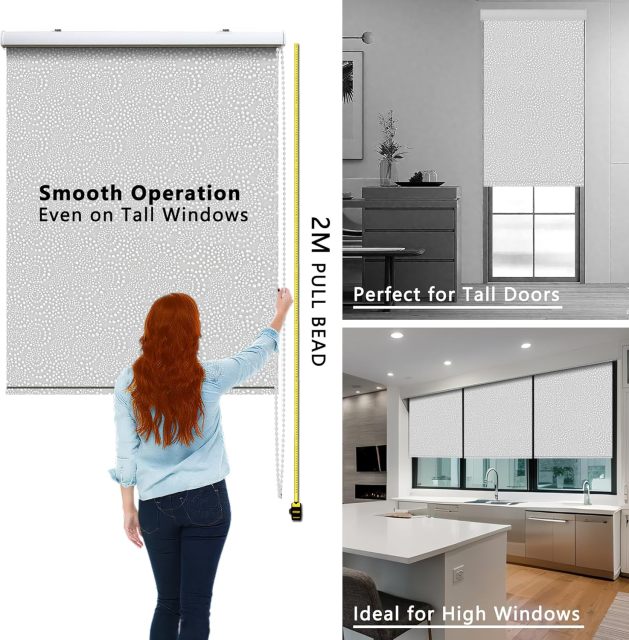
| top design | aluminum rail 28-38 mm top rail |
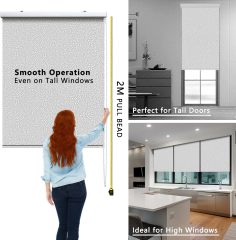
| size | 80*250 100*250 120*250 match many kinds of window |
| fabric desingn | blackout daylight design |
| MOQ | 10PCS for normally size |
| Packing | carton with pp bag or pet box |
| Sample | One pcs for free |
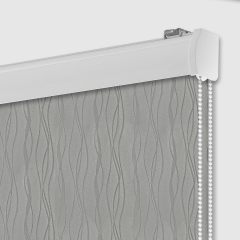
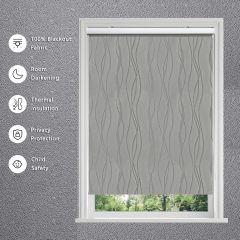
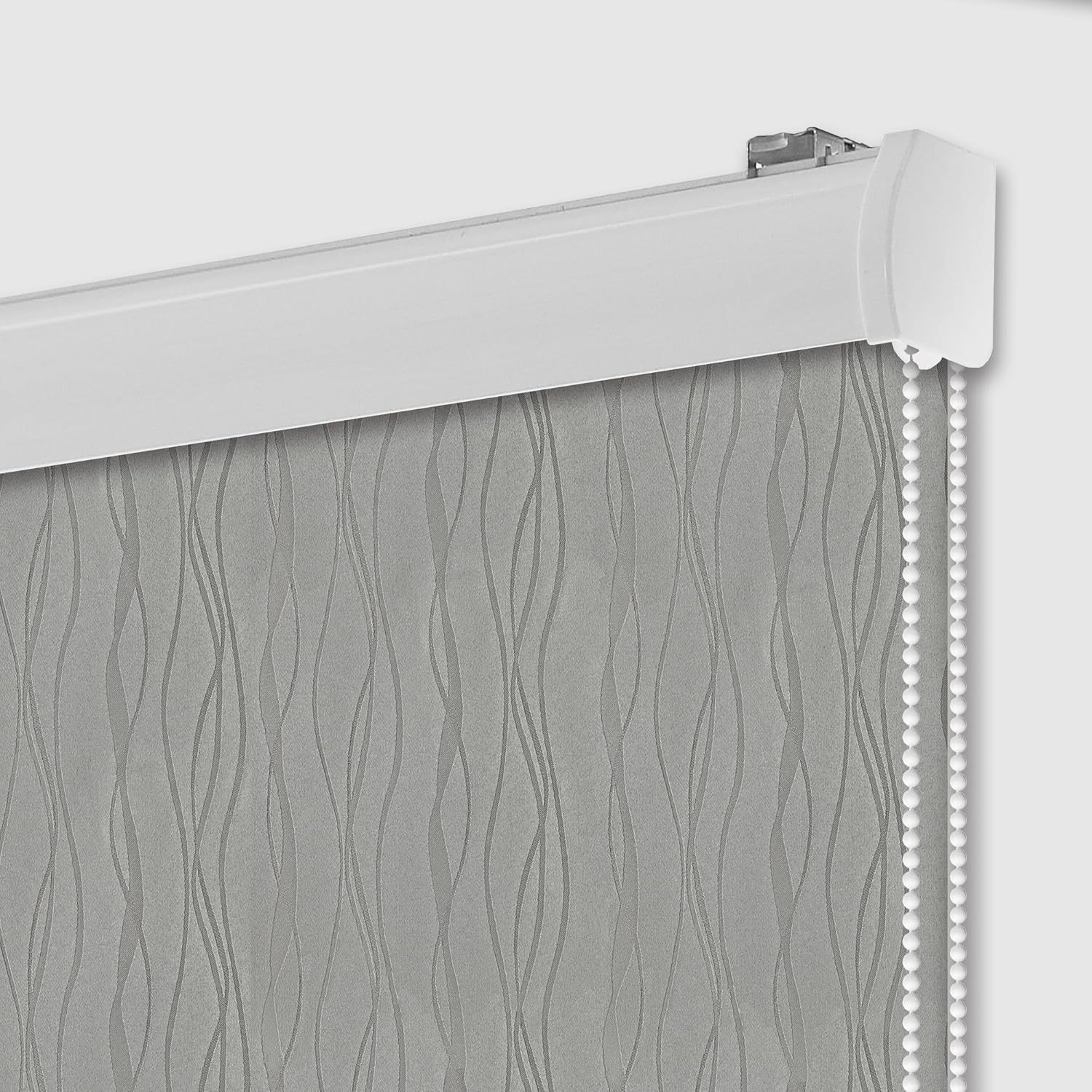
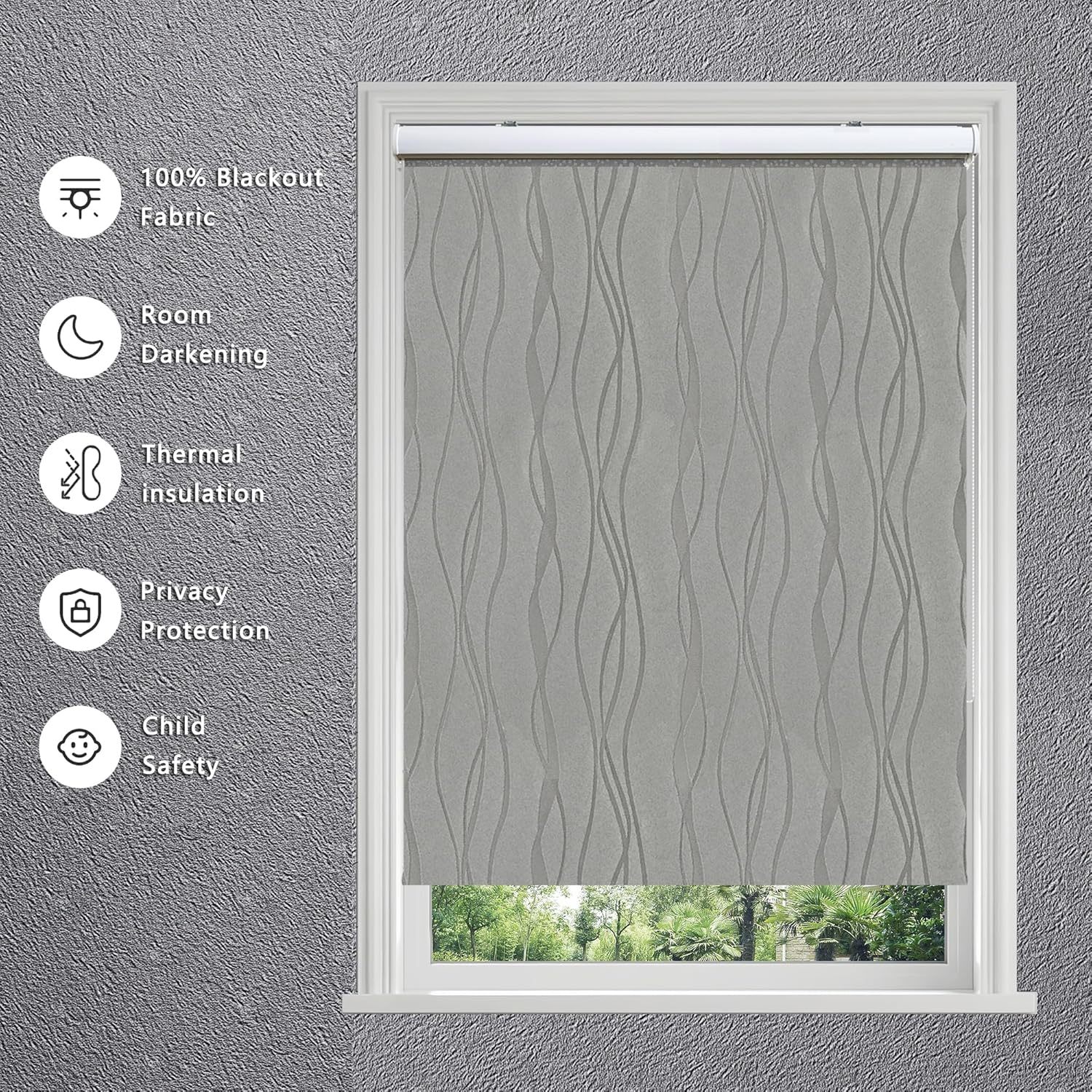
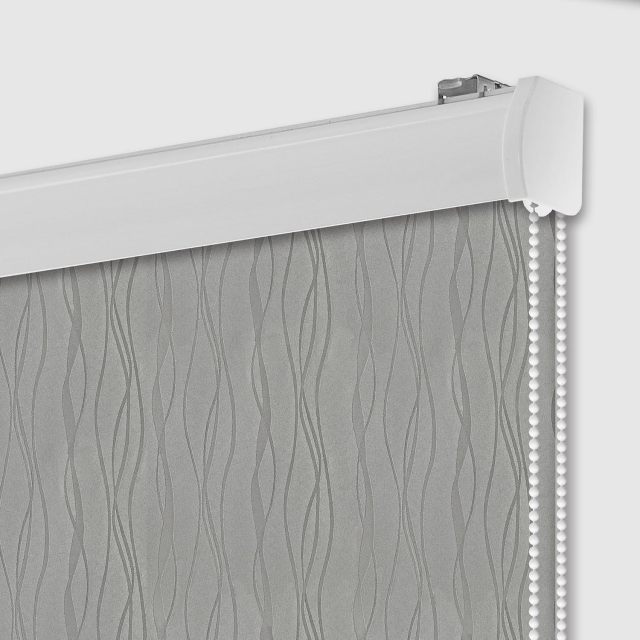
These window roller blinds are built for windows where the finish matters as much as the darkness. The fabric is a high-density grey jacquard with a soft vertical wave running through it, so the colour reads as texture rather than a flat panel of grey, and the head of the blind is a slim aluminium cassette instead of a bare roll of cloth.
We build these as custom roller blinds, cut to the width and drop you supply. The cassette, the roller tube and the fabric all follow the same measurement, so a wide opening gets a proportioned head rather than a standard cassette sitting on a wider roll.
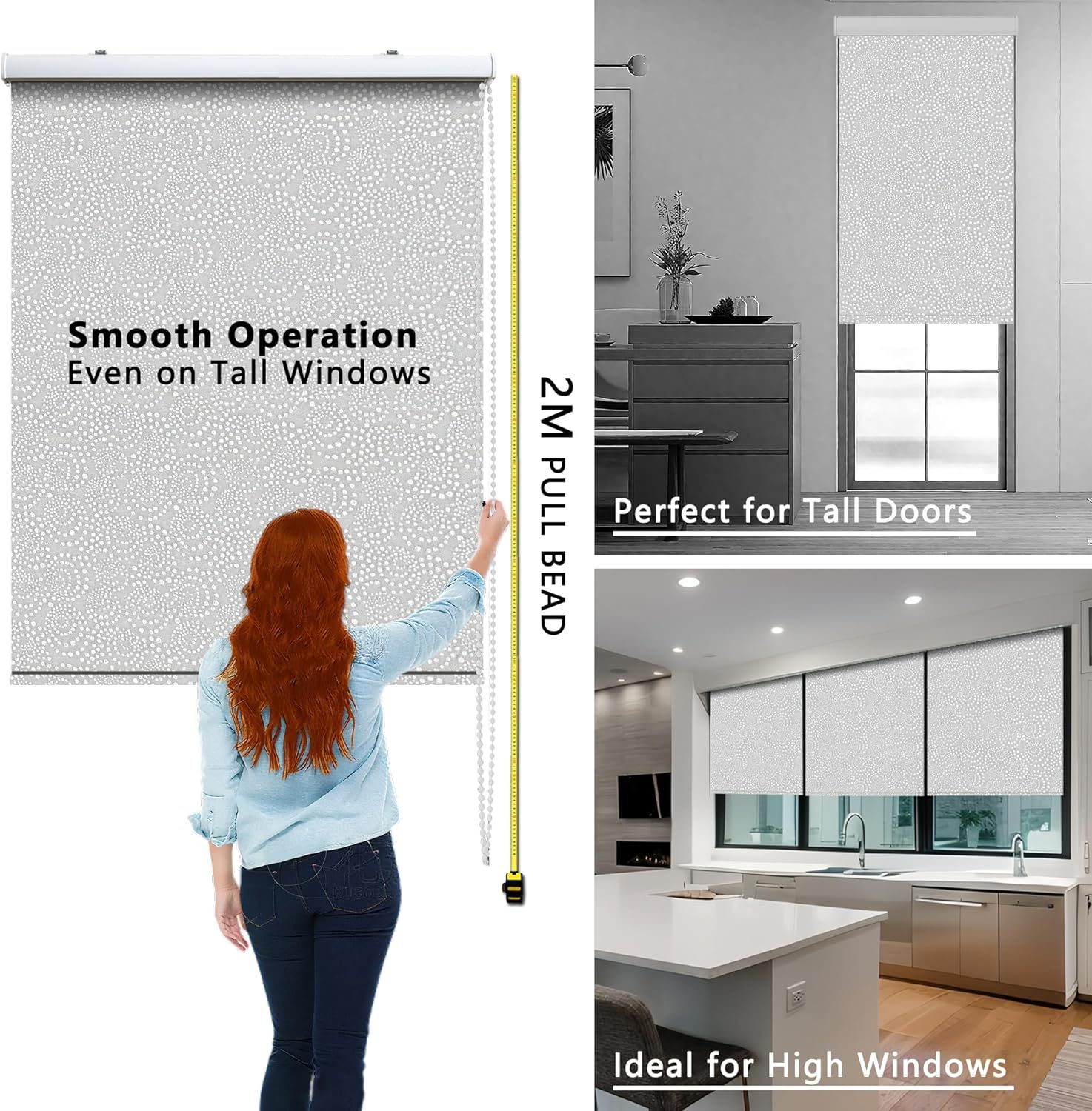
Each unit arrives complete: cassette, brackets, beaded chain and a fabric-wrapped bottom bar in the same grey. One box per window, nothing extra to source for a normal inside-recess or surface-fixed installation.
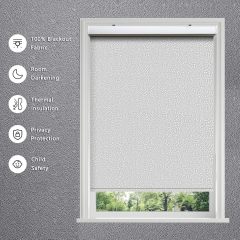
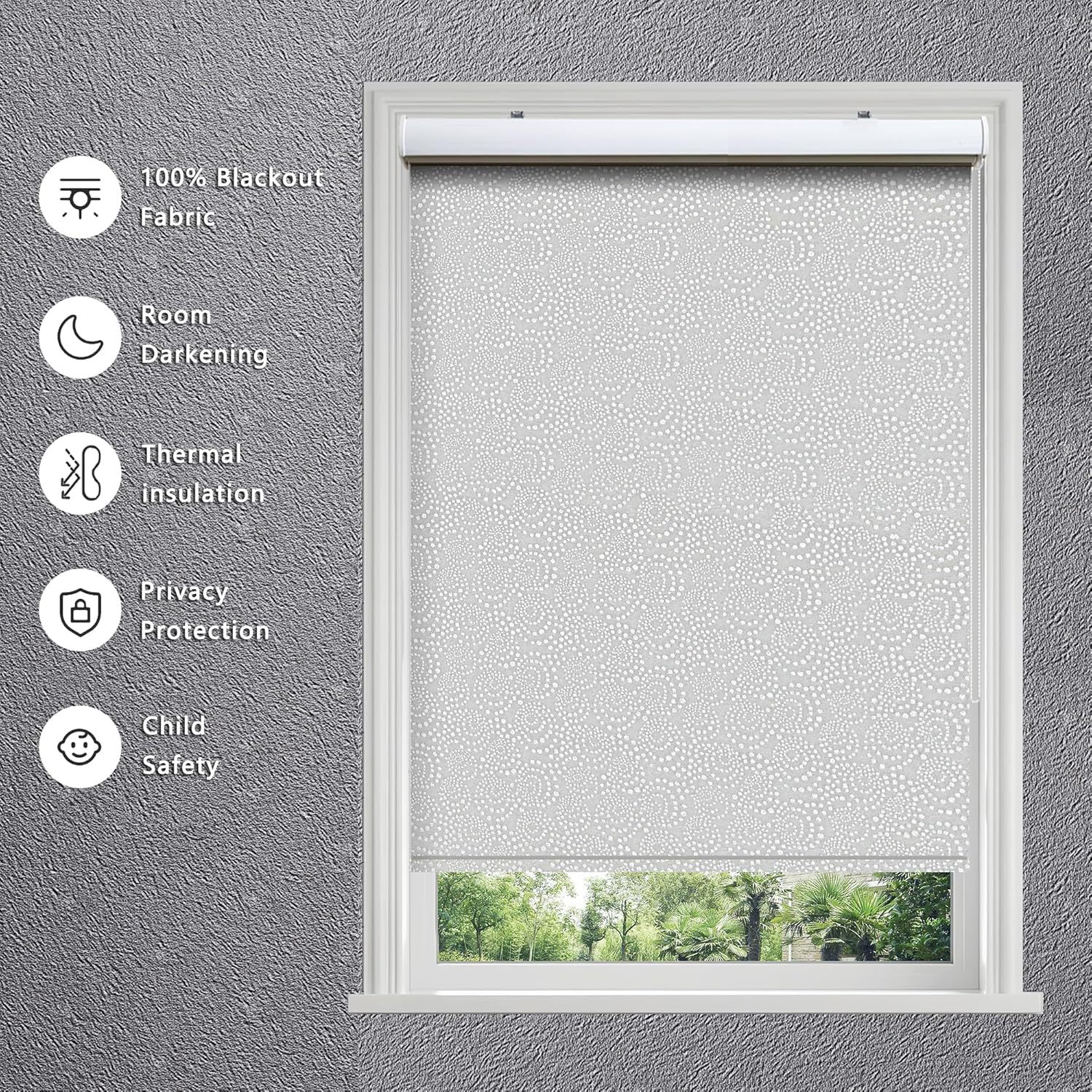
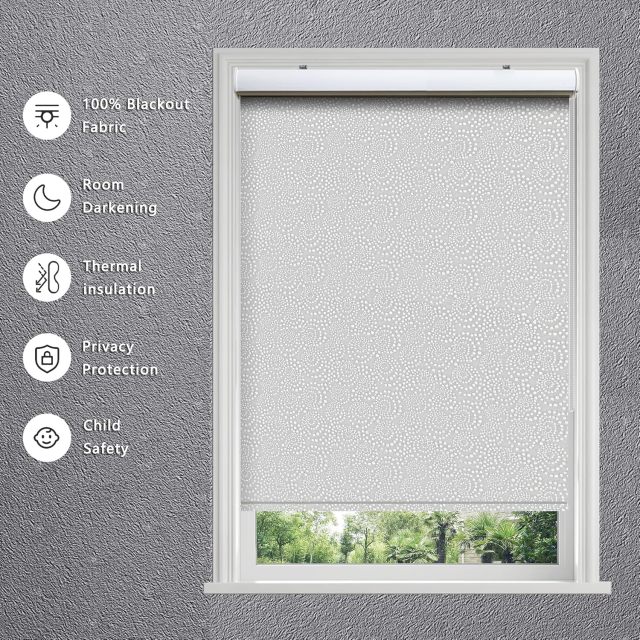
The range also includes a daylight version for buyers who would rather soften a room than darken it — the same cassette and the same grey family, with light filtering roller blinds fabric in place of blackout.
What that adds up to is a blind usually ordered in runs: hotel guest rooms, refurbished apartment blocks, serviced lets and showroom windows, where the same grey has to hold across fifteen windows and still look deliberate. Cassette width and drop are the two figures we confirm before anything is cut.
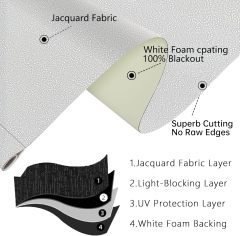
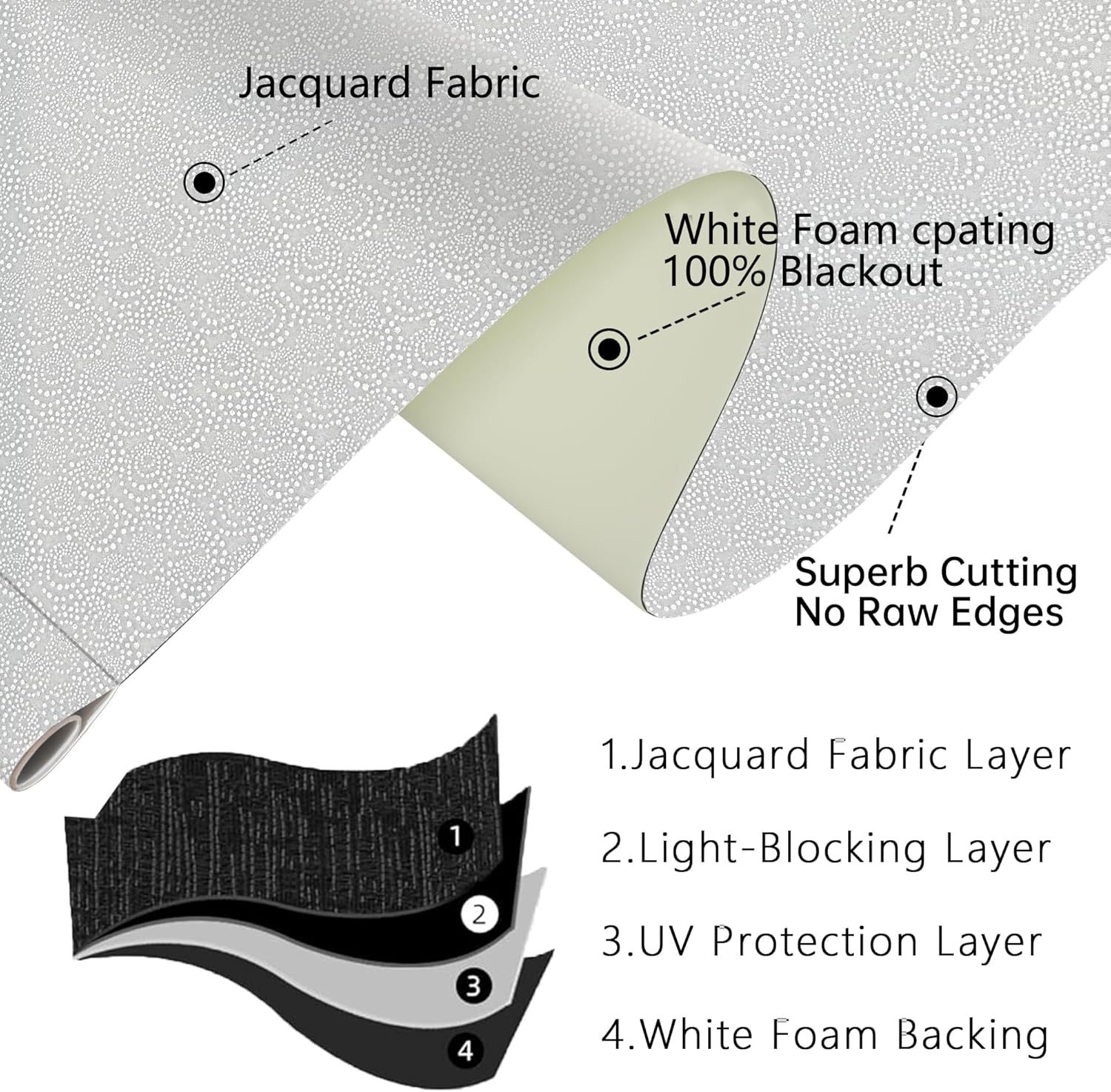
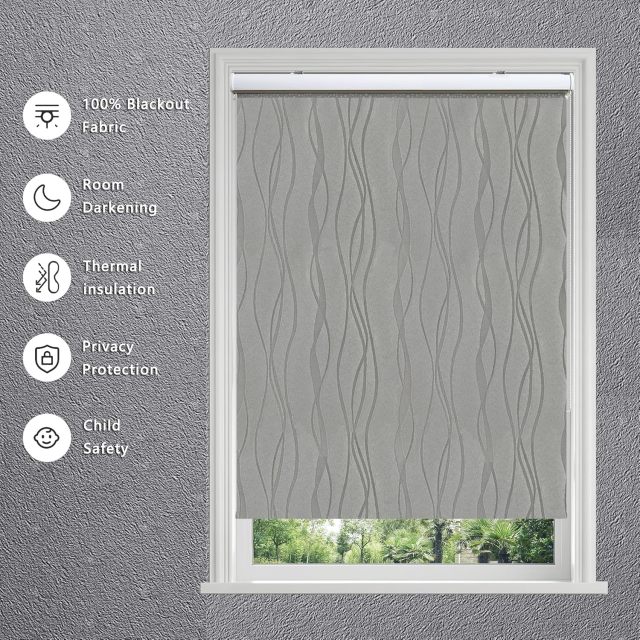
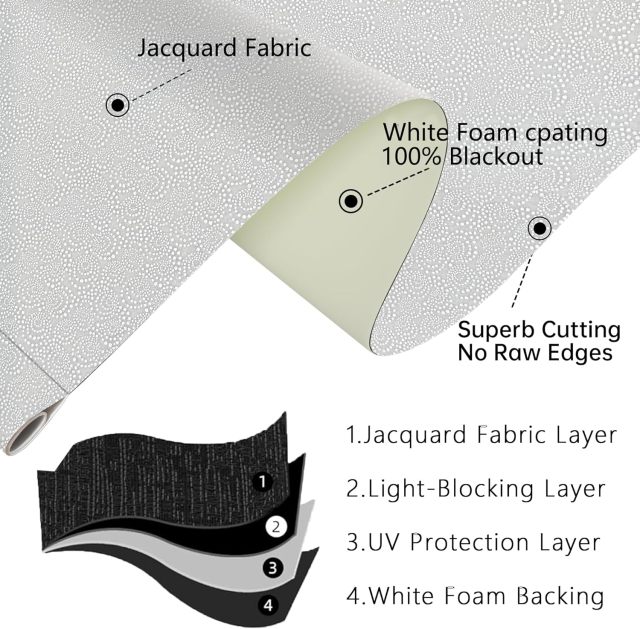
Blackout is a measurement, not a word on a label, and the gap between ordinary black out blinds and a properly built fabric shows the moment the sun is behind the window. The cloth used here is a high-density, light-impermeable fabric with a blackout lining that blocks up to 99% of the light reaching the glass — enough to clear glare from a screen, stop a sun patch tracking across a sofa, and slow the UV fading that bleaches upholstery over a few summers.
It is a layered build rather than a single coated cloth: a jacquard face carrying the grey wave, a light-blocking layer, a UV-protection layer and a white foam backing that gives the fabric body and stops light bleeding through the weave. That is the difference between a true blackout roller blinds fabric and a dark polyester that glows as soon as the sun is on it.
Grey does not weaken the effect. The colour sits on the face cloth; the blocking and foam layers behind it do the work, so a grey room goes as dark as a black one.
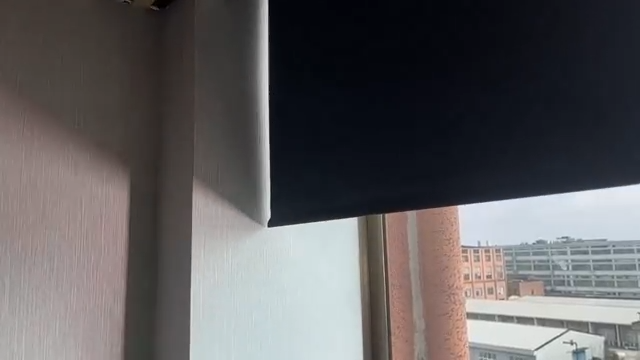
The 99% figure describes the fabric itself, not the finished window. Light that gets past the edges of a blind is a mounting question rather than a fabric question, and it is worth settling before you specify a whole floor.
Inside the cassette
The aluminium cassette runs across the head of the window and the fabric rolls up inside it. That single detail changes three things.
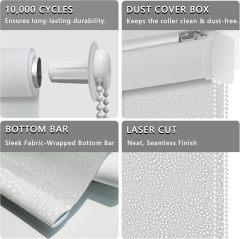
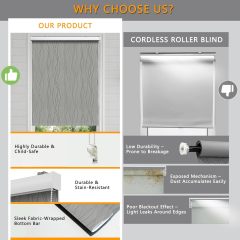
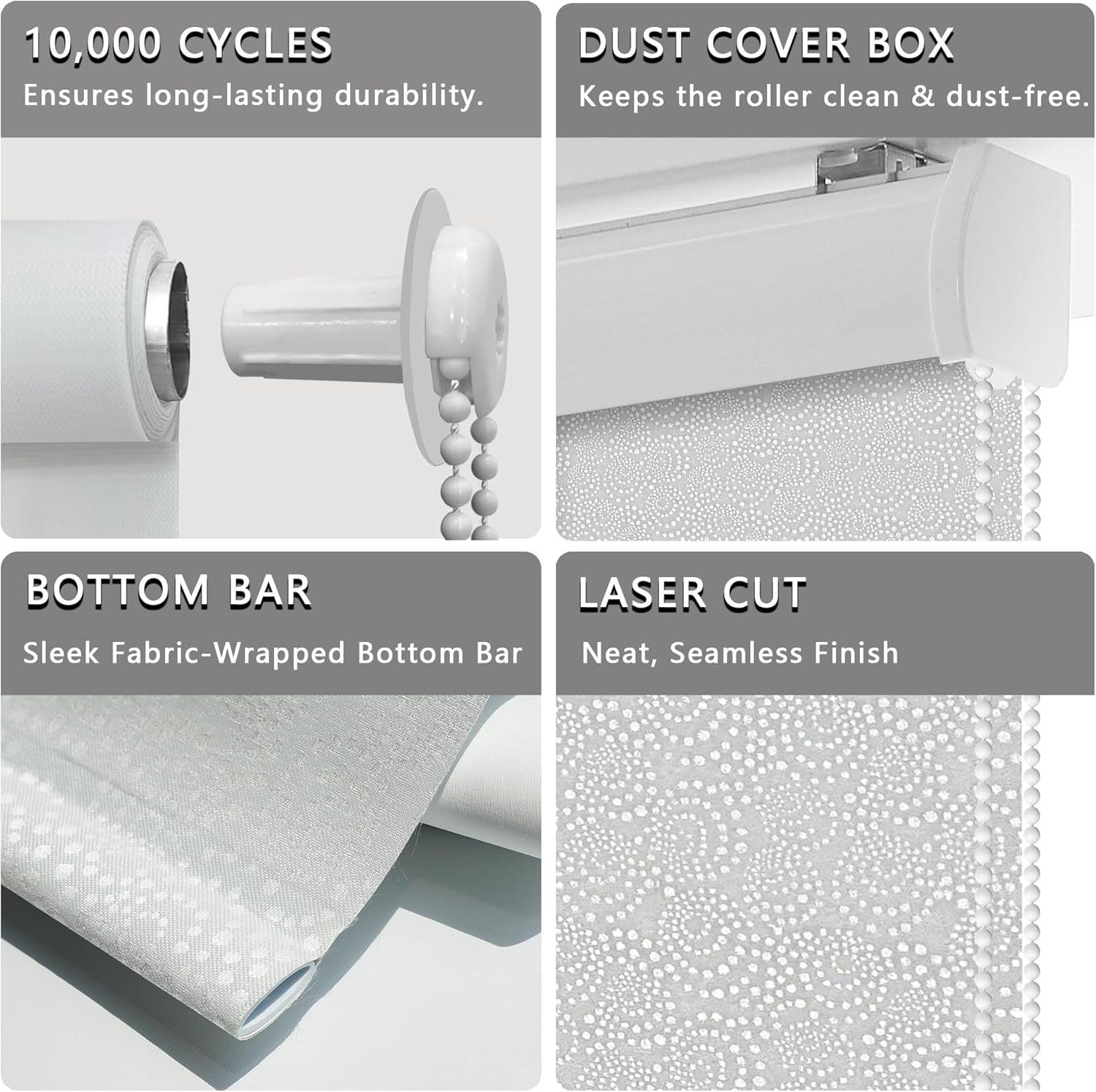
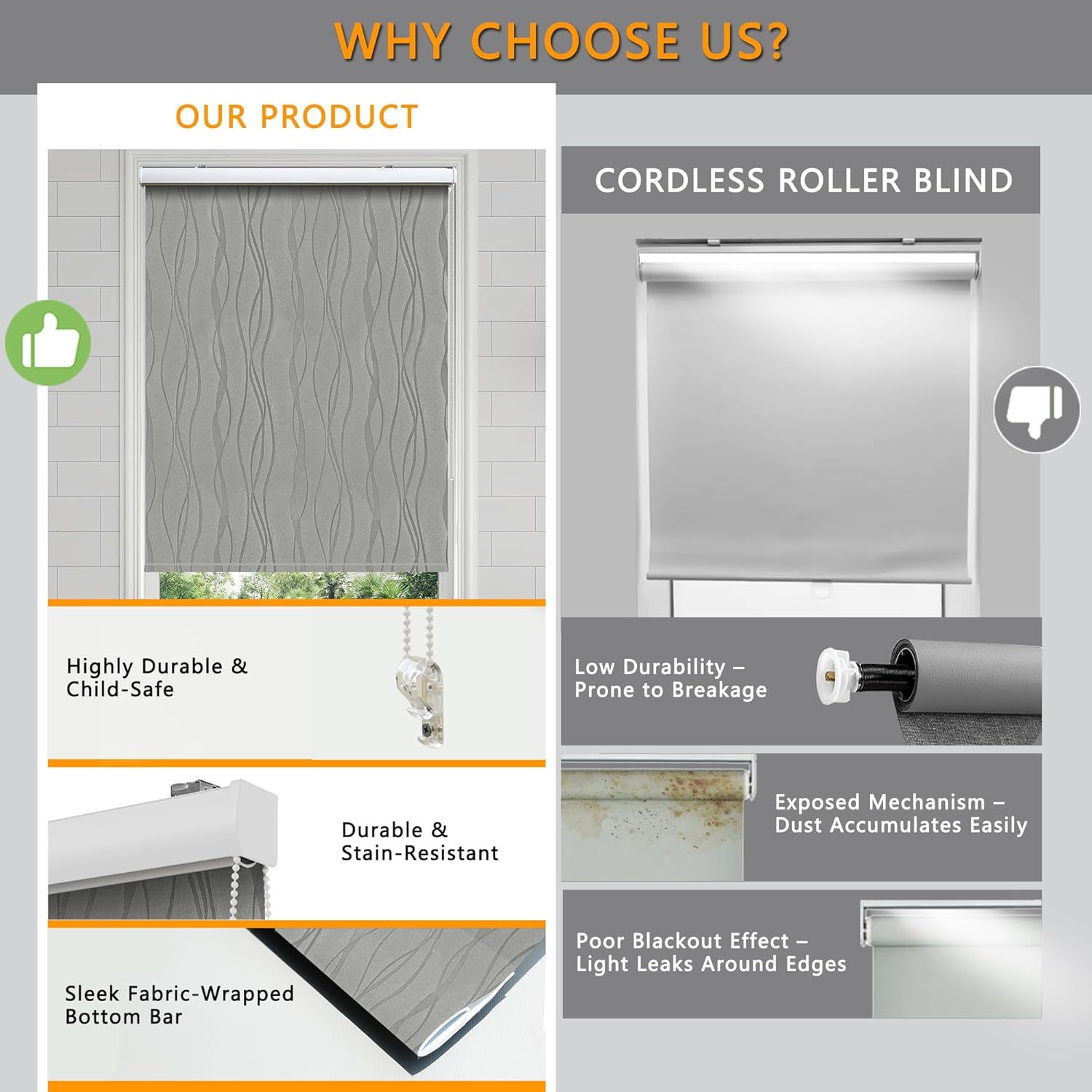
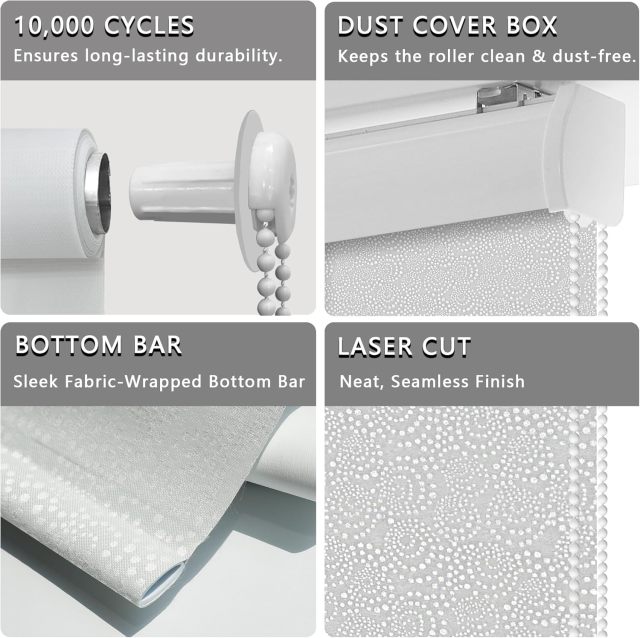
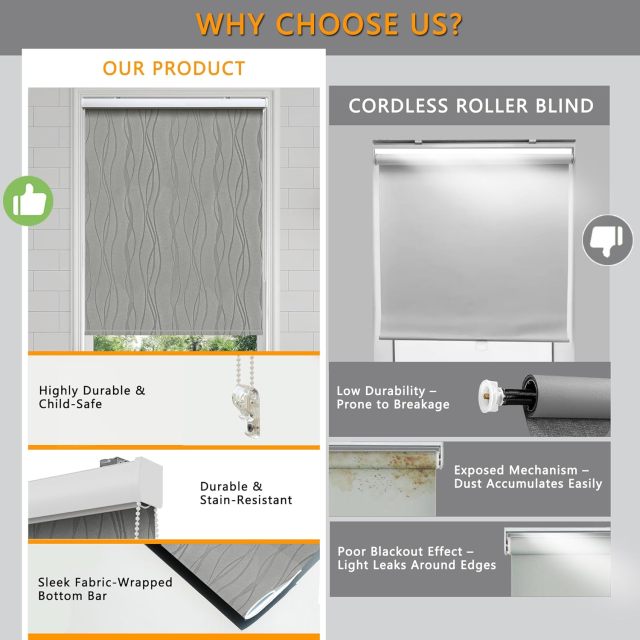
It protects the mechanism. Dust and grit are what wear a roller blind out first — they settle into an open roll, work into the drive, and the blind starts to drag. Sealed inside a cassette, the roll stays clean and the chain keeps its feel over years of daily use.
It finishes the top of the window. A bare roller shows a bright strip of daylight above the fabric and a raw roll of cloth at ceiling height; the cassette caps both, which is the difference between blackout roller shades that read as a fitted window treatment and ones that look temporary.
It keeps the profile slim. The cassette is made in a slim and a deep top rail, so we pick the shallower one for a tight reveal and the deeper one where the head is exposed on a wall or ceiling. The fabric-wrapped bottom bar matches the same grey, and the side edges are cut clean with nothing to fray or curl.
Space is the other gain. The fabric rolls into the cassette rather than folding into the room, so a sill stays clear and a sofa, desk or radiator can sit right up to the window — often the point that decides a blind over a curtain in a small bedroom or a narrow landing.
Send us the recess depth and say whether the blind sits inside it or in front of the frame. That is the one measurement that decides which cassette width we use.
An opaque blind changes a room at night as much as in the day. With the fabric down, nothing of the interior is visible from the street when the lights are on — no silhouettes, no glow through the weave — which is why black out blinds of this type are specified for ground-floor flats, overlooked terraces and hotel rooms facing a car park.
The same cloth works as a thermal layer. Closed before the sun reaches a west-facing window, it stops much of the heat at the glass instead of letting it store in the room; in winter the air trapped between fabric and glass slows heat loss overnight. It is not a substitute for double glazing, but it is the cheapest extra layer you can add to a single-glazed window.
Across a building the effect compounds. Thirty guest rooms with the blinds down through the afternoon take a real load off the air conditioning, and a tenant who can shut out a July afternoon is less likely to ask for another unit. That argument usually carries further with a client than darkness does.
Sizes, colours and measurements
Stock sizes cover most bedroom, office and patio-door openings; anything outside them is cut to your measurement, which is the point of buying custom roller blinds rather than a stock size — and the reason a run of slightly different windows in an older building can still look like one scheme.
Measure the width at the top of the recess, where the cassette sits, not at the sill; recesses are rarely square. Send width and drop in the same unit, plus the mount — inside the recess, or outside on the wall or ceiling. For a whole floor, a simple schedule of opening width, drop and colour per room is all we need to price it.
Four colours are standard: white, grey, black and beige, and a customised colour can be matched to a sample you send. Two fabric designs are available, blackout and daylight; blackout is the one to choose where the room has to go dark.
For wholesale roller shades and phased orders, keep the grey consistent by placing the whole phase together. Fabric is dyed in lots, and a repeat order six months later can sit a shade away from the first delivery: a difference nobody sees on a sample and everybody sees on a wall of windows.
| Top rail | Aluminium cassette, 28–38 mm |
| Fabric | High-density blackout jacquard, grey wavy-line pattern |
| Fabric design | Blackout or daylight |
| Standard sizes | 80 × 250, 100 × 250, 120 × 250 cm (width × drop) |
| Colours | White, grey, black, beige, or matched to your sample |
| Operation | Beaded chain, metal or ABS |
| Mounting | Inside the recess, or outside on wall or ceiling |
| Bottom bar | Fabric-wrapped, matched to the fabric |
| Roller tube | Aluminium |
| Care | Damp cloth or soft brush vacuum, no solvents |
The roller structure is deliberately minimal, so the shade sits flush against the window frame or ceiling instead of projecting into the room. That keeps the window area clear and saves space where room is tight, while the clean, unobtrusive profile suits modern, contemporary, minimalist and traditional interiors alike — a tidy look that does not give up function.
The opaque fabric does more than block light: it keeps the room private, so you are not visible from outside during the day or at night. It also works as an insulating layer at the window, reducing heat transfer in summer to keep the room cooler and holding warmth in during winter, which helps lower heating and cooling costs.
Meijia Window Decoration has been manufacturing window coverings since 2005 and today runs a 53,000 m² factory with around 200 staff, plus a second production base in Anhui with 12 lines, backed by a database of more than 3,000 qualified suppliers. We supply builders, e-commerce sellers and supermarkets across Europe, North and South America, the Middle East and Asia, with OEM and private-label production, minor customisation and one-stop export handling under 100% quality control. Both plants hold BSCI social responsibility, ISO 9001 and ISO 14001 certification.
Yes. Stock sizes cover the common openings, but most of what leaves the factory is cut to a customer's own measurement. Send the width taken at the top of the recess, the drop, and whether the blind mounts inside the recess or in front of the frame; we confirm the cut size and cassette width in writing before cutting. Ordering custom roller blinds this way keeps the proportions right — a stock blind trimmed to fit loses its balance and its bottom bar.
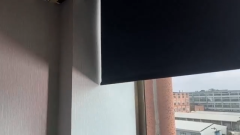
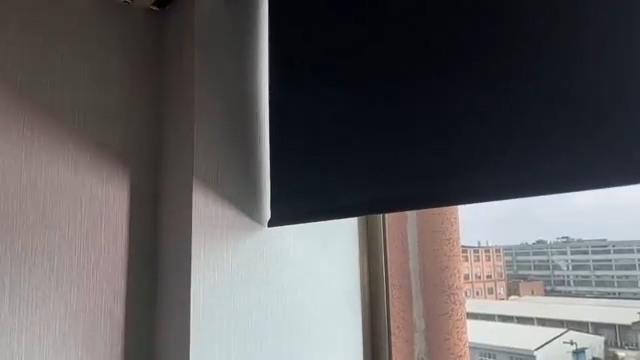
More than most people expect on an inside-recess mount. The fabric blocks up to 99% of the light reaching it, but unless the reveal is tight around the brackets, daylight passes down both sides of the roll. The cassette closes the gap at the head, which is usually the largest leak. If a room has to go fully dark, specify an outside mount so the fabric overlaps the frame — that is the practical limit for blackout roller shades, because the fabric does its job and the mounting decides the rest.
The cassette has to clear the fabric roll and still sit comfortably in the recess. We supply the rail in a slim and a deep profile and pick between them once you send the recess depth and the mounting position: the shallower inside a tight reveal, the deeper where the head is exposed on a wall or ceiling. If you are matching a blind already on site, measure the visible face of its cassette and we will match it. As window blinds manufacturers we cut the rail to the same width as the fabric, so the cassette and the roll always line up.
Blackout if the room has to go dark — bedrooms, hotel rooms, home cinemas, anywhere a screen or a sleep schedule matters. Daylight if you want the room to stay bright while cutting glare and keeping the view soft; that version behaves like light filtering roller blinds and is usually the better choice for a living room or a stairwell where total darkness would feel heavy. Both are built on the same cassette, so the two can be mixed in one building without the windows looking different.
The safe way to run a project is to place the whole phase as one order, because grey is dyed in lots. For wholesale roller shades we cut a floor or a block from a single fabric lot where the volume allows, and we keep the approved sample on file so a reorder months later is matched against it rather than against memory. If you are buying in stages, tell us the total quantity at the start and we will plan the lots around it.