Product Overview
Pull the chain and the fabric drops to exactly where you let go — no slack, no over-run, no wrestling with a spring. That is the whole appeal of this roller: a beaded loop drives a clutch inside the tube, so a tall office window and a compact bedroom window are operated in the same way, one-handed and quietly.
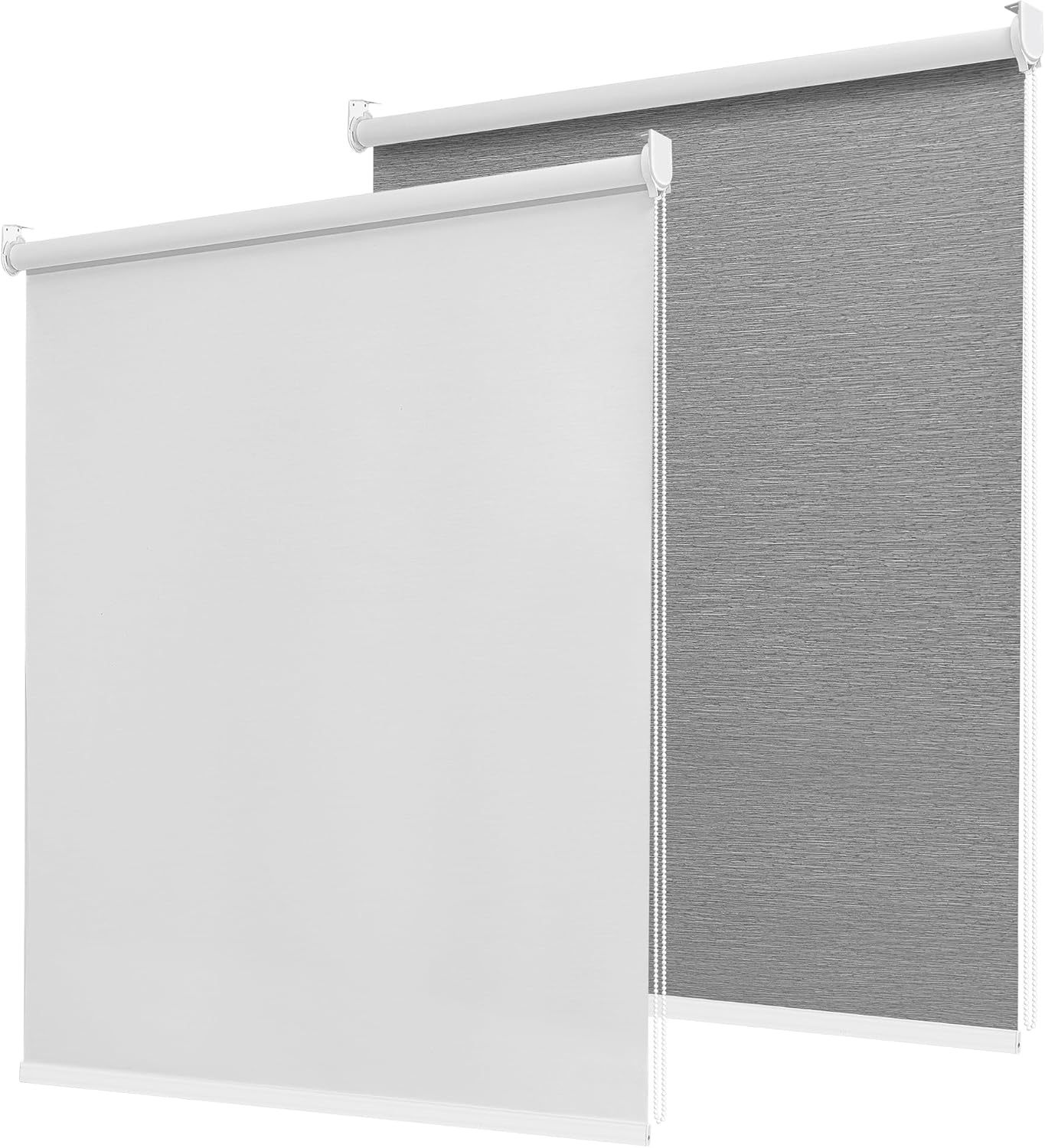
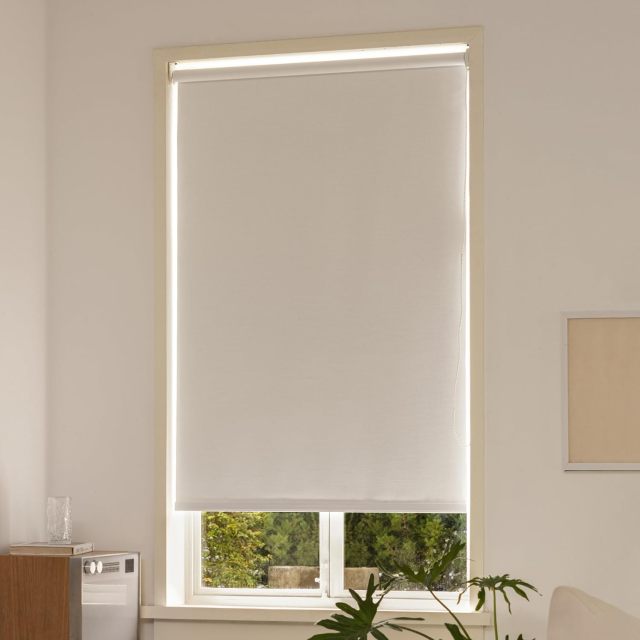
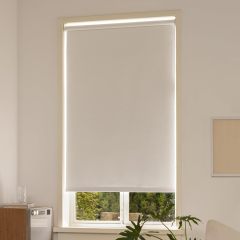
The build is simple and repairable. An aluminium top rail carries the roller tube, the fabric hangs from it under its own weight with an aluminium bottom bar, and the chain runs down one side. Fabric comes in two directions: a dense blackout face that closes a room down far enough for daytime sleep, and a daylight face that takes the hard edge off the sun while the view stays visible. Most of our blackout roller blinds ship on the blackout face; the daylight build is specified per order.
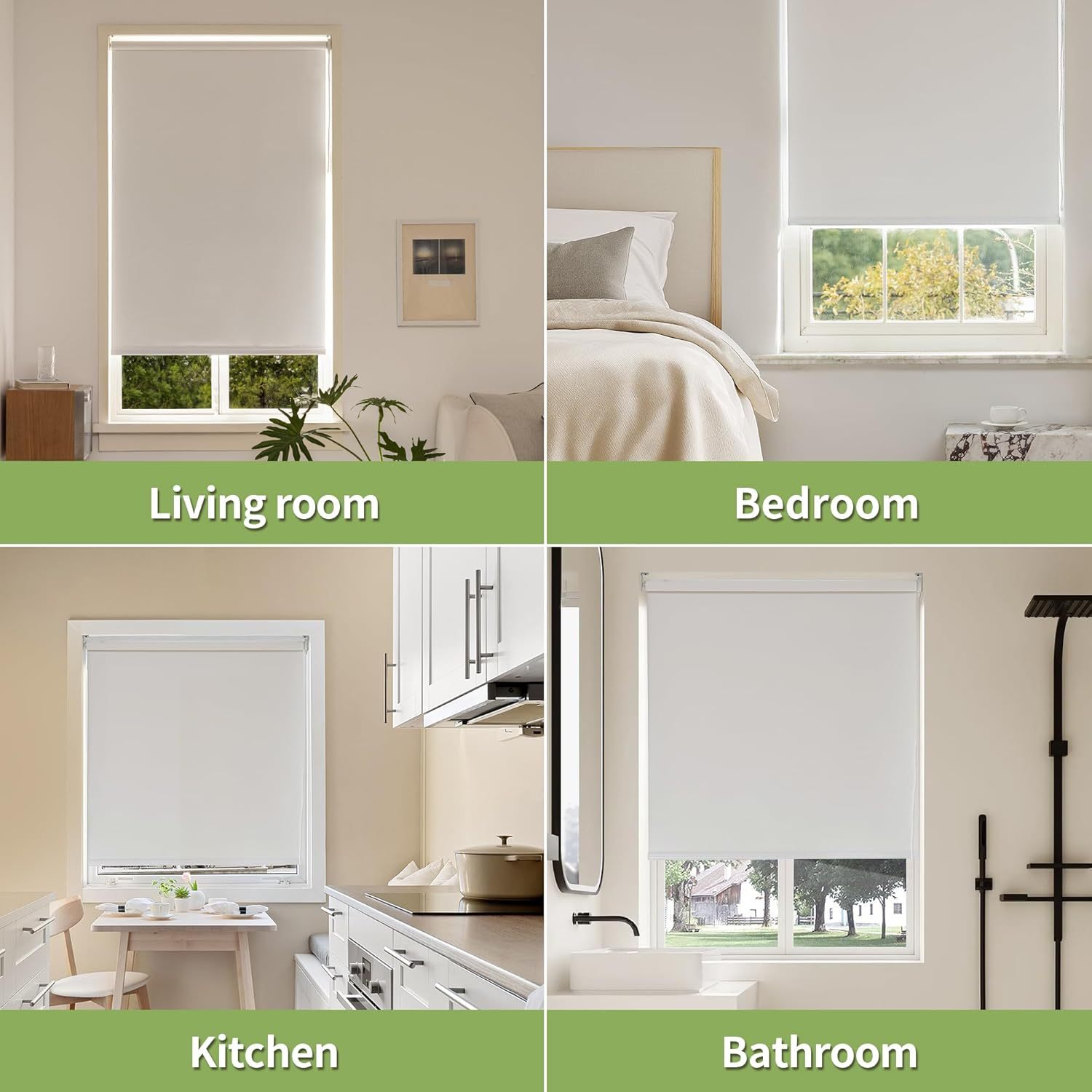
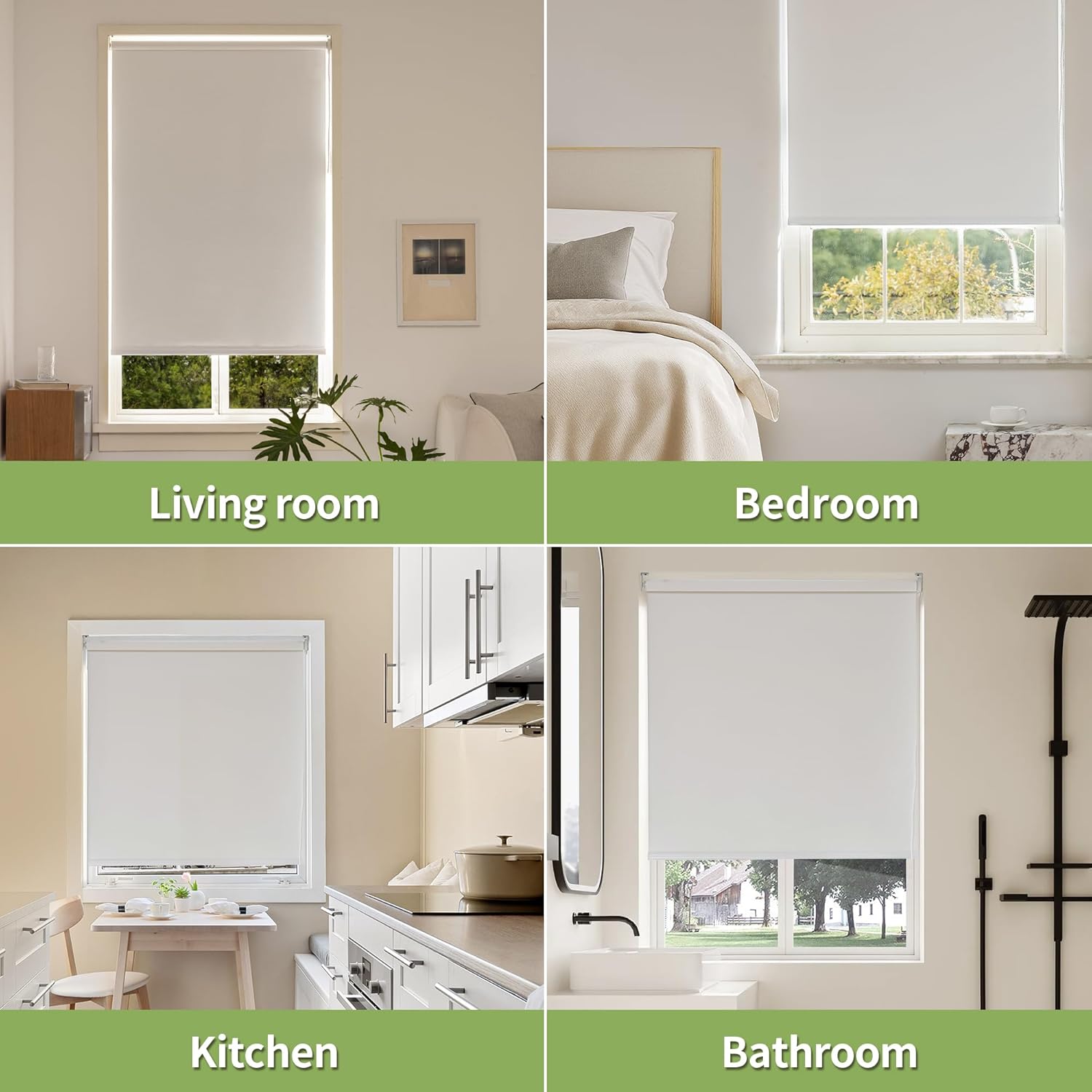
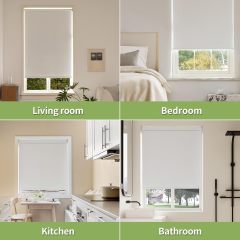
Where it goes: office fit-outs, bedrooms, living rooms, kitchens and bathrooms, hotel rooms and rental flats. Because the profile is the same across the range, a run of windows along one elevation can be ordered together, fitted by the same installer with the same bracket, and operated by anyone who walks into the room.
Light Blocking Performance
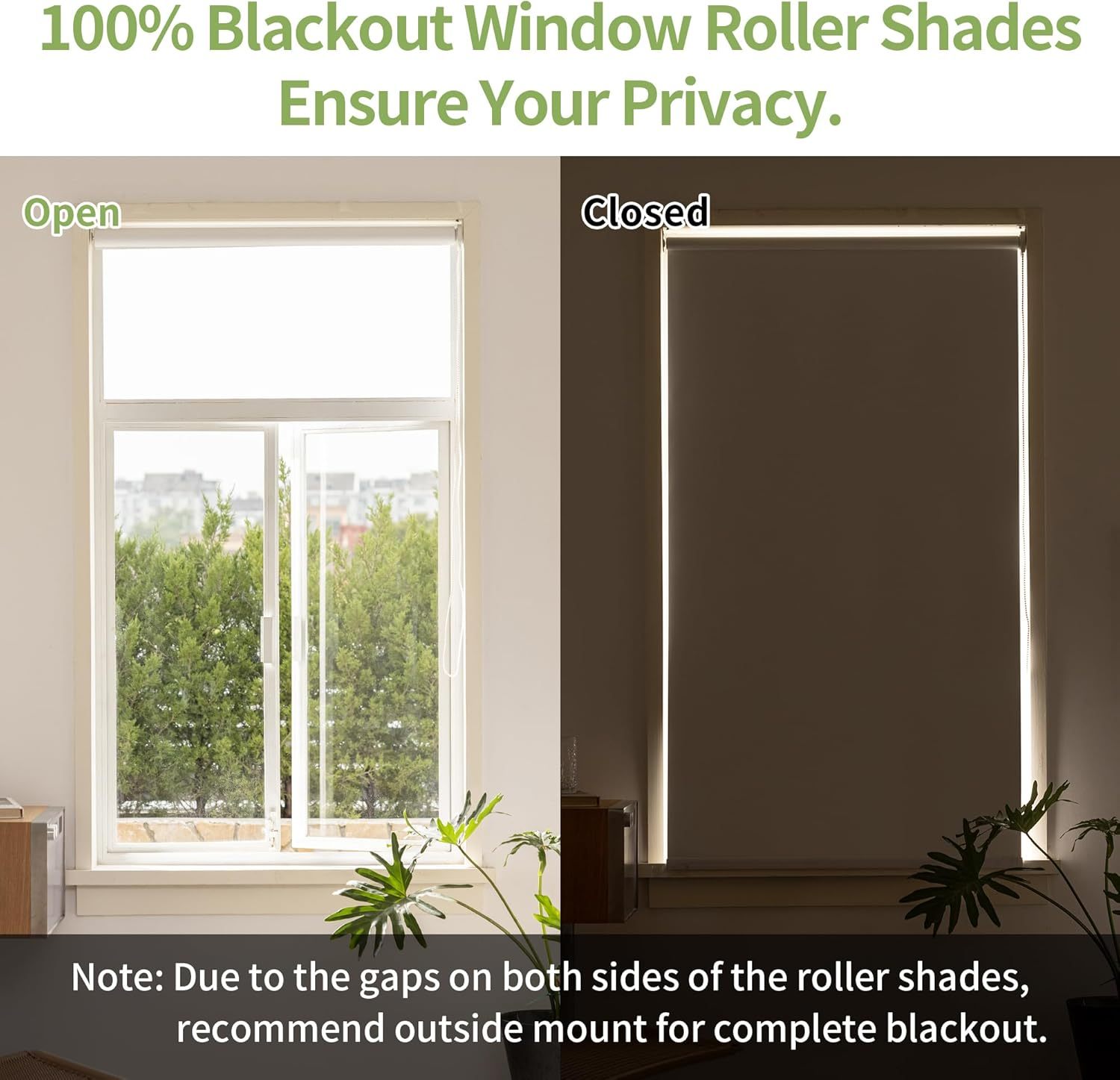
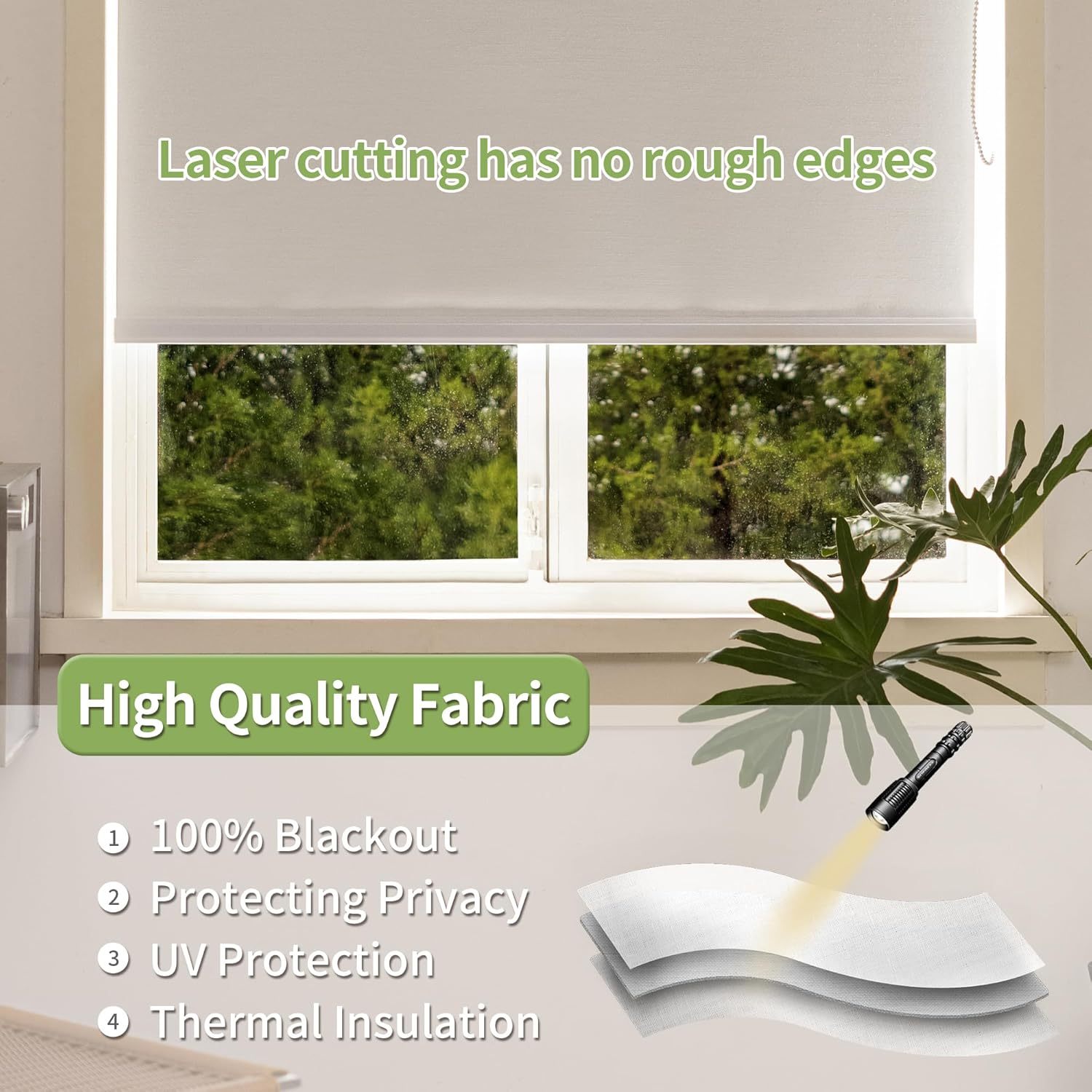
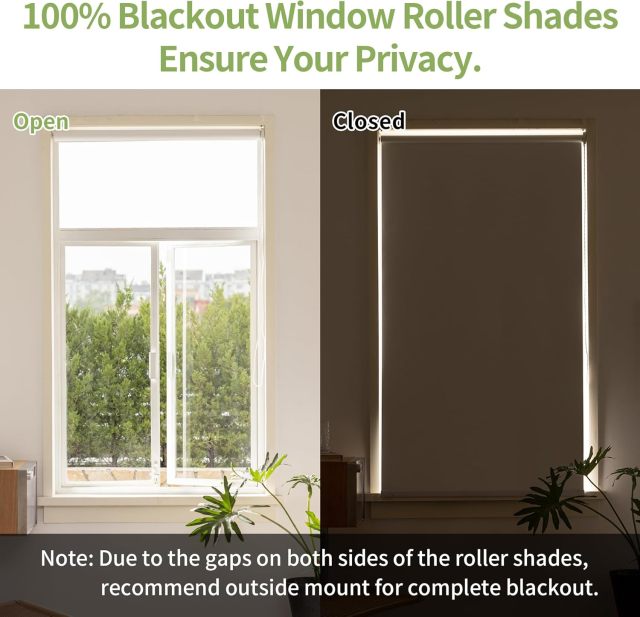
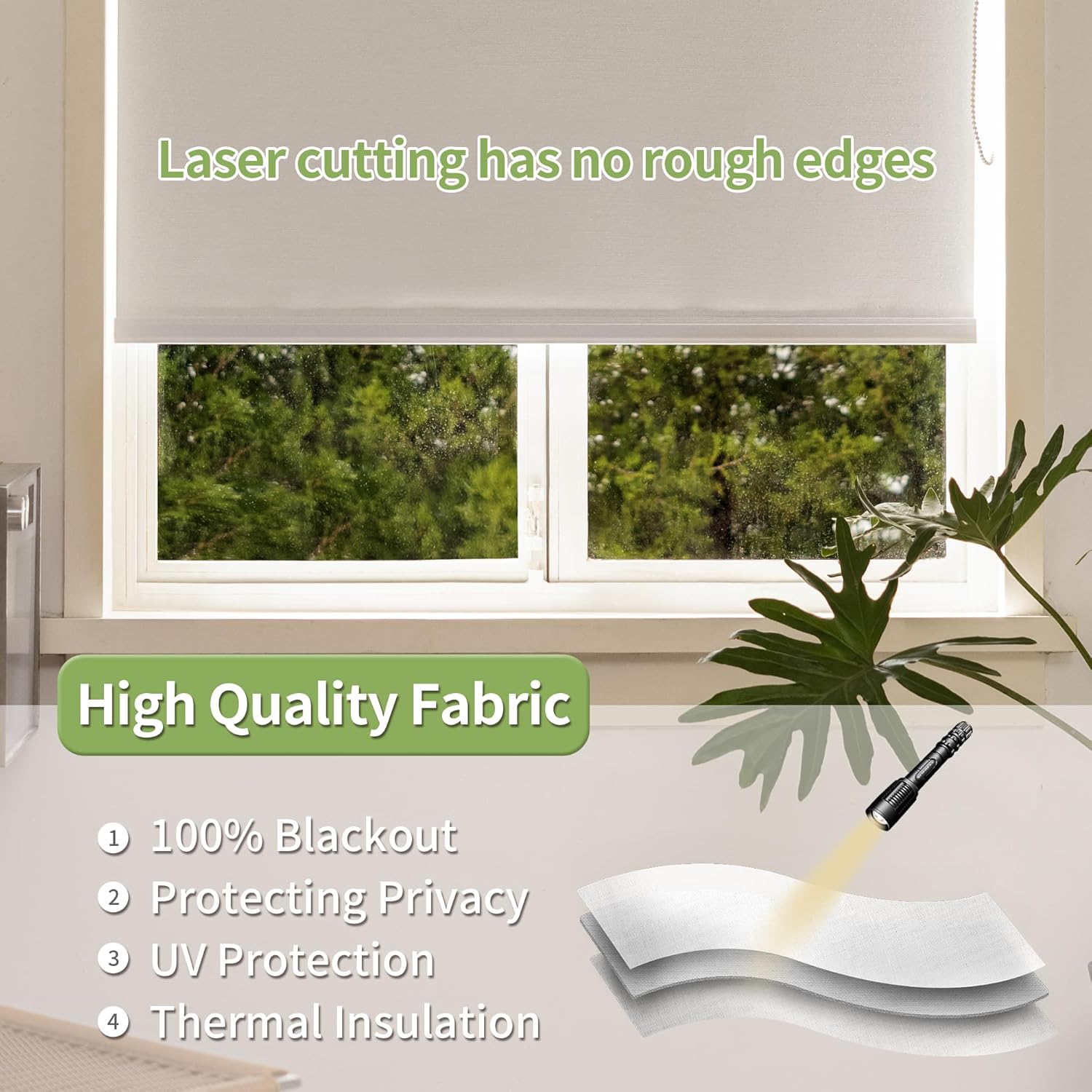
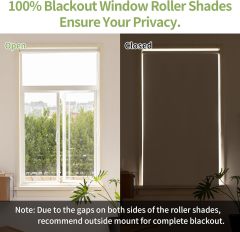
- Up to 99% of outside light blocked. The blackout face is a dense, light-impermeable weave with a blackout lining behind it, so daylight, street lighting and headlights arrive as a flat dark tone rather than a glow.
- Built for sleeping in daylight. Bedrooms, children's rooms, hotel rooms and the flats of anyone on shift work — the point is being able to sleep at ten in the morning in June.
- Glare off the screens. A west-facing office window throws reflections across monitors from mid-afternoon; drop the blind to shoulder height and the glare goes without the room going dark.
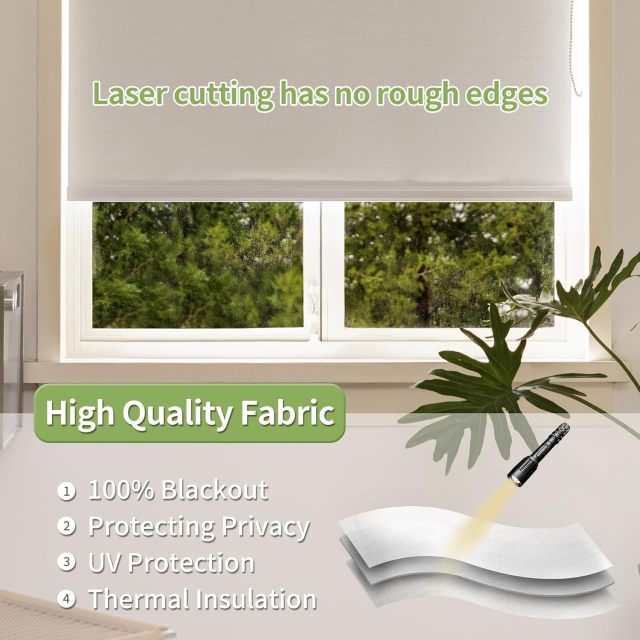
- UV protection for what is in the room. The same face that stops visible light also slows the UV that bleaches timber floors, upholstery and framed prints over a few summers.
- Specified by the trade as blackout shades. The blocking comes from the coated construction, not from a dark dye, which is why the face can be a light neutral and still close a room down.
- Media rooms and meeting rooms. Projectors and large displays need a controlled background, and blackout blinds give a flat, even surface behind the screen instead of a bright wall.
- Half-drop control. The chain lets the fabric sit anywhere between open and closed, so a room can be kept private and shaded while the top of the window still lets light in.
Beaded Chain Operation
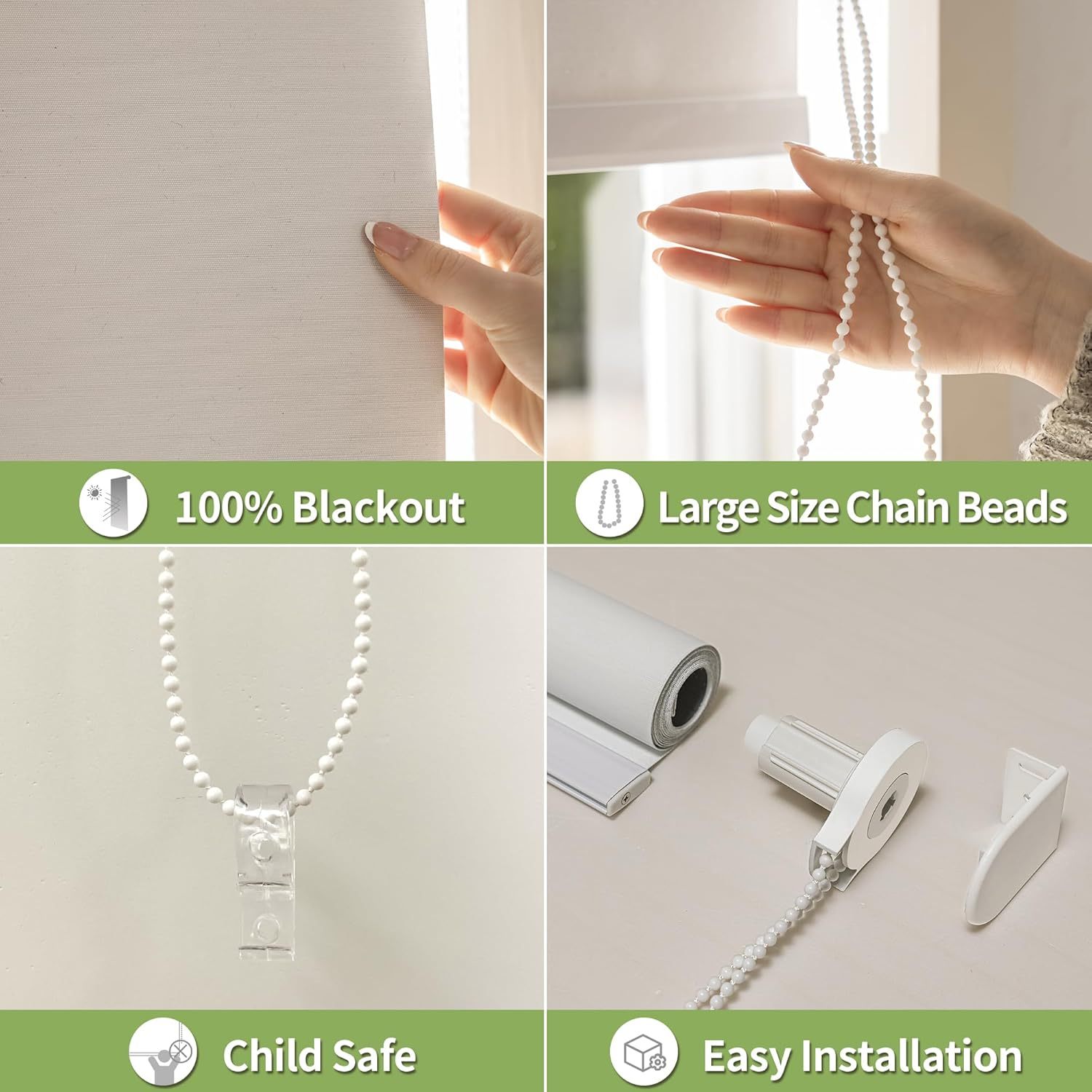
A metal or ABS beaded chain loops down one side of the blind and over a clutch wheel at the end of the tube. Pull the front run and the blind rises; pull the back run and it falls. Let go, and it stays where it is. That sounds trivial until a building has twenty windows to manage — a positive stop at any height means the blind can be left at 40% for glare, at 70% for privacy or fully down, and it will still be there tomorrow morning.
The glide is what we watch in production. A clutch that is set properly runs without squeaking or jittering, which matters in a bedroom and matters more in an open-plan office where blinds are adjusted through the day.
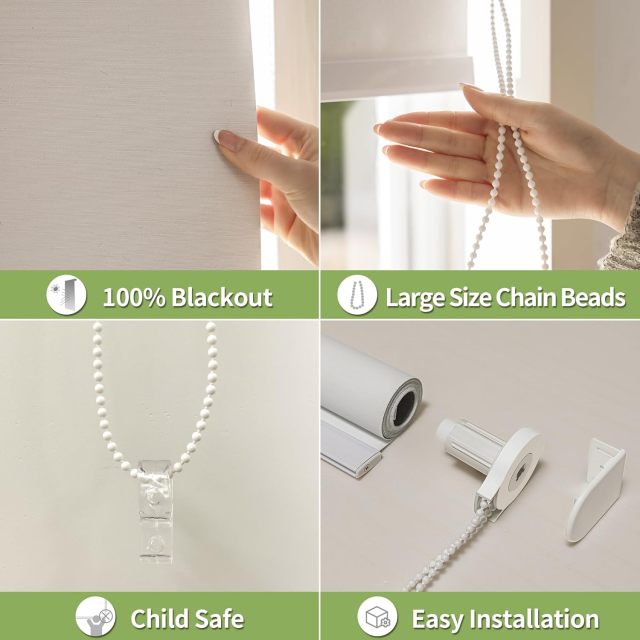
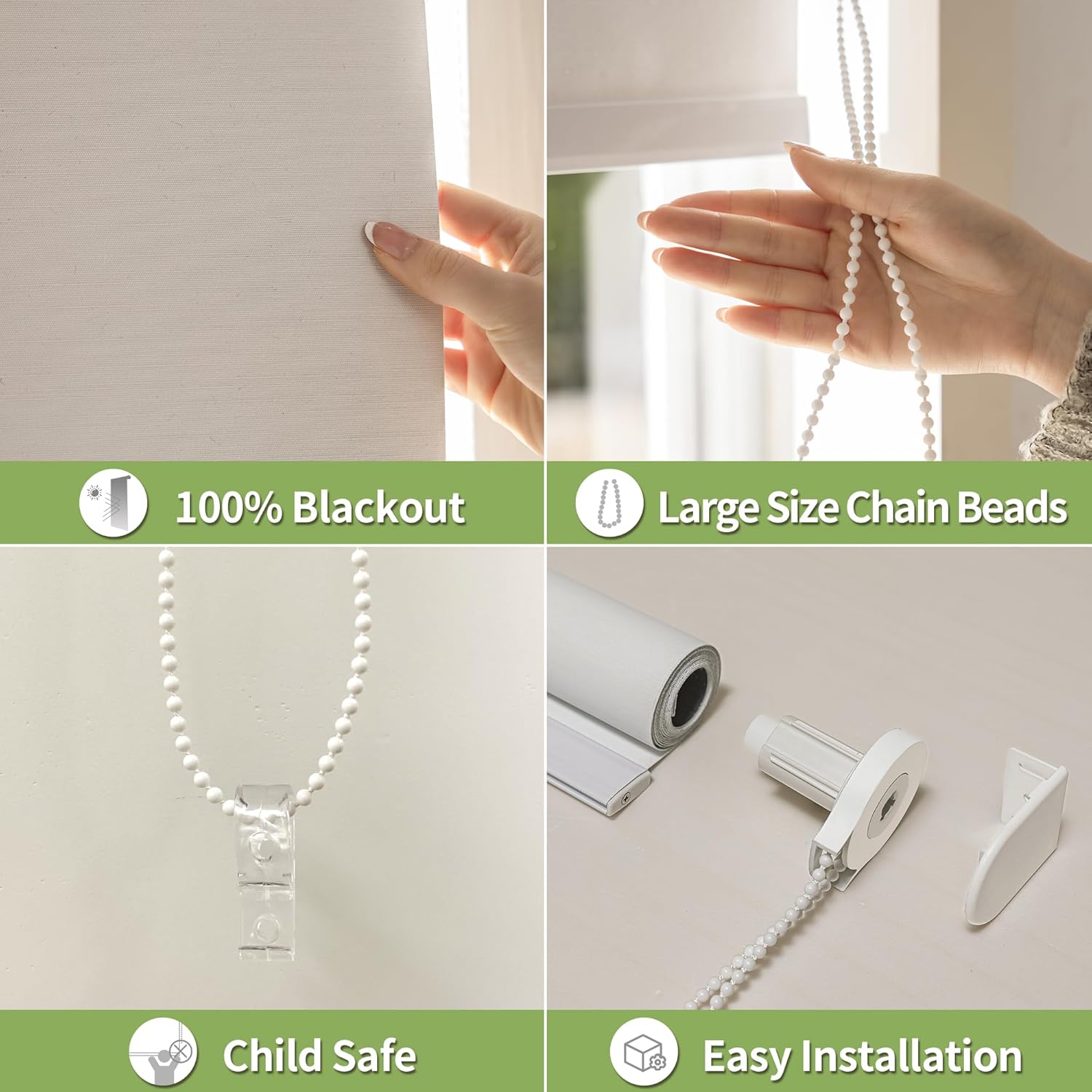
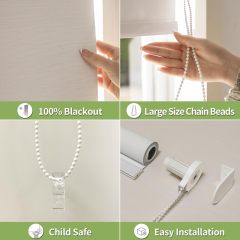
The beads are deliberately large enough to catch with two fingers, so housekeeping staff and hotel guests are not feeling for a thin cord in a dim room. On any window roller blinds installation the chain is the only part anyone touches day to day, and it is the part that decides whether the blind feels well made.
Slim, Space-Saving Fit
- Rolls into the tube, not into a stack. Nothing folds or concertinas; when the blind is up, all that shows is the rail and a slim roll of fabric at the head.
- Flush to the frame or the ceiling. The rail mounts hard against the head of the window, so the blind adds very little to the depth of the reveal.
- The sill stays usable. Kitchen worktops, bathroom ledges and window seats stay clear, because the fabric never hangs out into the room.
- Comfortable in tight corners. Where a window sits close to a return wall or a fitted wardrobe, a flat panel needs no clearance at the sides the way a slatted blind does.
- A flat, quiet line. Straight bottom bar, plain face, no visible mechanism — in a neutral interior blackout shades read as part of the wall rather than as a feature.
- Good in multiples. The slim profile repeats cleanly, so four or five windows along one wall read as a single line instead of a row of bulky fittings.
- Renovation-friendly depth. It is one reason specifiers choose roller window blinds for refurbishment work: nothing has to be recessed into the wall and nothing has to be built out from it.
Fabric Durability & Care
The fabric is chosen for how it behaves in year three, not how it looks on day one. It resists fading, dust pickup and surface wear, which is what lets the same blind sit on a west-facing elevation and still match the one on the shaded side of the same building.
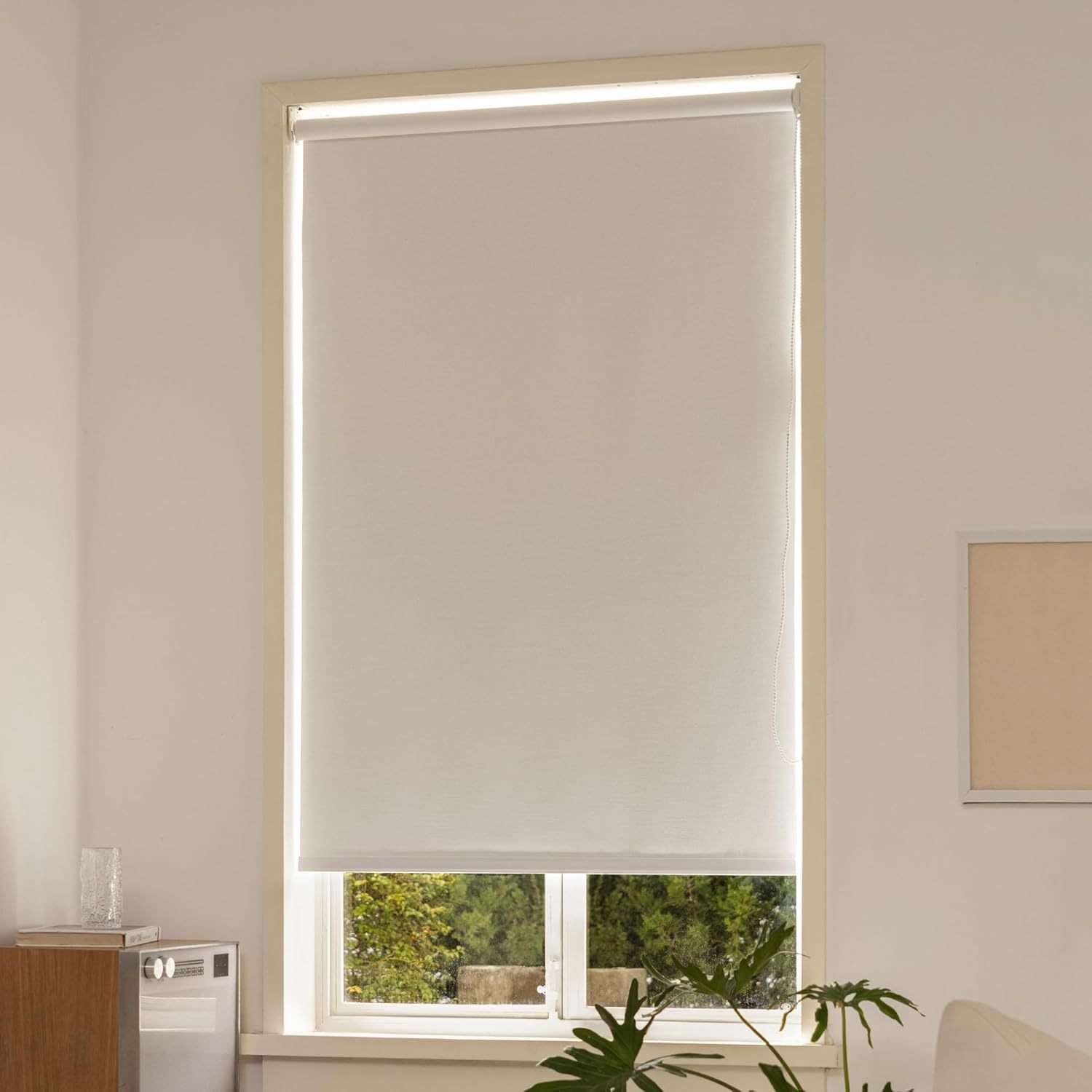
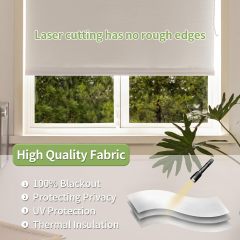
Edges are laser-cut rather than guillotined. The close-up on this product shows the finished edge, and the reason it matters is that a clean cut has no loose threads to comb out over time and no rough line for a cloth to catch on.
Cleaning is a damp cloth, plus a vacuum with a soft brush for the dust that settles along the top of the roll. There is no need to soak the fabric, unclip it from the tube or send it away to be cleaned.
For roller window blinds that are operated every working day, the two wear points are the hem and the tube. The bottom bar holds a straight hem under light tension, and the aluminium tube keeps the roll true, so the fabric feeds back evenly instead of creeping to one side.
Humidity is the one thing to raise at specification. The face wipes down rather than absorbing splashes, which suits a bathroom or a kitchen window, but this is an interior fabric rather than an outdoor one — if the window takes direct spray, tell your sales contact and the right build will be confirmed for the room.
Privacy & Thermal Insulation
- No silhouettes after dark. The opaque face stops a lit room being read from the street — you can leave a lamp on and still be private, which a net curtain will not do.
- Ground-floor and street-facing windows. Pavement-level bedrooms, street-level offices and overlooked bathroom windows all get the same benefit at eye level.
- Privacy at half-drop. The upper part of the window can stay open for air and daylight while the lower half blocks the view in from outside.
- An insulating layer at the glass. Fabric hanging close to the pane traps a still layer of air against it, so the window stops behaving like a radiator into the room.
- Summer heat kept outside. On a sun-facing elevation the fabric takes the radiant load before it reaches the room, which is most noticeable on large glazed areas.
- Winter warmth kept inside. The same layer slows heat loss through single-pane or older glazing, so a room holds its temperature for longer after the heating goes off.
- Less work for the heating and cooling. Lower solar gain in summer and lower heat loss in winter both reduce how hard the building services have to run.
- Why not just a dark fabric. A dark roll looks private in daylight and stops being private the moment a light goes on; blackout blinds use an opaque build instead, which is what makes them work at night.
Chain Safety & Hardware
The chain is the one part of a roller blind that has historically been a safety problem, so it gets the most attention here. The loop carries a breakaway connector: pulled hard — by a child, or by a chair pushed against it — the loop separates instead of holding. A tension clip fixes the chain to the wall so the two runs stay together and the loop does not swing loose.
The rest of the hardware is about staying straight. The roller tube is aluminium, so a wide drop does not bow in the middle; the bottom bar is weighted to keep the fabric under light tension; end caps close the tube ends so dust stays out of the clutch.
On a large size the fabric load is considerable, and a tube that flexes shows up as a wave along the bottom bar. That is the first failure people notice on a thin-tube roller, and it is mechanical rather than a fabric fault.
The same chain, clip and tube go into every blind we build, blackout blinds and the wholesale roller shades we supply for hotel and office contracts alike, so a replacement in year three behaves like the original.
Custom Fit & Sizing
- Cut to your measurement. Send the finished width and drop and the blind is made to that figure rather than rounded to the nearest stock size.
- Inside or outside the reveal changes the numbers. Inside mount uses the clear width between the reveals and the drop from the head to the sill; outside mount uses the width you want covered and the drop from the bracket line down.
- Look before you measure. Handles, tiles, radiators, deep sills and opening sashes all change where the blind can sit and how far it can drop.
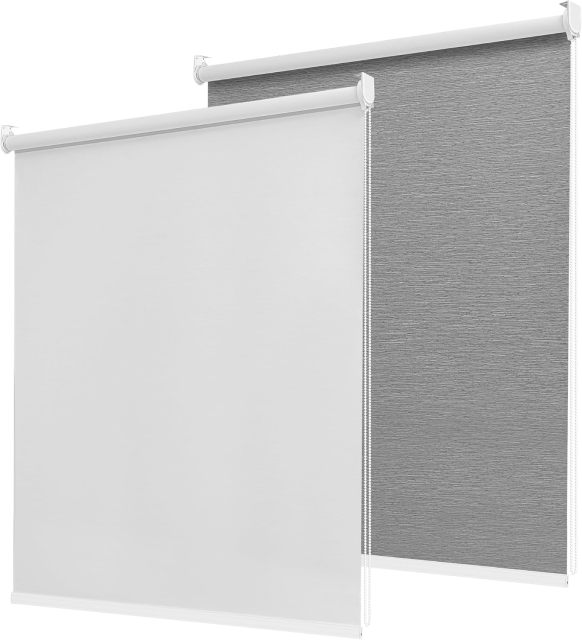
- A standard palette or a matched colour. White, grey, black and beige are the standard faces; a scheme that needs something else is matched against a sample.
- One batch per project. Where a run of windows has to look identical, order them together so the fabric comes off one roll — a second order placed months later may not match exactly.
- Out-of-range openings are quoted individually. Wide or tall windows change the rail specification, so they are priced against the actual measurement rather than the standard list.
- Custom roller blinds for contract work. For a hotel or office schedule, send the window list as a table and each blind is labelled to its room or window number.
Specifications
| Top rail | Aluminium, 18 mm / 28 mm / 38 mm profiles |
| Standard sizes | 80 × 250 cm, 100 × 250 cm, 120 × 250 cm (width × drop) |
| Sizing | Made to measure for non-standard windows |
| Fabric direction | Blackout or daylight (light-filtering) face |
| Colour | White, grey, black, beige, plus customised colour |
| Operation | Beaded chain in metal or ABS |
| Chain safety | Breakaway connector with wall tension clip |
| Mounting | Inside the reveal, or outside on the wall or ceiling |
| Roller tube | Aluminium |
| Bottom bar | Aluminium, straight-cut hem |
Installation & Mounting
- Choose the mount. Decide whether the blind sits inside the reveal or outside it, on the wall face or on the ceiling — this is the measurement decision a window roller blinds fit turns on, and it is far easier to settle before anything is drilled.
- Mark the bracket line. Run a spirit level across the head of the window and mark both bracket positions at the same height.
- Check what you are fixing into. Masonry takes plugs and screws; plasterboard needs a stud or a proper hollow-wall fixing; tiled surfaces need a tile drill and a light touch.
- Fix the brackets. Use the fixing that suits the wall, and check both brackets are level before the rail goes near them.
- Click the rail in. The top rail presses into the brackets and the end caps close the ends of the tube.
- Clip the chain. The tension clip goes to the wall so the loop runs straight and the two runs stay together.
- Run it through. Lower the blind fully, check the hem is level, and adjust a bracket if the fabric is not hanging square.
Room-by-Room Applications
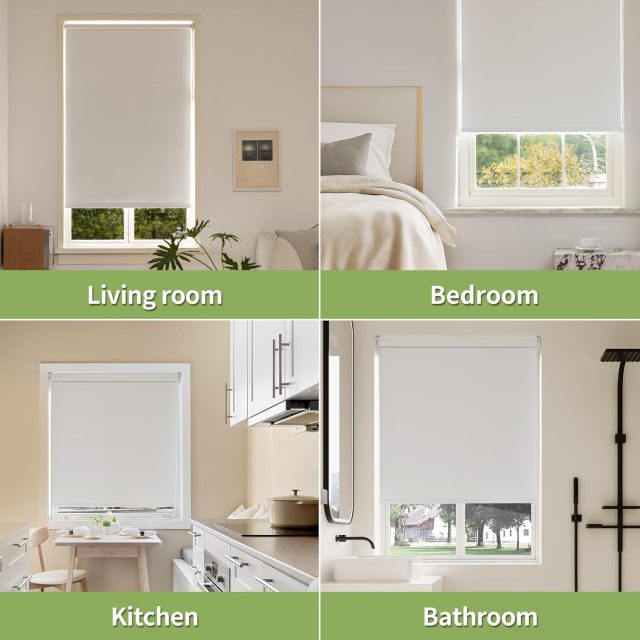
- Bedrooms. The case the blackout face was made for: early summer light, street lighting, and a room that has to be dark at nine in the evening in July.
- Home offices and studies. Glare is the problem here rather than brightness; a half-drop keeps the desk usable and the room lit.
- Living rooms. Partial drops for low afternoon sun, plus protection for whatever sits under the window.
- Kitchens. Short drops over worktops, where the blind has to stay clear of the surface and wipe down easily.
- Bathrooms. Small windows, often overlooked, where privacy matters more than light control.
- Hotel rooms and rental flats. One mechanism a guest or tenant can work without instruction, which is why blackout roller blinds dominate that sector.
- Where the view matters more than the dark. Living rooms with a garden or a skyline usually suit our light filtering roller blinds fabric: glare softened, outside still visible.
- Offices with a mixed elevation. Blackout on the sun side, daylight on the shaded side, on the same rail with the same chain, so the building still looks consistent from outside.
Production Process
- Place order. Your window schedule, fabric direction and colour choices become a production order, with sizes and packing confirmed before anything is cut.
- Stock up. Fabric, rail, chain and fittings are drawn from stock held for the range, so a short run does not wait for a full mill order.
- Select material. The roll is checked for shade and surface before cutting, so a multi-window order is matched rather than assembled from whatever is nearest.
- Cut fabric and rails. Fabric is cut to the finished drop, and the aluminium rail and tube are cut to the finished width.
- Assembly. Fabric, tube, bottom bar, clutch and chain go together, with the breakaway connector fitted at the same station.
- Inspection. Each unit is run through its full travel and checked for a straight hem, an even roll and a clutch that grips without slipping.
- Packaging. PP bag inside a carton, or a PET box for single-unit presentation, with the brackets and clip bagged alongside the blind.
- Delivery. Cartons are palletised for sea or air freight, or handed to a courier for express, and runs of wholesale roller shades are packed to one carton spec so a project can be stored and issued as a single lot.
Ordering & Delivery
- Minimum order. 10 pcs on normal sizes. Anything outside the standard range is quoted per item, so confirm the figure with your sales contact before the order goes in.
- Stock held for the range. Fabric, rail and chain for standard builds are kept in stock, which is what lets a repeat order move without waiting for a new material run.
- Rush orders. If a project date is tight, raise it before the order is placed and we will tell you what can realistically be pulled forward.
- Samples. Ask your sales contact about sample availability for the fabric and build you are considering.
- Custom roller blinds. Sizes, colours and fabric directions are made to order — send the window schedule and we will confirm what is feasible and when it can ship.
- Packing. Carton with a PP bag, or a PET box. Trade and e-commerce orders can be packed in a mail-order box instead.
- Shipping. Sea freight for volume, air freight for speed, and freight express for small urgent consignments.
- Export handling. One-stop export service — documentation and booking are handled on our side.
- Mixed builds on one order. Blackout and light filtering roller blinds can travel together, which is how most mixed-elevation projects are specified.
- Wholesale roller shades. Cartons are sized for a clean pallet build-up, so a full container or air pallet loads without re-packing at the forwarder.
- Factory visits. If you are in Dongguan or Wuhu, ask your sales contact about coming in to see the line run.
Scale & Supply Capability
Meijia Window Decoration has been manufacturing window coverings since 2005 and today runs a 53,000 m² factory with around 200 staff, plus a second production base in Anhui with 12 lines, backed by a database of more than 3,000 qualified suppliers. We supply builders, e-commerce sellers and supermarkets across Europe, North and South America, the Middle East and Asia, with OEM and private-label production, minor customisation and one-stop export handling under 100% quality control. Both plants hold BSCI social responsibility, ISO 9001 and ISO 14001 certification.
FAQ
What comes with each blind?
Each blind ships as a complete fitting set: aluminium top rail, roller tube, fabric, bottom bar, mounting brackets, beaded chain, chain tension clip and end caps. A window roller blinds order for a project arrives labelled by room or window number where the schedule asks for it, so the fitter is not matching cartons to openings on site.
Which top rail profile will my blind come with?
The range uses 18 mm, 28 mm and 38 mm aluminium rails. The profile is chosen to suit the size of the blind and the depth you have to fix into, so a narrow bathroom window and a wide office drop do not take the same rail. Tell your sales contact the window size and the surface you are fixing to, and they will confirm the profile with the custom roller blinds order.
Will light come in around the edges?
The fabric itself blocks the light; the edges are a mounting question. Because the fabric has to run clear of the brackets, there is a small gap at each side and a line at the top, and an inside-reveal fit will show a thin edge of light. Mounting outside the reveal, overlapping the wall or the frame, closes most of it. If a dark room really matters, specify an outside mount when you measure — that single decision changes more about blackout roller blinds than any fabric choice.
Blackout or daylight fabric — how do I choose?
Match the face to the room rather than to the window. Rooms where people sleep, or where a screen has to be seen — bedrooms, hotel rooms, media rooms — take the blackout face. Rooms where the view is part of the point — living rooms, studies, reception areas — usually take the daylight face, which is what we supply as light filtering roller blinds: the sun is softened and the outside stays visible.
Can I fit them myself?
Yes, with a drill, a spirit level, a pencil and a screwdriver. The rail clicks into two brackets and the chain clips to the wall. The one thing to plan for is size: a wide roller window blinds set is easier with two people, one holding the rail while the other lines up the brackets, because a long rail is awkward to balance one-handed.
Can I leave them half down for weeks at a time?
The clutch holds the position and will not creep down. Fabric that stays in the same fold for months can take a light set, though, so in a room that is only used occasionally it is better to run the blind fully up between visits and drop it when the room is in use — that also keeps dust off the exposed face of blackout shades.