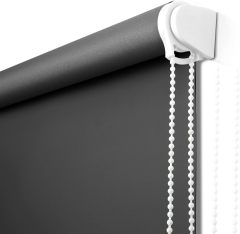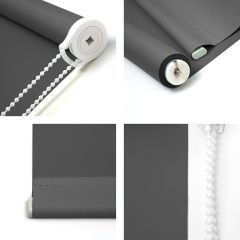
| top design | aluminum rail18-28-38 mm top rail |
| size | 80*250 100*250 120*250 match many kinds of window |
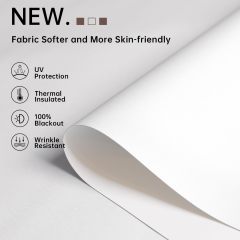
| fabric desingn | blackout daylight design |
| MOQ | 10PCS for normally size |
| Packing | carton with pp bag or pet box |
| Sample | One pcs for free |
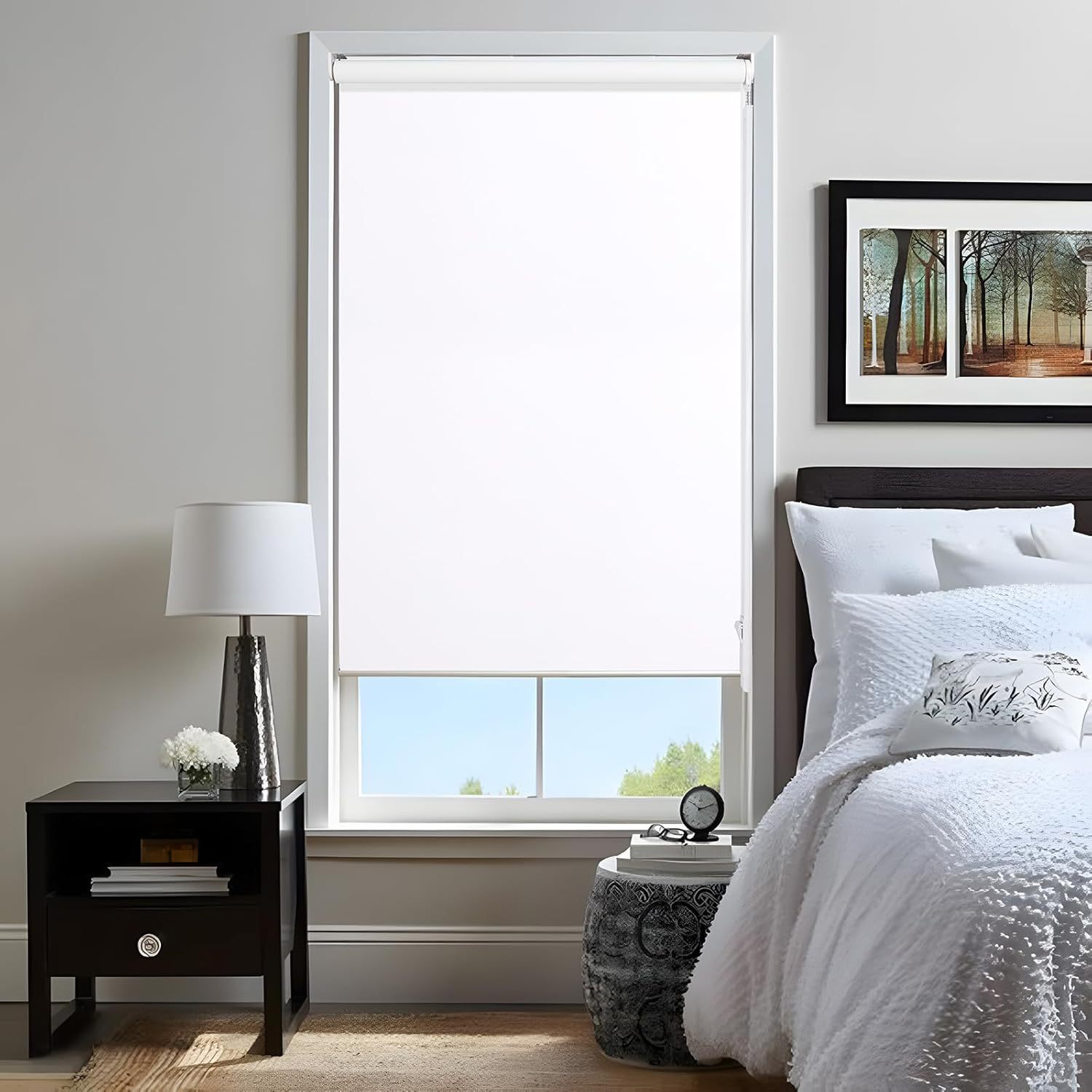
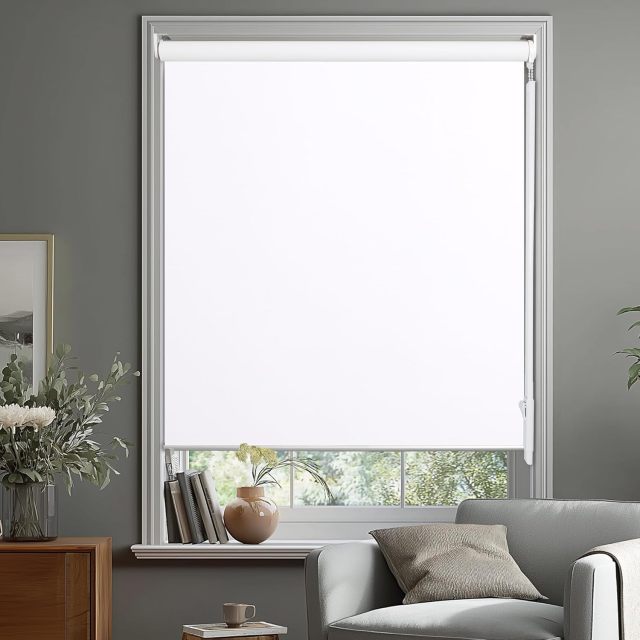
An indoor roller blind pulls down over the glass and rolls away into a slim tube at the top. This version is built for the rooms that take the most sun, with a dense opaque fabric backed by a blackout lining, so it holds back heat and daylight rather than simply dimming them, and a beaded chain that lets you leave the blind at any height instead of choosing between fully up and fully down.
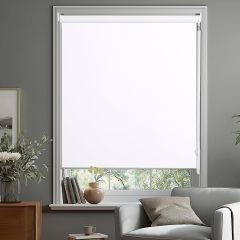
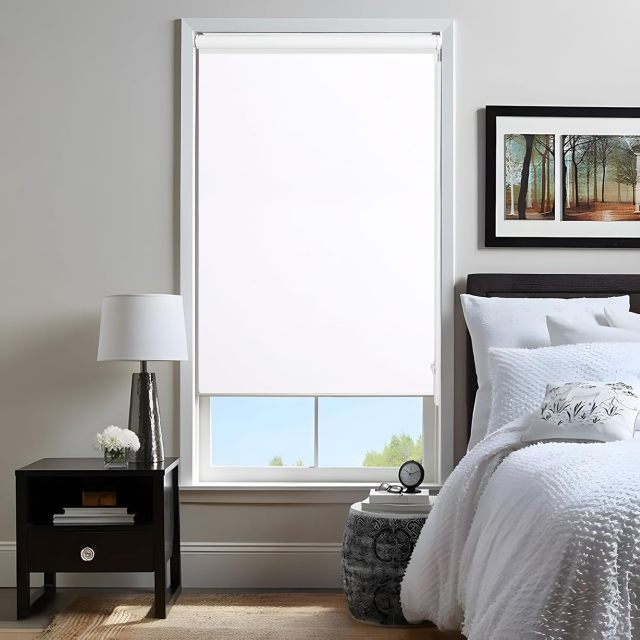
Living rooms are where it earns its keep: a west-facing wall of glass that turns the room into an oven by four o'clock, a television that disappears in the afternoon glare, or a window seat where the upholstery fades summer after summer. The same window roller blinds suit bedrooms, home offices and dining rooms without changing the hardware.
We cut and assemble every set in our own factory, so a whole house or a whole floor of apartments can be matched in one production run. They ship as single sets for a shop or a homeowner, and as wholesale roller shades for contractors, hotel refurbishments and trade programmes where the same sizes repeat across a schedule.
| Fabric face | Blackout (light-impermeable) or daylight (light-filtering) |
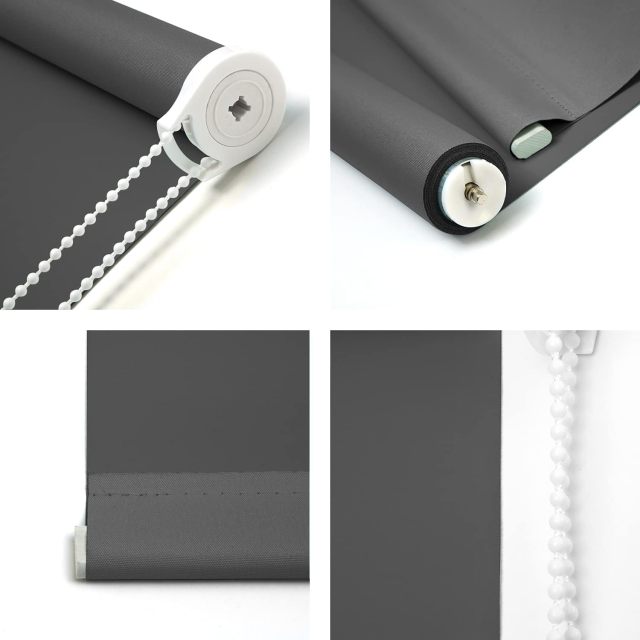
| Top rail | Aluminum, 18 mm / 28 mm / 38 mm profiles |
| Roller tube | Aluminum |
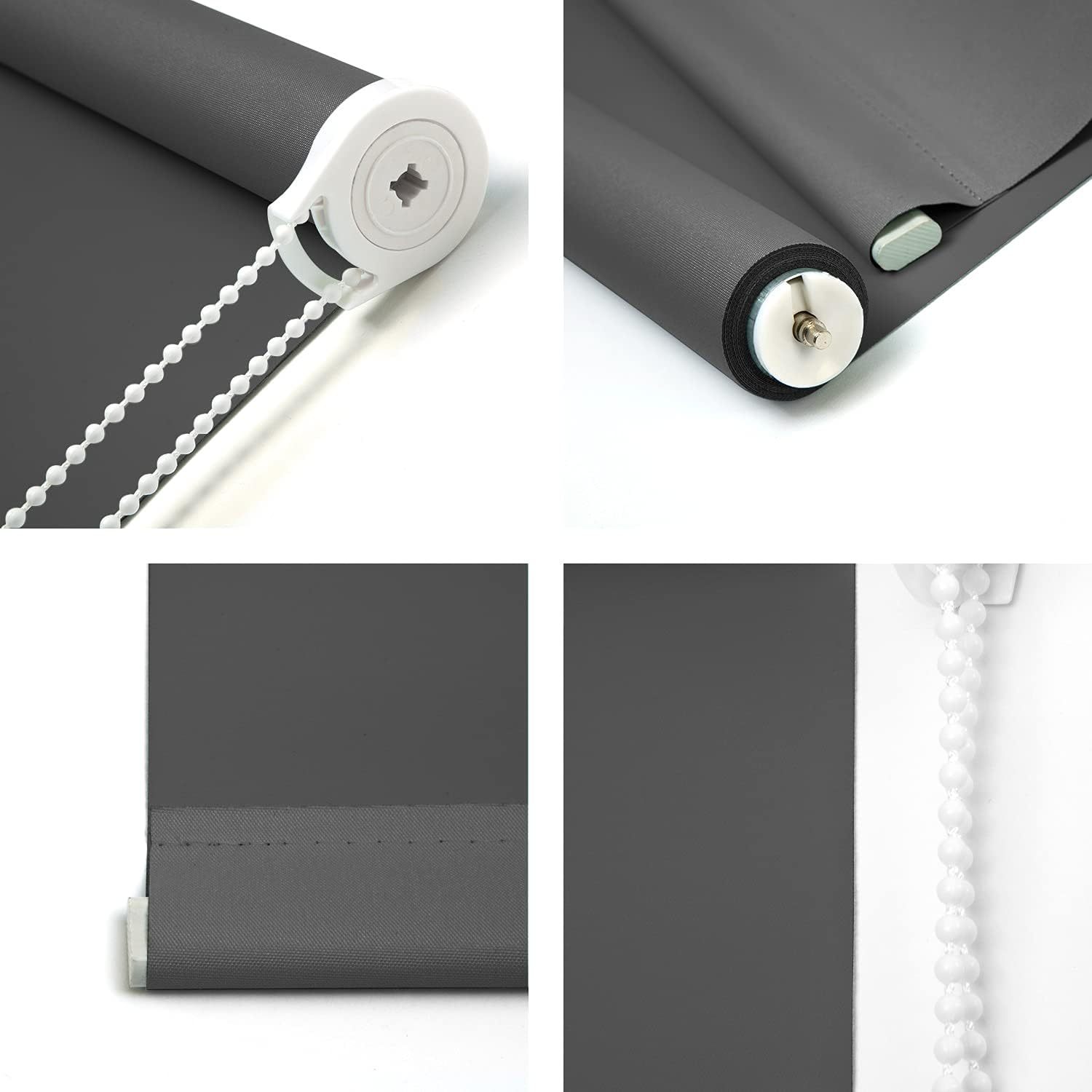
| Control | Beaded chain in a metal or ABS clutch housing |
| Operation | Manual chain; the blind holds at any height |
| Mounting | Inside the recess or outside; wall or ceiling |
| Standard sizes | 80 × 250 cm, 100 × 250 cm, 120 × 250 cm (width × height) |
| Window match | Standard sizes cover most domestic and project windows; roller window blinds outside that list are cut to order |
| Colours | White, grey, black, beige, custom colour match |
| Bottom finish | Stitched hem over a bottom bar |
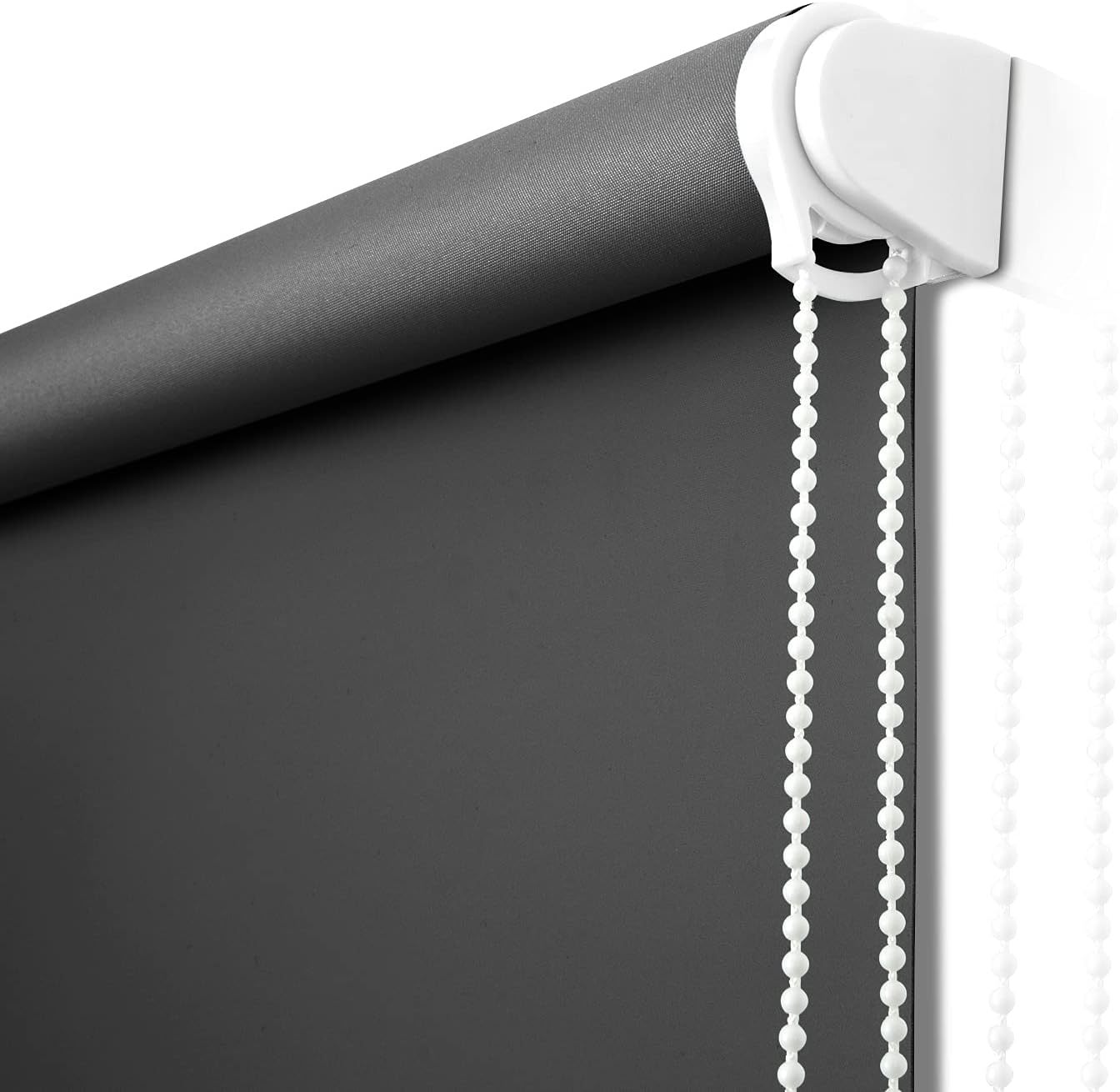
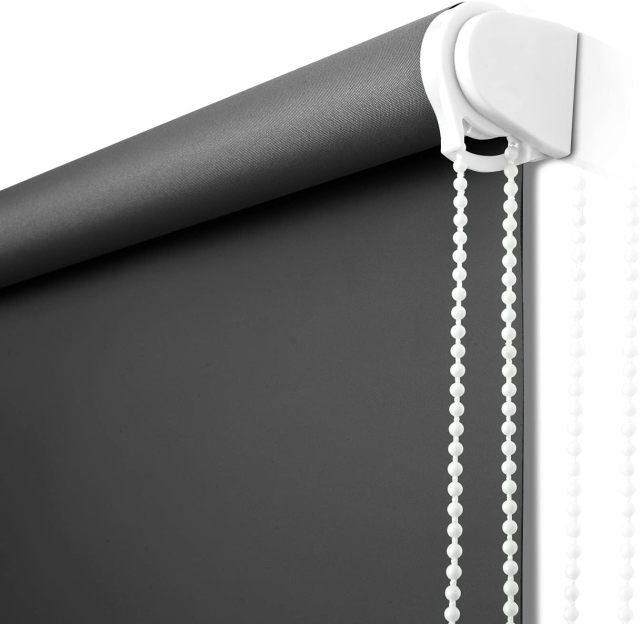
A chain rather than a pull cord. The control on these roller window blinds is a beaded chain running through a white clutch housing at the end of the tube. Each bead seats positively, so the blind moves in small, even steps instead of jumping or slipping.
Quiet in a room people sit in. The clutch is the part you hear on a commodity roller blind, and it is the part we pay attention to. There is no squeak on the way down and no rattle while the blind hangs, which matters when the window is behind the sofa rather than in a spare room.
Stops where you leave it. Let go of the chain and the blind stays exactly at that height — a hand's width from the top, halfway down, or closed to the sill.
Chain side and length. Tell us which side you would like the chain on and how far the floor sits below the window, and we will confirm what is possible for your sizes. A tall living-room window needs a longer loop than a bedroom one, and the loop should finish well above the floor.
Day-to-day handling. Pull gently and let the blind do the work; yanking shortens the life of any clutch. A quick dust of the chain every few months keeps travel smooth.
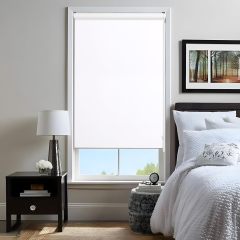
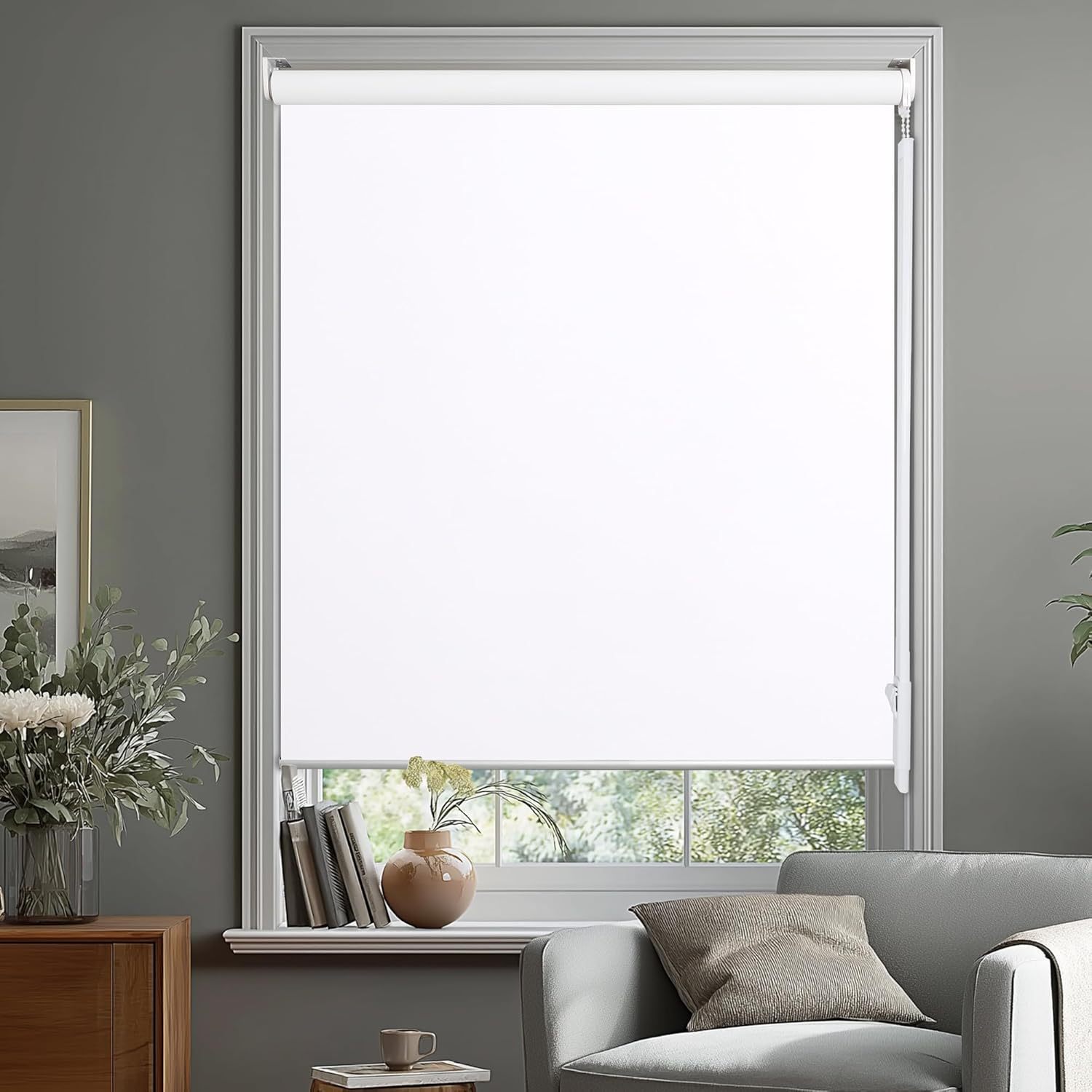
A roller blind takes its space at the top of the window, not in front of it. Raised, the fabric is wound onto the tube in a roll only a few centimetres deep, so nothing hangs in folds over a sill, a radiator or the back of a sofa.
That is why these roller window blinds sit well against furniture. The window can still be opened, the sill can hold plants, and a low radiator keeps its air. Mounted inside the recess, the blind sits almost flush with the frame; mounted outside, it covers the frame and a little of the wall, which is the usual choice when the recess is shallow or the reveals are deep.
They also suit glazed doors and wide living-room sliders, where a curtain would need a long run of track. Because the head is compact, the blind can sit behind an existing curtain track — keep the curtains for winter warmth and use the blind for daily glare control.
Breakaway chain connector. Every beaded chain is fitted with a connector that releases if the loop is pulled hard, so a child or a pet cannot be caught in it. It clips back together afterwards.
Chain routing. Keep the loop clear of cots, beds, sofa arms and anything a pet climbs. If the window is in a family room, tell us and we will advise on the arrangement that keeps the loop high and out of the way.
Tube stiffness. The fabric rolls onto an aluminum tube sized to the drop, so a wide blind does not bow in the middle or rub against the frame as it comes down. That is the difference you notice on a wide blind after a year of daily use.
Steady operation. Clutch and tube are matched, so the blind travels evenly instead of dropping on one side.
Fixings. The brackets carry the weight of the whole roll. Check that the wall or frame is sound before mounting, and re-check the screws after the first week of use.
As a window blinds supplier we build these for contract work as well as homes, which is why the safety connector and the tube stiffness are standard rather than optional.
Meijia Window Decoration has been manufacturing window coverings since 2005 and today runs a 53,000 m² factory with around 200 staff, plus a second production base in Anhui with 12 lines, backed by a database of more than 3,000 qualified suppliers. We supply builders, e-commerce sellers and supermarkets across Europe, North and South America, the Middle East and Asia, with OEM and private-label production, minor customisation and one-stop export handling under 100% quality control. Both plants hold BSCI social responsibility, ISO 9001 and ISO 14001 certification.
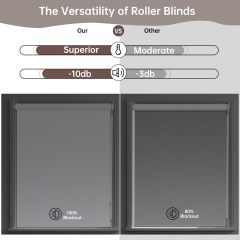
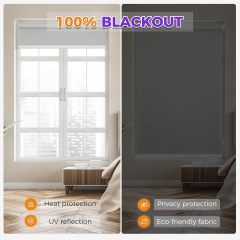
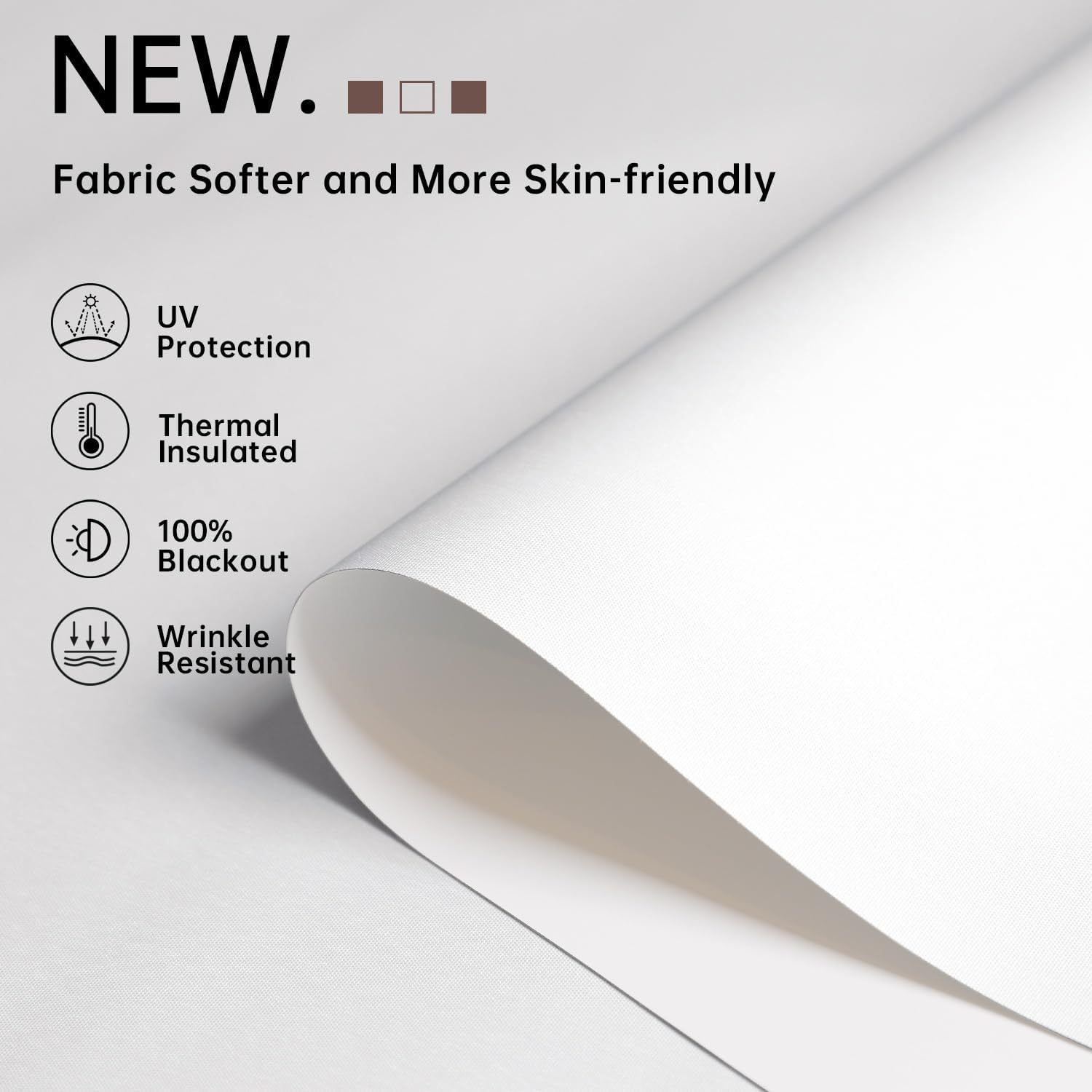
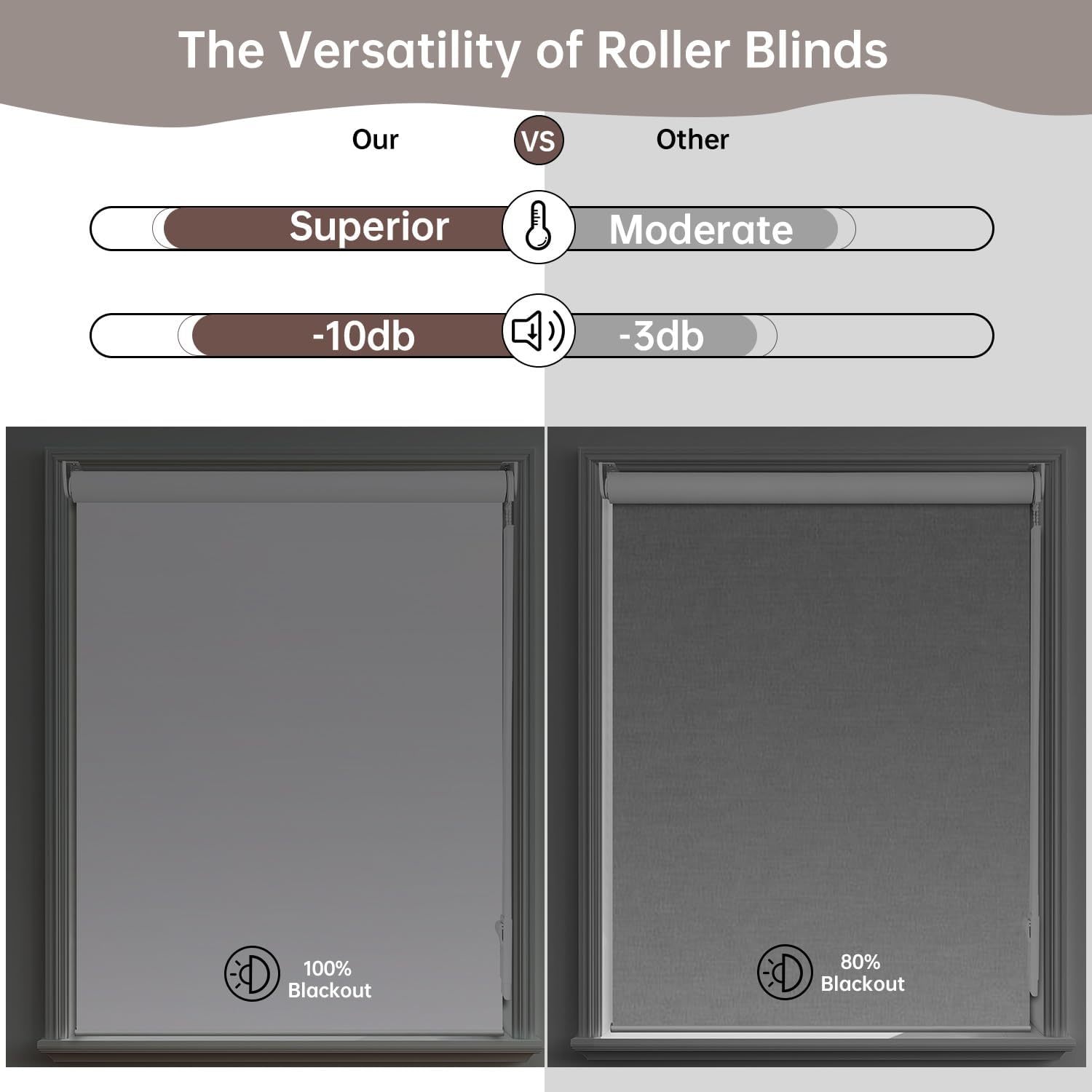
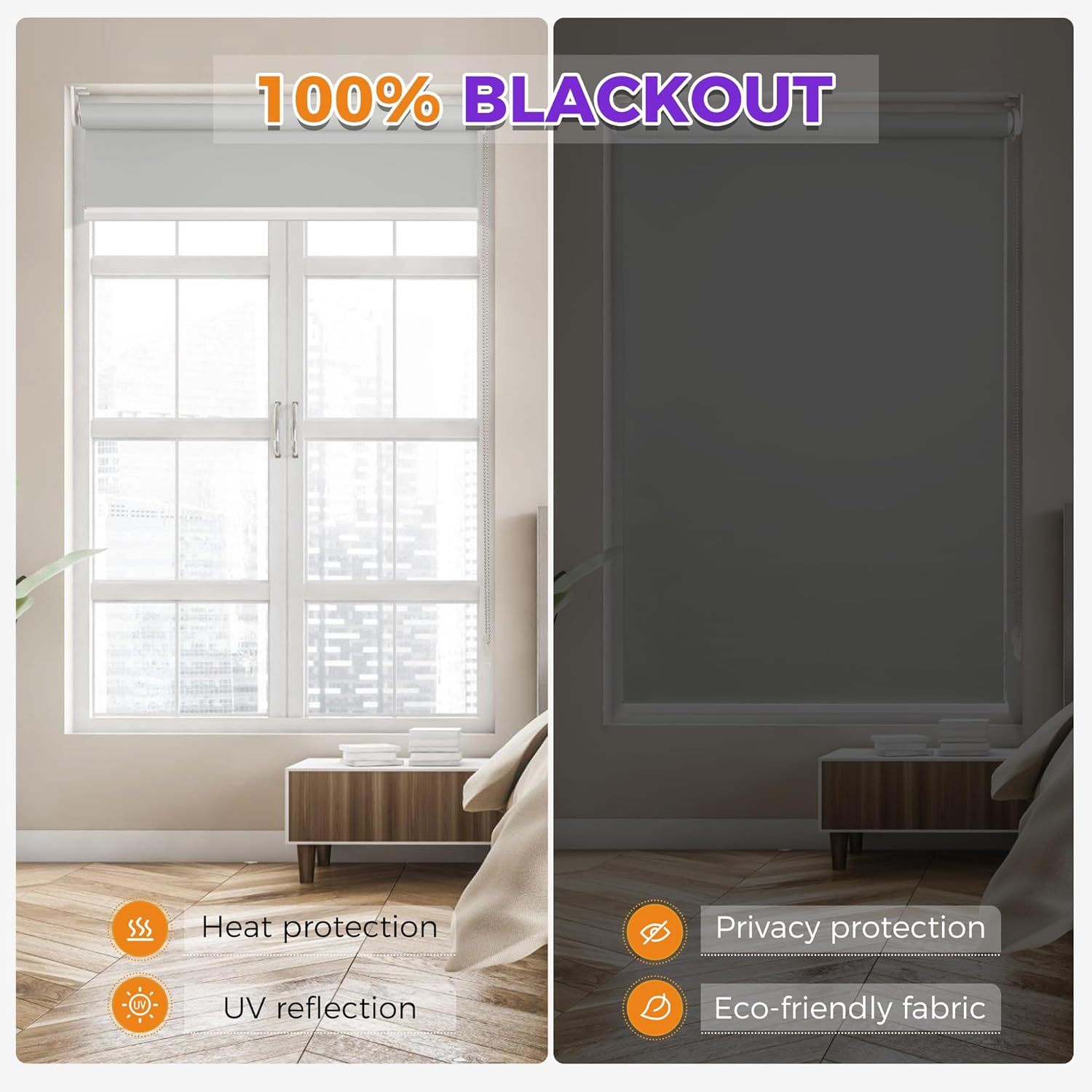
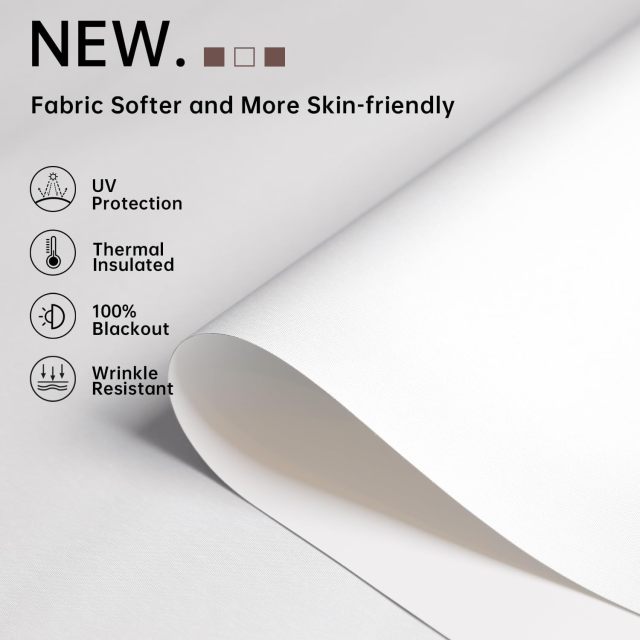
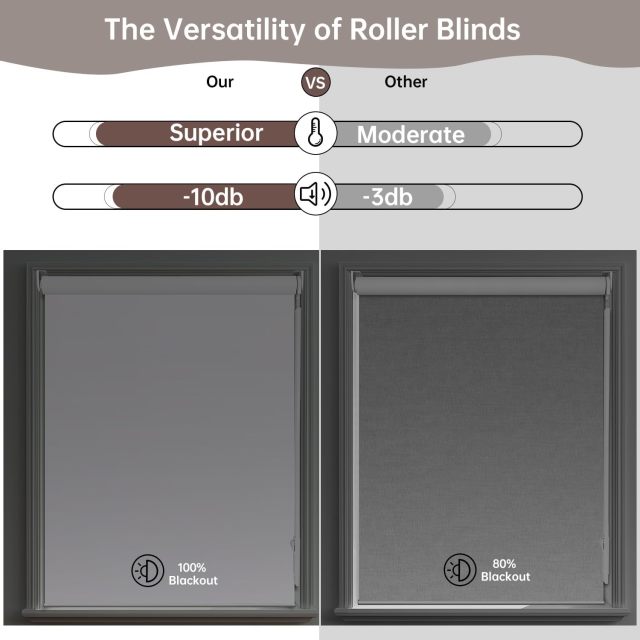
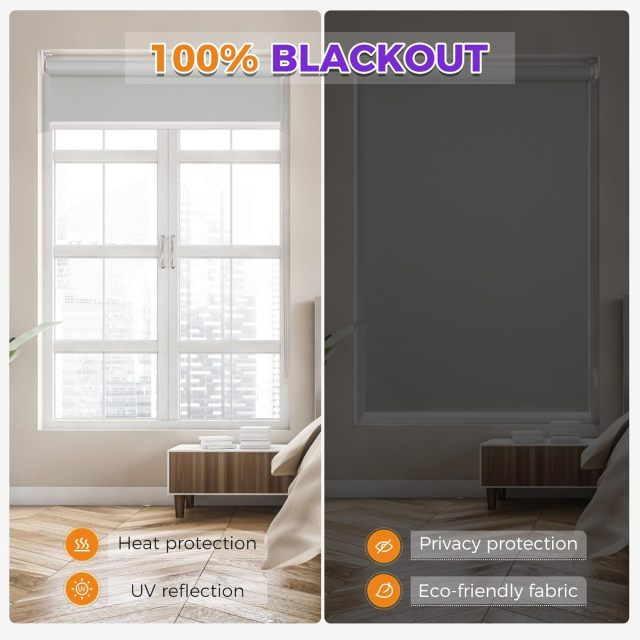
On the blackout face, up to 99% of the light reaching the glass is blocked, so a sunlit living room becomes noticeably dim and a screen stays readable. Expect a thin line of light at the sides — that is normal for a roller blind, and it closes down in a deep recess with an inside mount. If you want daylight rather than darkness, order the daylight face instead.
The blackout face is a dense, opaque fabric with a lining, and it is the one to choose when blackout shades need to darken a room for sleep, a projector or a bright afternoon. The daylight face filters light: it takes the hard edge off strong sun and spreads it evenly, but it does not give the same privacy once the lights are on at night. Many buyers use blackout in the living room and daylight where the room should stay bright.
Yes. The sizes listed above cover most windows, and anything outside them is cut to your measurement. Send the recess width, the drop you want and whether it is an inside or outside mount, and we confirm the finished dimensions before production. Custom roller blinds are cut in the same batch, so a room with three different windows can still match.
The fabric rolls onto an aluminum tube sized to the width and drop, which is what keeps a wide blind straight. Across a wide span the tube carries the load without bowing in the middle, so the blind comes down level instead of drifting to one side. Check that the brackets are fixed into sound timber, masonry or a solid frame — a loose bracket, not the tube, is the usual cause of a blind that starts to rub.
They can be fitted, but the standard blackout face is a woven fabric rather than a bathroom specialist. In a room with steam and splashes, tell us where the window is before you order and we will advise on the fabric that suits it. Cleaning is a wipe with a damp cloth either way — the fabric should not be soaked.
Dust them with a vacuum and soft brush attachment, or a dry microfibre cloth, once a month. For marks, use a damp cloth with a little mild soap and blot dry — do not scrub, and do not leave the fabric wet against the glass. Never wash the tube, clutch or chain; keep water on the fabric only.