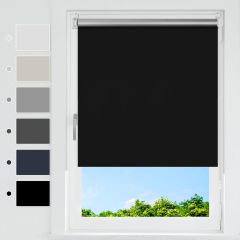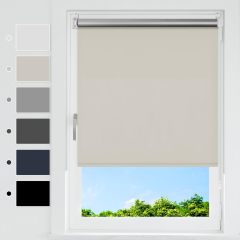
• Blackout Roller Blind, with or without Drilling, Clamp-On Thermal Roller Blind, Dark Grey, 50 x 130 cm (W x H), Privacy Screen, Sun Protection, for Windows/Doors
  • Blackout Roller Blind, with or without Drilling, Clamp-On Thermal Roller Blind, Dark Grey, 50 x 130 cm (W x H), Privacy Screen, Sun Protection, for Windows/Doors
  • Blackout Roller Blind, with or without Drilling, Clamp-On Thermal Roller Blind, Dark Grey, 50 x 130 cm (W x H), Privacy Screen, Sun Protection, for Windows/Doors
  • Blackout Roller Blind, with or without Drilling, Clamp-On Thermal Roller Blind, Dark Grey, 50 x 130 cm (W x H), Privacy Screen, Sun Protection, for Windows/Doors
  • Blackout Roller Blind, with or without Drilling, Clamp-On Thermal Roller Blind, Dark Grey, 50 x 130 cm (W x H), Privacy Screen, Sun Protection, for Windows/Doors
  • Blackout Roller Blind, with or without Drilling, Clamp-On Thermal Roller Blind, Dark Grey, 50 x 130 cm (W x H), Privacy Screen, Sun Protection, for Windows/Doors
  • Blackout Roller Blind, with or without Drilling, Clamp-On Thermal Roller Blind, Dark Grey, 50 x 130 cm (W x H), Privacy Screen, Sun Protection, for Windows/Doors
  • Blackout Roller Blind, with or without Drilling, Clamp-On Thermal Roller Blind, Dark Grey, 50 x 130 cm (W x H), Privacy Screen, Sun Protection, for Windows/Doors
  • Blackout Roller Blind, with or without Drilling, Clamp-On Thermal Roller Blind, Dark Grey, 50 x 130 cm (W x H), Privacy Screen, Sun Protection, for Windows/Doors
  • Blackout Roller Blind, with or without Drilling, Clamp-On Thermal Roller Blind, Dark Grey, 50 x 130 cm (W x H), Privacy Screen, Sun Protection, for Windows/Doors
  • Blackout Roller Blind, with or without Drilling, Clamp-On Thermal Roller Blind, Dark Grey, 50 x 130 cm (W x H), Privacy Screen, Sun Protection, for Windows/Doors
  • Blackout Roller Blind, with or without Drilling, Clamp-On Thermal Roller Blind, Dark Grey, 50 x 130 cm (W x H), Privacy Screen, Sun Protection, for Windows/Doors
  • Blackout Roller Blind, with or without Drilling, Clamp-On Thermal Roller Blind, Dark Grey, 50 x 130 cm (W x H), Privacy Screen, Sun Protection, for Windows/Doors
  • Blackout Roller Blind, with or without Drilling, Clamp-On Thermal Roller Blind, Dark Grey, 50 x 130 cm (W x H), Privacy Screen, Sun Protection, for Windows/Doors
  • Blackout Roller Blind, with or without Drilling, Clamp-On Thermal Roller Blind, Dark Grey, 50 x 130 cm (W x H), Privacy Screen, Sun Protection, for Windows/Doors
  • Blackout Roller Blind, with or without Drilling, Clamp-On Thermal Roller Blind, Dark Grey, 50 x 130 cm (W x H), Privacy Screen, Sun Protection, for Windows/Doors

Blackout Roller Blind, with or without Drilling, Clamp-On Thermal Roller Blind, Dark Grey, 50 x 130 cm (W x H), Privacy Screen, Sun Protection, for Windows/Doors

  1. Space-saving design: Roller blinds roll up neatly into a compact headrail when not in use, taking up minimal space and keeping windows unobstructed, ideal for small rooms or spaces where bulky window treatments are impractical.
  2. Light control flexibility: They allow easy adjustment of light levels—fully lowered for maximum privacy and light blockage, partially rolled up for soft diffused light, or completely raised to let in full sunlight.
  3. Easy maintenance: Made of durable, wipeable materials (like polyester or vinyl), roller blinds can be quickly cleaned with a damp cloth to remove dust or stains, requiring little effort to keep them in good condition.
  4. Versatile style: Available in a wide range of colors, patterns, and opacities (from sheer to blackout), they match various interior decor styles, from modern and minimalist to classic and cozy.
  5. Simple operation: Most roller blinds feature user-friendly mechanisms, such as cord pulls, chain controls, or motorized options, making them easy to raise and lower for people of all ages
color:
white
grey
black
beige
customized color
size:
customized size
  • Blackout Roller Blind, with or without Drilling, Clamp-On Thermal Roller Blind, Dark Grey, 50 x 130 cm (W x H), Privacy Screen, Sun Protection, for Windows/Doors
  • Blackout Roller Blind, with or without Drilling, Clamp-On Thermal Roller Blind, Dark Grey, 50 x 130 cm (W x H), Privacy Screen, Sun Protection, for Windows/Doors
  • Blackout Roller Blind, with or without Drilling, Clamp-On Thermal Roller Blind, Dark Grey, 50 x 130 cm (W x H), Privacy Screen, Sun Protection, for Windows/Doors
  • Blackout Roller Blind, with or without Drilling, Clamp-On Thermal Roller Blind, Dark Grey, 50 x 130 cm (W x H), Privacy Screen, Sun Protection, for Windows/Doors
  • Blackout Roller Blind, with or without Drilling, Clamp-On Thermal Roller Blind, Dark Grey, 50 x 130 cm (W x H), Privacy Screen, Sun Protection, for Windows/Doors
  • Blackout Roller Blind, with or without Drilling, Clamp-On Thermal Roller Blind, Dark Grey, 50 x 130 cm (W x H), Privacy Screen, Sun Protection, for Windows/Doors
  • Blackout Roller Blind, with or without Drilling, Clamp-On Thermal Roller Blind, Dark Grey, 50 x 130 cm (W x H), Privacy Screen, Sun Protection, for Windows/Doors
  • Blackout Roller Blind, with or without Drilling, Clamp-On Thermal Roller Blind, Dark Grey, 50 x 130 cm (W x H), Privacy Screen, Sun Protection, for Windows/Doors

Description

Why Choose Our Roller Blinds?

  • Superior Light & Privacy Control: Crafted with high-density blackout fabric (95% light-blocking rate) or breathable light-filtering material—block harsh sunlight for restful sleep, reduce glare on screens, or let soft natural light fill your room. Enjoy complete privacy without sacrificing air circulation!
  • Durable & Easy-to-Clean Materials: Made with tear-resistant polyester, waterproof PVC, or premium cotton-linen blends. Moisture-proof and stain-resistant, they wipe clean in seconds with a damp cloth—ideal for busy households, kids, or pets. Rust-proof aluminum roller tube ensures smooth operation for years.
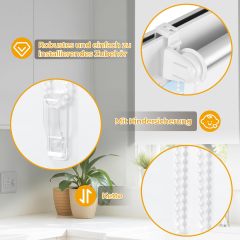
  • Tool-Free Easy Installation: Come with all mounting hardware (brackets, screws, instruction manual) and fit most standard windows. Choose inside or outside mount—installs in 15 minutes or less, no professional skills needed!
  • Smooth & Quiet Operation: Equipped with a heavy-duty chain mechanism or optional motorized remote control (available in select sizes). Raise/lower effortlessly without jamming, and the quiet roller design won’t disturb your peace.
  • Sleek & Versatile Style: Available in 12+ neutral colors (white, gray, beige, black) and multiple sizes (24"-72" width). Minimalist lines complement modern, industrial, rustic, or traditional decor—seamlessly blend with your furniture and walls.

🌿 Perfect for Every Space

  • Bedrooms: Block early morning light for deep sleep; reduce noise from outside.
  • Offices: Cut screen glare to boost productivity; maintain professional privacy.
  • Kitchen/Bathroom: Waterproof fabric resists humidity and splashes; easy to wipe clean.
  • Living Rooms: Filter light for a cozy ambiance; keep furniture from fading in direct sun.

📏 Customizable Fit

We offer standard sizes to fit most windows, plus custom size options—just contact us with your window dimensions for a tailored solution. All blinds feature a 3/4" side rail gap for a snug fit and maximum light blockage.

top design  aluminum rail pvc rail  iron rail and  18-28-38.50 mm top rail
bottom rail  can match to the top rail 
fabric desingn blackout daylight design 
MOQ 10PCS for normally size 
Packing carton with pp bag or pet box 
Sample One pcs for free 


Product Overview

This is a clamp-on thermal roller blind in dark grey, 50 cm wide and 130 cm deep, a compact size that suits narrow windows, side lights and the glazed panels in doors. The fabric rolls down flat from a slim headrail and stops wherever you leave it, so the same blind gives you full blackout at night and a shaded, private room during the day. It replaces curtains or a Venetian where either would crowd the sill: nothing hangs into the room, nothing swings, and the glass stays clear when the blind is up.

You can mount it two ways. The clamp brackets grip the frame or the door panel and need no drill, no wall plugs and no ladder work; if you want a permanent fixing, the same blind can be screwed to the wall or ceiling above the opening. That no-drill grip is why this size is often specified for rented flats, hotel rooms, student accommodation and small offices where the frames cannot be altered.

For trade buyers the value is in the range behind it: the same construction is produced as custom roller blinds in any width and drop, in white, grey, black, beige or a colour matched to your scheme, with aluminium, PVC or iron rails depending on budget and frame depth. Distributors use this compact size as an opening price point; contractors use it as a fill-in item for the smaller openings on a window schedule. As with the rest of our window roller blinds, the fabric can also be ordered in a light-filtering daylight weave if the room does not need to go fully dark.

Blackout Roller Blind, with or without Drilling, Clamp-On Thermal Roller Blind, Dark Grey, 50 x 130 cm (W x H), Privacy Screen, Sun Protection, for Windows/Doors

Light Control & Privacy

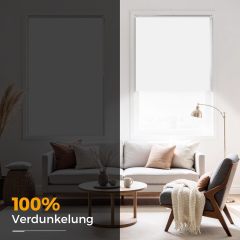
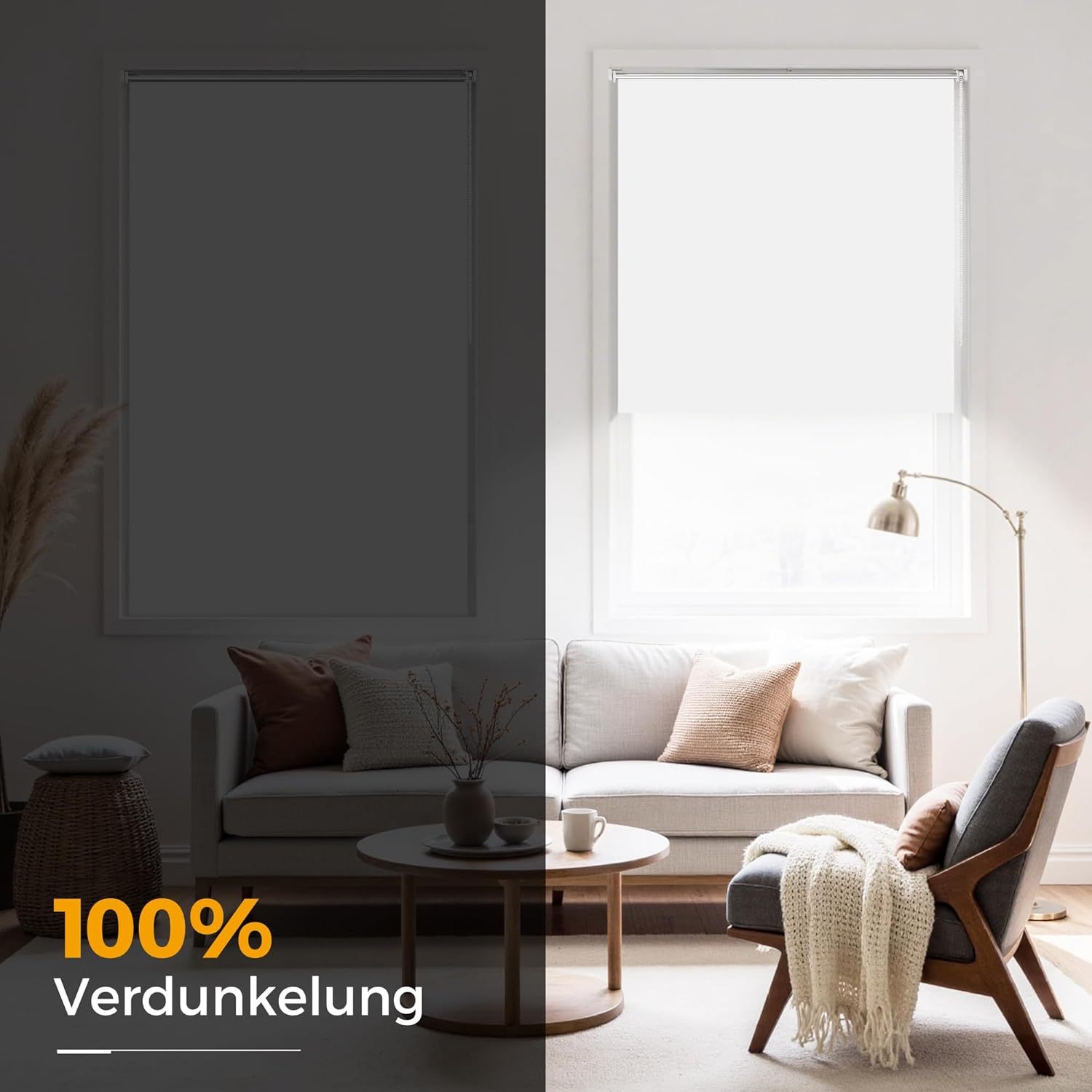
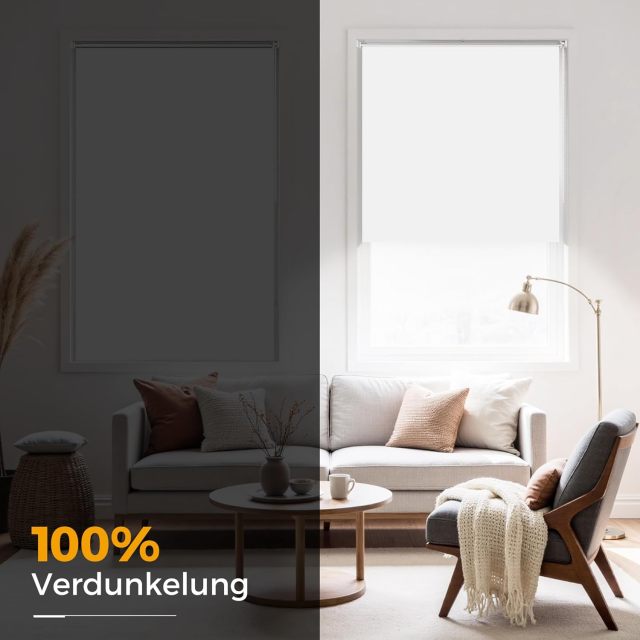
  • Rated at 95% light blocking. The blackout weave is dense enough to take out early summer sun, street lighting and the glow of a screen, so a bedroom reads dark and a meeting room stops throwing reflections across the table.
  • Dark grey behaves better at night. A pale blind lights up when a car passes; this charcoal tone absorbs that spill and keeps the window edge from glowing in a dark room.
  • Opaque when lowered. The panel is solid rather than sheer, so nobody can see in or read a silhouette from outside even with a lamp on inside.
  • Daylight weave if you want the view. The same blind is produced in a light-filtering fabric that softens glare and keeps the outlook, for rooms that should not go dark.
  • Stops the sun before it reaches the furniture. Keeping the panel down through the brightest hours is what protects flooring, timber and upholstery from fading.
  • Any height, not just up or down. The chain drive lets you drop the blind halfway for daytime privacy with light coming over the top.
  • A narrow light line at the sides is normal. Roller fabric runs inside the brackets, so a slim line can appear where it meets the frame; the rail gap is kept close to hold it to a minimum.
  • Where these blackout roller blinds differ. This is the compact size in the range, using the same fabric and hardware as the wide units but cut narrow for side lights, doors and small rooms.

Thermal Performance

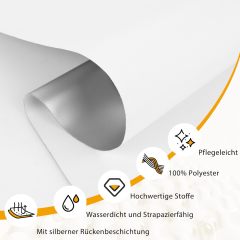
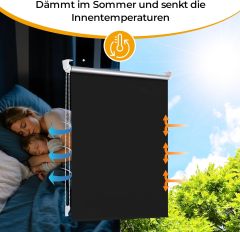
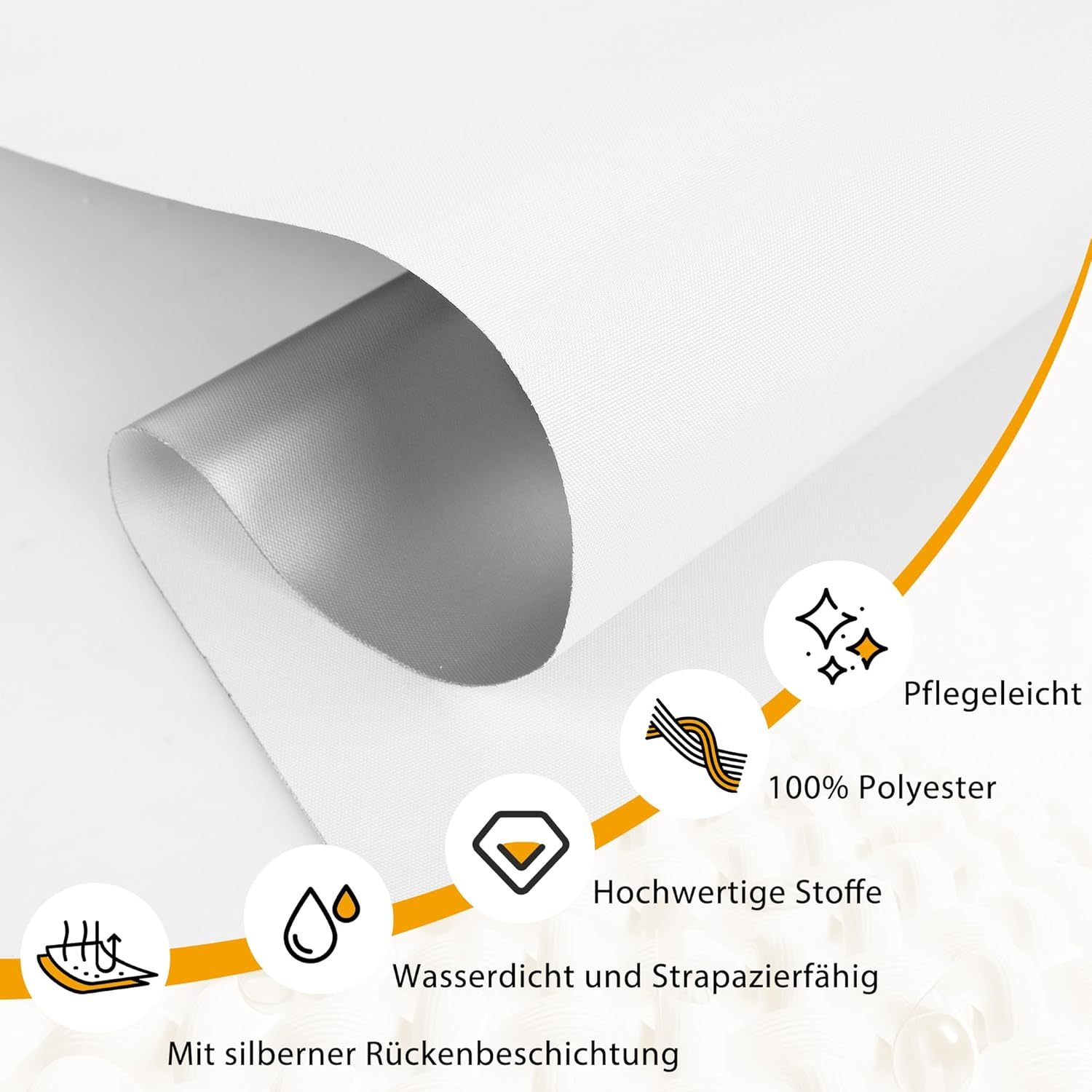
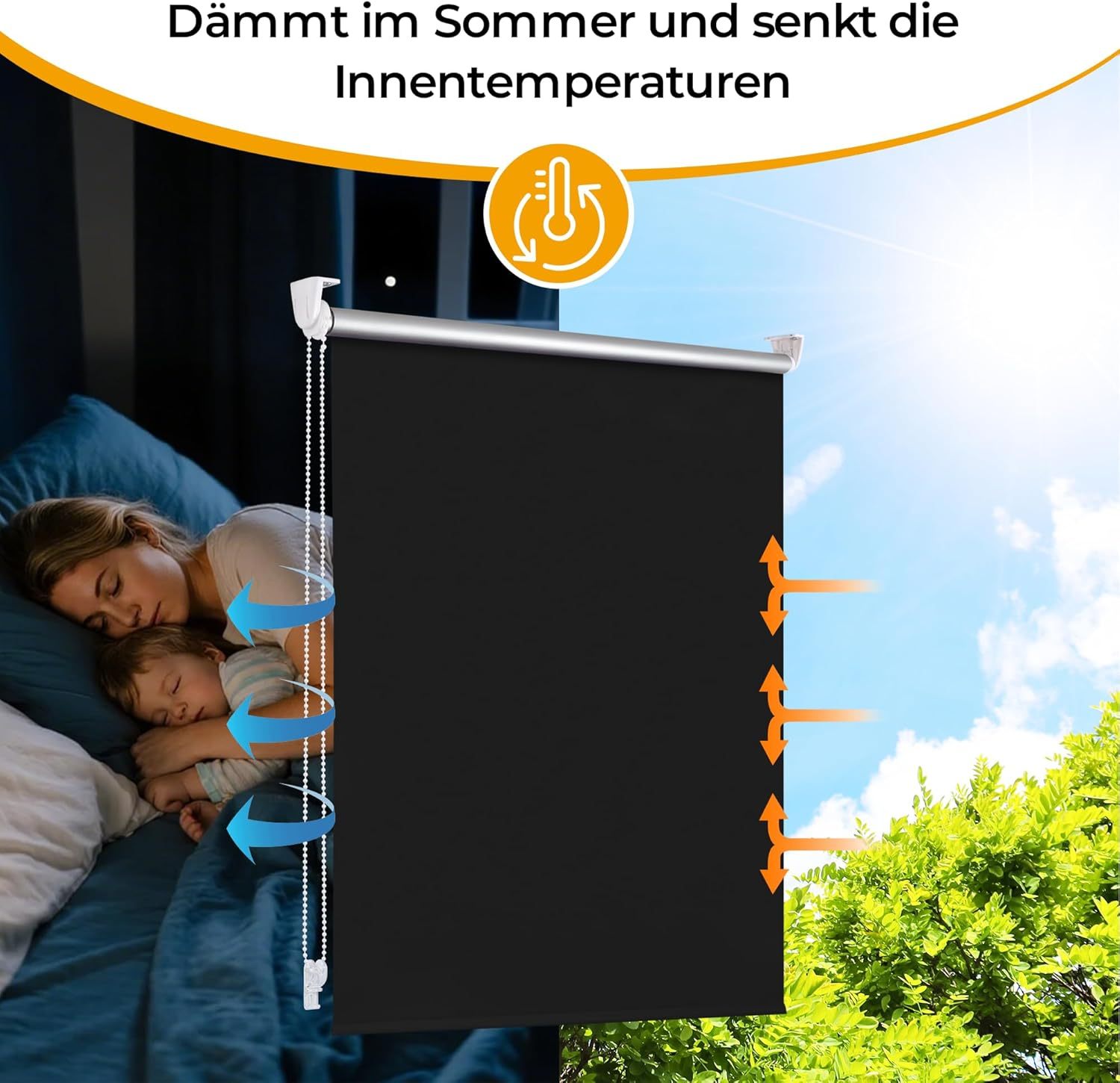
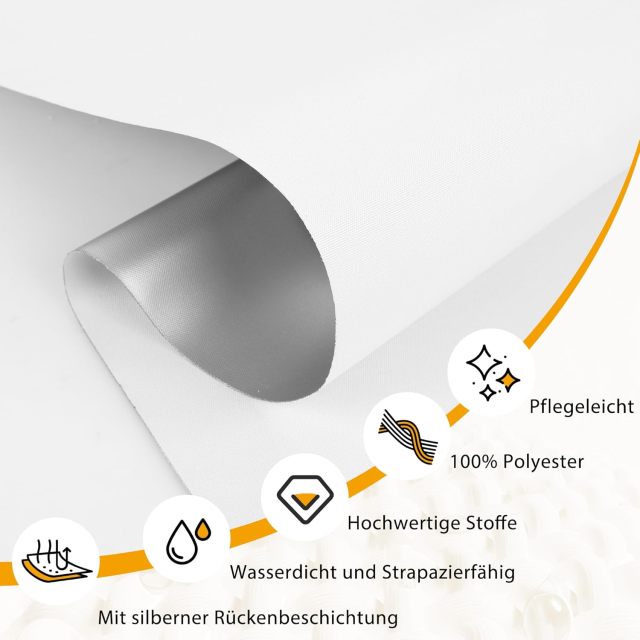
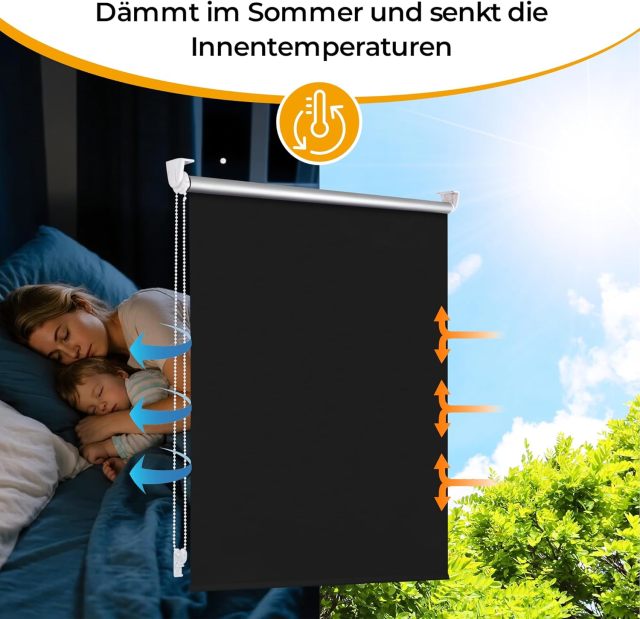
The reverse of the blackout fabric is finished with a silver coating. That layer does the thermal work: instead of letting radiant heat pass through the panel and warm the room, it reflects it back towards the glass. On a west-facing door or a window that catches the afternoon sun, that is the difference between a room that stays usable at four in the afternoon and one that has to be given up.

In winter the same panel does the opposite job. A lowered blind traps a still layer of air between the fabric and the glass, so the cold surface stops pulling warmth out of the room and the draught that rolls off a large window is reduced. Glazed doors are the leakiest part of most rooms, which is why door blinds are often specified for them rather than for the walls.

Two practical points. Lower the blind before the sun lands on the glass rather than after, because the aim is to stop heat entering, not to cool a room that has already warmed up. And lower it close to the sill or threshold; a blind left hanging well short of the bottom lets heat and light round the edge and does much less work. This is a blind, not a replacement for double glazing or cavity insulation: it reduces the load on the room, it does not remove it.

Fabric Quality & Cleaning

  • Polyester blackout weave. Tight, high-density construction with a matte face; it hangs flat, rolls evenly and resists tearing at the edges when the blind is pulled.
  • Aluminium roller tube. The fabric rolls onto an aluminium tube that does not rust, so a steamy bathroom or a kitchen window will not seize the mechanism.
  • A matched bottom rail. The hem bar is finished to match the top rail, which keeps the fabric taut across the width and gives a straight bottom line instead of a curling edge.
  • Moisture resistant, at home in a kitchen. Splashes and condensation wipe off; the fabric does not need dry cleaning and does not mark from a damp cloth.
  • Dust once a week. A dry microfibre cloth, or a vacuum on the soft brush attachment, run down the panel while it is fully lowered, stops dust settling into the weave.
  • Wipe marks along the weave. Use a damp cloth with a little mild soap, wrung out, worked along the fabric rather than scrubbed across it, then a clean damp cloth and a towel.
  • Let it dry before rolling up. Rolling a damp blind traps moisture inside the roll, so leave it down until the fabric is dry to the touch.
  • Nothing aggressive. No bleach, no abrasive pads, no solvent cleaners and no machine washing; any of those will dull the finish on these blackout roller blinds long before the fabric itself wears out.

Clamp-On & Screw Mounting

  1. With the position settled at measuring time, mark the two bracket points on the frame at the same height.
  2. Clean the frame face with a damp cloth and let it dry. Polish, grease and dust are what make a clamp slip.
  3. Check the frame is flat across the bracket position and deep enough for the clamp to close on it. On thin aluminium or rounded uPVC sections, confirm the bracket fits before you order.
  4. Open each clamp bracket, seat it on the frame, close it and tighten by hand. Firm is enough; over-tightening distorts the bracket.
  5. Measure from the frame to the bracket on both sides so the blind sits level before anything is hung.
  6. Clip the roller into the brackets and push the chain end into the clutch until it seats.
  7. Run the blind fully down and fully up twice, checking that the hem stays level and the chain runs cleanly.
  8. If you would rather screw it up. The same blind can be fixed with screws to the wall or the ceiling above the opening. That route needs a drill and the right plug for your wall, since masonry, plasterboard and timber all take different fixings, and it gives a more permanent hold on a door that is opened and closed all day. Buyers often start with the clamp brackets on a rental and switch to screws once the building is their own, which is the practical advantage of no drill roller blinds. Whichever route you take, the blind clips into the same headrail, so nothing about the fabric or the control changes.

Chain Control & Child Safety

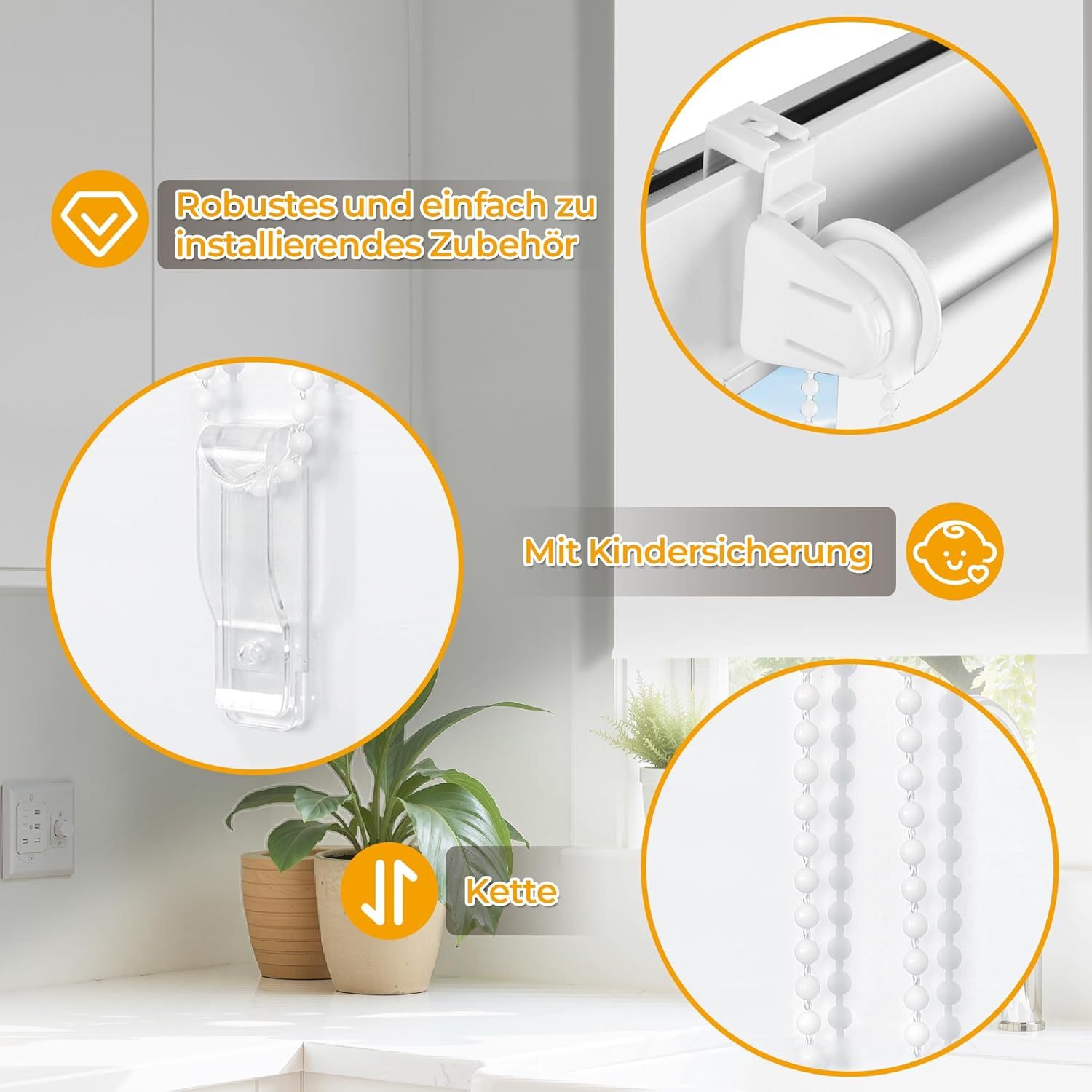
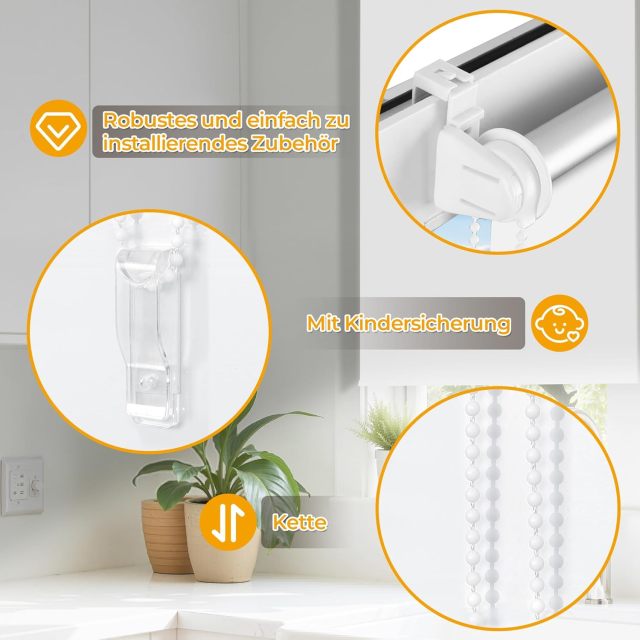
The control is a beaded chain running in a loop down one side of the headrail, through a clutch inside the roller. Pull the front of the loop and the blind drops; pull the back and it lifts. Because the chain drives a clutch rather than a cord winding onto a spool, the panel stops where you leave it with no slip and no jam, and the roller turns quietly instead of rattling against the brackets.

That matters more than it sounds in a room where the blind moves twice a day. Chain drives are the quieter mechanism as a blind ages, and the clutch is the part that keeps the fabric tracking straight across the width, so the hem does not creep to one side after a year of use.

The chain loop is also the one part of the blind that needs a decision. A tensioner and safety clip are supplied; fit them. The clip holds the loop taut against the wall or frame so it cannot form a slack loop that a small child or a pet can reach. Keep the chain side away from cots, beds and low furniture, and if the blind is going into a nursery or a room children use, say so when you order so the chain side and length can be set accordingly.

If the blind will be moved constantly, in a hotel room, a meeting room or a door that opens all day, ask about the motorised version. Optional motorised control is available in select sizes, so confirm it against this size before you specify it. Across the window roller blinds we supply, the manual chain stays the safest choice for doors simply because there is nothing to charge and nothing to lose.

Room & Door Applications

  • Bedrooms. The blackout panel takes out early light and street glare, and the dark grey keeps the window from glowing at the edges once the lights are off.
  • Glazed doors and side panels. Clamp brackets mean no holes in a door leaf or a landlord's frame, and measuring the glass rather than the whole door gives the cleanest result with door blinds of this size.
  • Home offices and meeting rooms. Drop the blind to the height of the screen and the reflections go, while the fabric stops the room being overlooked during a call.
  • Kitchens and bathrooms. The moisture-resistant weave wipes clean in a splash zone, and there is no cord trailing across a wet worktop.
  • Living rooms. Lower it through the afternoon to keep the sun off furniture; it is one of the simplest blinds for windows to live with, because there is nothing to gather or tie back.
  • Rentals and serviced apartments. No drilling means no making good at the end of a tenancy, and the blind comes off in minutes for cleaning or storage.
  • Hotels, clinics and student accommodation. One specification repeated across rooms: same fabric, same colour, same bracket, so replacements still match years later.
  • Showrooms and commercial displays. Small panels let a showroom control daylight on a display without blocking the window off entirely.

Colour & Finish

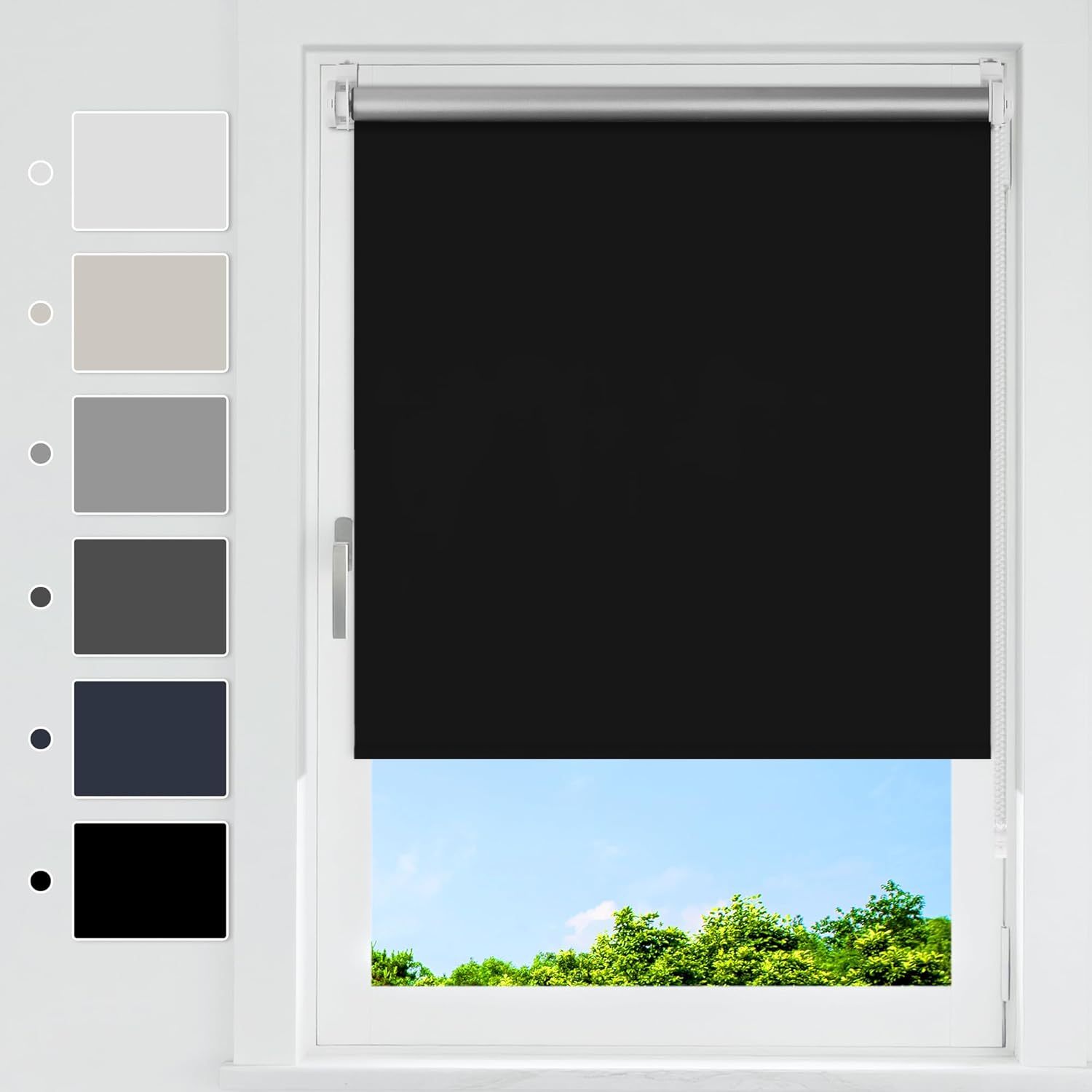
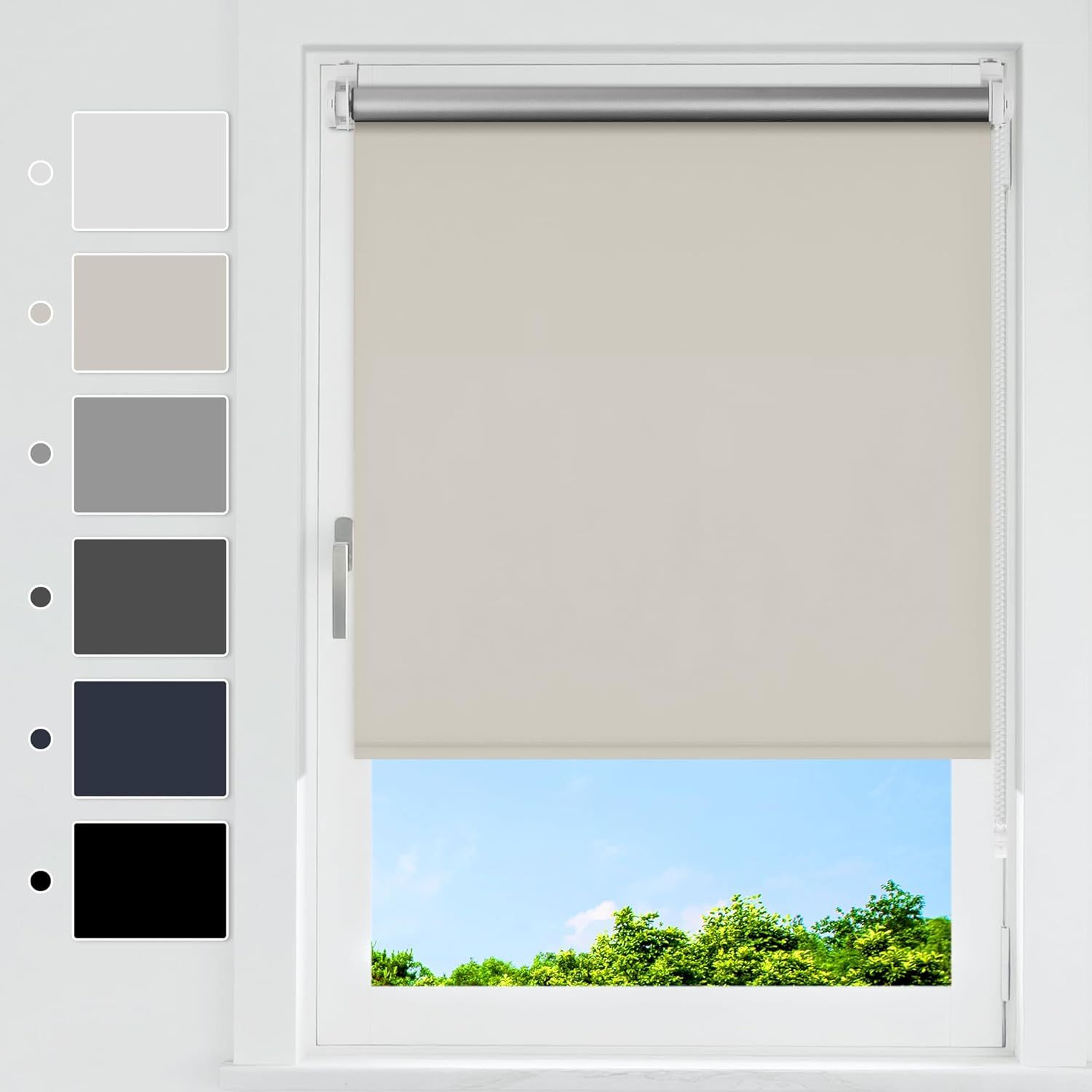
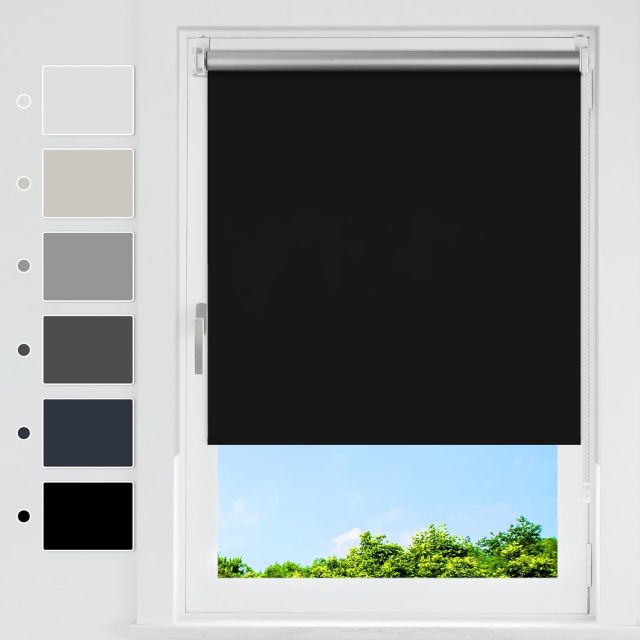
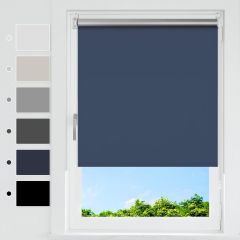
Dark grey is the colour most buyers choose when the frame is anthracite, grey or white and the room is neutral. It reads as charcoal rather than black, holds its tone in daylight, and because the face is matte there is no sheen across the window when the sun is on it. In a room with pale walls it makes the window read as a deliberate dark frame; against a dark wall it almost disappears.

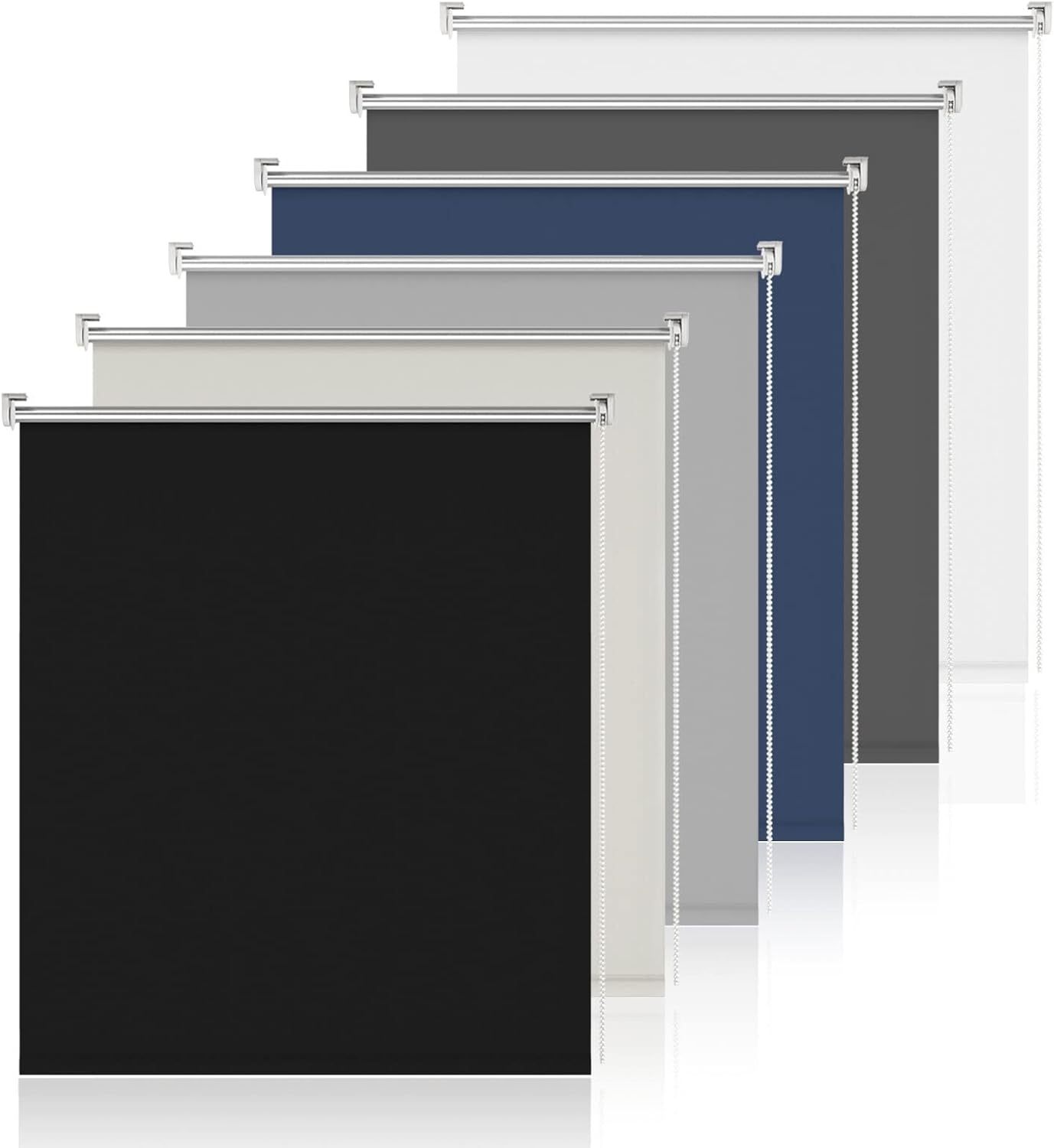
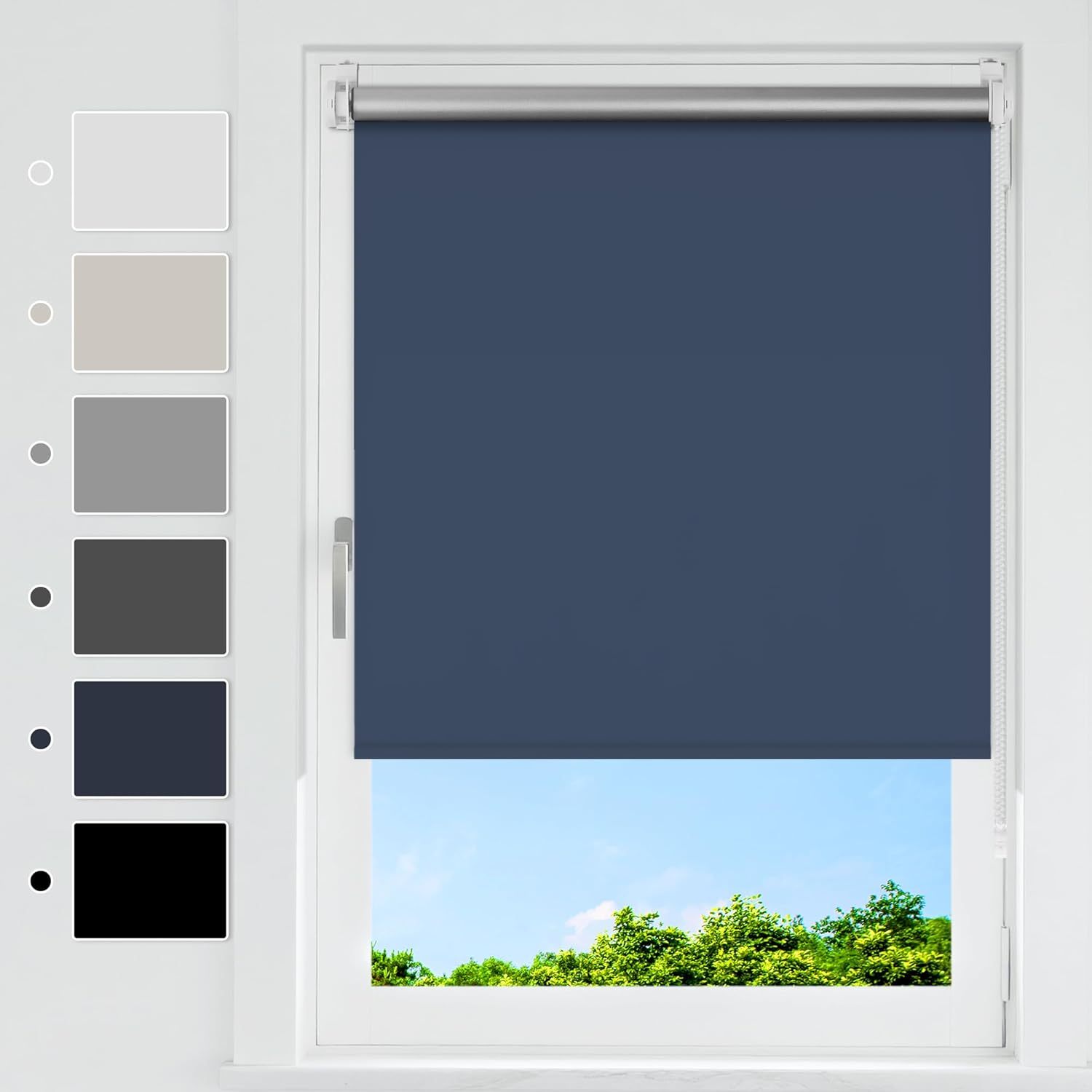
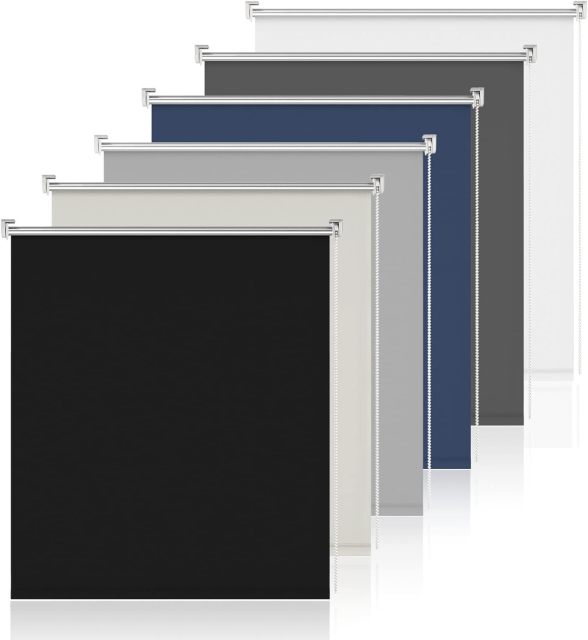
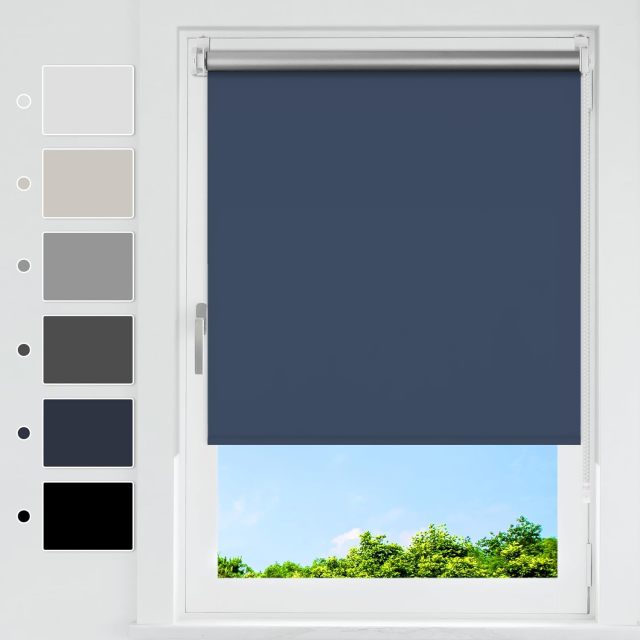
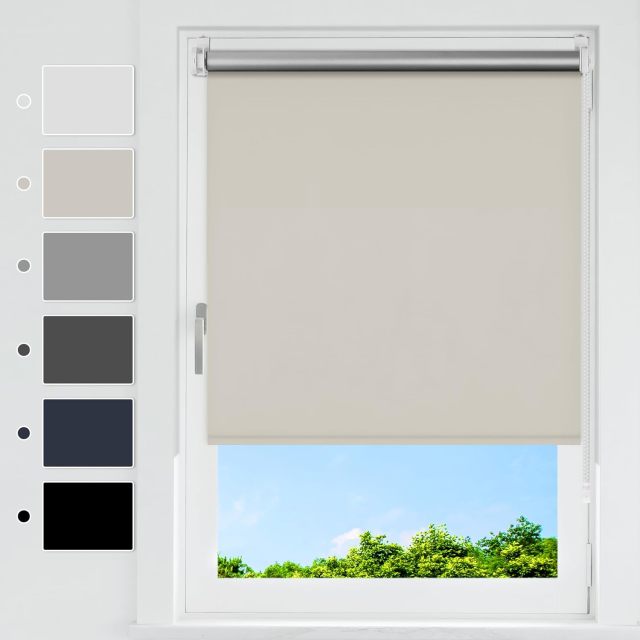
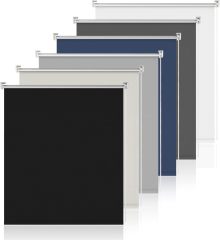
The range around it is deliberately narrow. The same blind is produced in white, grey, black and beige, and in a custom colour matched to a sample you send. For a project that means one fabric family across every opening: white in the bathrooms, dark grey in the bedrooms, beige in the reception rooms, with the same hardware and the same chain throughout.

Two details do most of the visual work. The headrail is slim, so the blind sits close to the top of the frame instead of hanging below it. And the bottom rail matches the top, which gives a straight line at the hem rather than a visible weight bar in a different finish.

If colour accuracy matters, on a hotel floor, a commercial rollout, or a house where the blind meets the kitchen cabinet doors, ask for a physical swatch rather than judging from a screen. The gallery shows the swatch options, but dark grey is the one that changes most between a bright showroom and a north-facing room. Across these blackout roller blinds the palette stays consistent from order to order, which is what makes repeat programmes work.

Sizing & Fit

  • Measure the opening, not the old blind. Width at the top, middle and bottom of the recess, taking the smallest figure; then the drop from the point where the headrail will sit down to the sill or threshold.
  • Inside the recess. Order close to the recess width so the fabric sits within the frame, where the light gap is smallest and the line is cleanest.
  • Over the face of the frame. Add an overlap at each side so the fabric covers the frame edge; this is the usual choice when a light line at the sides would be noticed.
  • This size. Narrow windows, side lights, glazed door panels and small rooms where a wider blind would eat the wall.
  • Custom sizes. Any width and drop, cut to your measurement. Give the figures in millimetres and say whether it is a recess measurement or an overall measurement, because custom blinds cannot be adjusted once the fabric is cut.
  • Check the rail depth. The top rail is made in four depths; a deeper rail needs more clearance behind the fabric, so match it to the frame depth rather than always taking the largest.
  • Check the bracket clearance. For no drill roller blinds the clamp needs a flat face of a certain depth, so measure that face as well as the glass, especially on slim uPVC sections.
  • Replacing an existing blind. Measure the old one end to end, including its brackets, and note where it was fixed. That number is usually the fastest way to get the new one right first time.

Specifications

SpecificationDetail
FabricHigh-density polyester blackout weave with a matte face
Fabric designBlackout as standard; daylight (light-filtering) option
OpacityOpaque when fully lowered
Colour, this itemDark grey
Colours availableWhite, grey, black, beige and custom colour
Size, this item50 cm wide x 130 cm drop (W x H)
Top railAluminium, PVC or iron
Top rail depth18 mm, 28 mm, 38 mm or 50 mm
Bottom railMatched to the top rail
MountingClamp-on without drilling, or screw-fixed to wall or ceiling
ControlBeaded side chain with clutch
Child safetyChain tensioner and safety clip supplied

Production & Inspection

  1. Place order. Size, colour, fabric, rail type and depth, mounting route and chain side are confirmed against your schedule.
  2. Stock up. Fabric, roller tube and rail are pulled from stock in the confirmed colour.
  3. Select material. The fabric is cut from the roll for your size; custom blinds are cut only after the measurement has been signed off.
  4. Cut fabric and rails. Both are cut to the ordered width and drop, with the bottom rail cut to the same width.
  5. Assembly. Tube, clutch, chain, brackets and bottom rail are assembled into the headrail.
  6. Inspection. Every unit is run fully down and up, then checked for a level hem, clean chain travel, bracket fit and fabric faults.
  7. Packaging. The blind is bagged, the hardware is bagged separately, and the unit is boxed.
  8. Delivery. Export handling to the port, airport or courier depot agreed on the order.
  9. The same eight stages apply whether the order is one unit or a repeat run of window roller blinds for a hotel floor. Inspection is done unit by unit rather than on a sample from the run, because a blind that leaves with a crooked hem or a stiff clutch is a fitting problem for your installer, not ours. If your project has a signing-off stage before shipment, tell your sales contact at the ordering stage so the inspection record can travel with the goods.

Ordering, Packing & Delivery

  • What to send with an order. Width and drop in millimetres, mount type (inside the recess or over the face), colour, fabric (blackout or daylight), rail type and depth, and the chain side. Because our blackout blinds are cut to order, confirm the figures before the order is released.
  • Minimum order. The figure depends on the size and configuration you choose; ask your sales contact for the current number for your order.
  • Samples. A single piece can be arranged, so ask your sales contact about availability and the terms that apply to your market.
  • Rush production. A seven-day rush service is available for small custom roller blinds orders; confirm the schedule against your quantity and size before you rely on it.
  • Packing. Carton with a PP bag as standard, or a PET box; single pieces can also go in a mail box for parcel handling.
  • Shipping. Sea freight for volume, air freight for schedule and express courier for small urgent lots, with one-stop export service from our side.
  • Manufacturing defects. A unit with a manufacturing defect is replaced under our one-year quality terms; ask your sales contact for the claim procedure and the evidence they need from you.
  • Paperwork. Tell us which documents your market or your trade customer requires and we will confirm what can travel with the order.

Durable & Easy-to-Clean Materials

Fabrics are built to take daily wear: tear-resistant polyester, waterproof PVC, or premium cotton-linen blends. They resist moisture and stains, so a quick pass with a damp cloth is usually all it takes — a practical choice for busy households, kids and pets. The rust-proof aluminum roller tube keeps the shade running smoothly year after year.

Tool-Free Easy Installation

Every shade ships with the mounting hardware you need — brackets, screws and an instruction manual — and fits most standard windows. Choose an inside or outside mount depending on your frame and the coverage you want; the install itself takes 15 minutes or less and no professional skills are required.

Scale & Supply Capability

Meijia Window Decoration has been manufacturing window coverings since 2005 and today runs a 53,000 m² factory with around 200 staff, plus a second production base in Anhui with 12 lines, backed by a database of more than 3,000 qualified suppliers. We supply builders, e-commerce sellers and supermarkets across Europe, North and South America, the Middle East and Asia, with OEM and private-label production, minor customisation and one-stop export handling under 100% quality control. Both plants hold BSCI social responsibility, ISO 9001 and ISO 14001 certification.

FAQ

Which top rail should I choose: aluminium, PVC or iron?

Aluminium is the usual pick for interior blackout blinds, because it is light, holds its shape and does not corrode in a steamy bathroom or kitchen. PVC is the budget option and suits dry rooms where the blind is not handled heavily. Iron is for spans that need extra rigidity, or where the specification calls for a metal rail. The number after the rail name is the rail depth: 18, 28, 38 or 50 mm. Measure the clearance behind your frame and take the rail that fits it, rather than always choosing the deepest.

Does the dark grey fabric block light completely?

No fabric roller blacks a room out with zero light, but this blackout weave removes almost all of it, so the room reads dark and the window stops glowing. A narrow line can still appear at the sides where the fabric meets the frame, which is normal for roller construction and kept small by the close rail gap. If that line would bother you, mount the blind over the face of the frame instead of inside the recess so the fabric overlaps the frame edge. The same fabric is used across our door blinds, so a door and its side panel can be matched.

Can this blind be fitted to a door as well as a window?

Yes. The clamp brackets grip the door frame or the door leaf itself, and the 50 cm width covers a glazed door panel or a narrow side light. Measure the glazed panel rather than the whole door, because the blind only needs to cover the glass. Keep the chain side away from the handle and check that the chain does not catch when the door swings. If the panel is longer than 130 cm, the same blind is cut to your drop. The fitting method is the one we use across our blinds for windows, so nothing new has to be learned on site.

Do the clamp brackets need a perfectly flat frame?

They need a flat, clean face with enough depth for the bracket to close on. A slightly uneven uPVC or timber frame is usually fine, because the bracket has some give; a heavily moulded or rounded frame is not. Clean off polish and grease first, and check the frame is not hollow or loose on the wall, because a clamp holds by pressure and a wobbly frame will not hold it. If your frames are rounded or very shallow, take the screw-fixed version of these no drill roller blinds rather than forcing the clamp.

Can I order a different width, drop or colour?

Yes. Stock sizes cover the common openings, and beyond that the blind is made to your measurement in white, grey, black, beige or a colour matched to your sample. Give the width first, then the drop, in millimetres; custom roller blinds are cut to those figures and cannot be adjusted afterwards. Colour matching on custom blinds starts from a sample you send, so allow for that stage in your schedule.

Which side does the chain hang on?

The beaded chain runs in a short loop at one side of the headrail. Tell your sales contact which side you need when the order is placed: a left-hand chain suits a window with a wall or a return on the right, and on a door the chain should stay clear of the handle and the door swing. The tensioner and safety clip are fitted on the same side, so the decision has to be made before the blind is assembled rather than at the window.
Packing & Dlivery

Leave a message
First Name *
Last Name *
Email *
Message *